














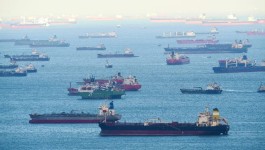















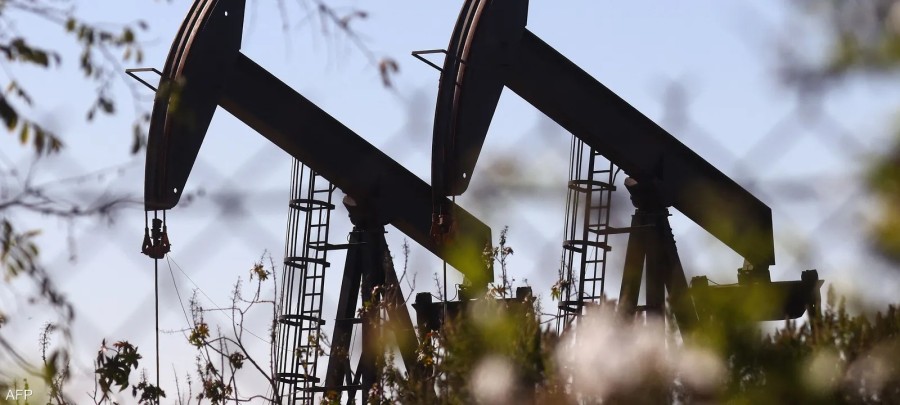


Oil prices rose following attacks on ships in and near the Strait of Hormuz, highlighting the continuing risks to shipping in the waterway.
Brent crude rose to near $73 a barrel, while West Texas Intermediate crude surpassed $69.
The Al Rukayyat, a liquefied natural gas tanker carrying a cargo, was hit by a projectile near the coast of Oman as it exited the shipping lane, according to people familiar with the matter, along with a warning from security consultancy EOS Risk Group.
Separately, the UK Maritime Trade Operations (UKMTO) reported an attack but did not identify the targeted vessel. Axios, citing a US official, reported that Iran fired at least two missiles at commercial ships transiting the Strait, noting that two commercial vessels were hit and damaged, but there were no reports of injuries.
The strait, which connects producers in the Arabian Gulf to global markets, has partially reopened after being almost completely closed due to the US-Iranian conflict. Recent transits have included a convoy of at least eight ships linked to Japan. However, despite the recovery in shipping traffic, it remains below pre-conflict levels.
Ship attacks bring back the risk premium for oil
Oil prices fell 30% in the second quarter after Washington and Tehran agreed to a temporary peace deal, easing concerns about supply disruptions from the Middle East.
Brent crude, the global benchmark, has erased the war premium that had accumulated in recent months, with some major banks, including Goldman Sachs Group and Morgan Stanley, now warning of a possible return to oversupply.
Iranian Foreign Minister Abbas Araqchi indicated in a post on social media that talks on reaching a final agreement with the United States would not begin if the threats continued, in what appeared to be a reference to the memorandum of understanding signed with Washington, but without providing details.
Tehran is holding a mass funeral this week for former Supreme Leader Ali Khamenei, who was killed in an airstrike at the start of the war.
Warren Patterson, head of commodity strategy at ING Group NV in Singapore, said: “The latest attacks on ships in the Arabian Gulf highlight that we are still very far from returning to normal.”
He added: A limited response from the United States may provide some short-term support for oil, but given the pessimistic sentiment and weakness in the physical market, any jump is likely to be short-lived.
On Monday, Saudi Aramco said it would cut the price of its Arab Light crude to Asia for next month by $11 a barrel to $1.50 below a regional benchmark. The company last sold this crude at a discount in 2015 and 2020.
Riyadh's move came after a weekend decision by OPEC+ members, including Saudi Arabia, to raise production quotas for next month, adding to the likelihood of increased supply. While those additional barrels remain theoretical, the decision suggests a desire to boost production as conditions return to normal.
Awaiting the US Energy Information Administration report
Charu Chanana, chief investment strategist at Saxo Markets, said the attacks remind investors that the de-escalation trade in the Middle East remains fragile. She added: “The market may reintroduce a small portion of the Hormuz risk premium, but we don’t appear to be pricing in a full-blown disruption yet.”
However, Chanana added that the global situation remains less supportive of oil prices, noting that OPEC+ continues to increase production, Gulf supplies are recovering, and the Brent-Dubai market structure has shifted into a contango, indicating a bearish pricing pattern that suggests a more abundant physical market in the near term.
Further insight into market conditions will come later on Tuesday, when the U.S. Energy Information Administration releases its Short-Term Energy Outlook.
Last month, the agency raised its 2027 forecast for U.S. crude production by 220,000 barrels per day to 13.83 million barrels, after prices rose during the war.
In the latest trading, Brent crude futures for September settlement rose 1.1% to $72.80 a barrel at 2:03 p.m. in Singapore, and West Texas Intermediate crude futures for August delivery rose by the same percentage to trade at $69.30 a barrel.