


































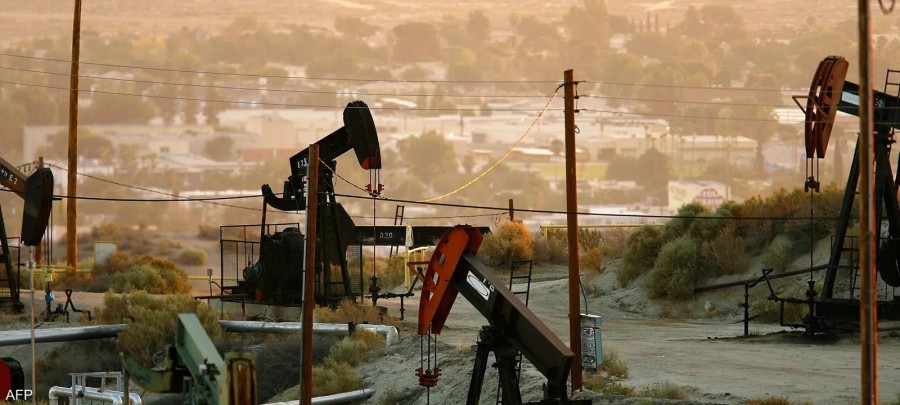


Oil prices fell to a new three-month low amid growing expectations that a US-Iranian agreement to reopen the Strait of Hormuz will lead to a significant increase in flows, easing the tight supply in the global crude market.
Brent crude, the international benchmark, settled near $79 a barrel after falling as much as 1.1% earlier in the session, while West Texas Intermediate crude surpassed $76. The interim agreement, scheduled to be signed on Friday, offers Tehran significant financial incentives, including the right to sell its oil immediately.
Ship owners appear to be rerouting vessels ahead of any possible reopening of the strait, as two tankers bound for Africa changed course in the Indian Ocean and diverted their destinations to the Middle East, according to ship tracking data.
The easing of supply constraints is becoming increasingly apparent in the market, with the price spread between the two nearest-term Brent crude contracts narrowing significantly. The spread shrank to just 14 cents a barrel in the backwardation contract on Wednesday. While this remains a bullish trend, with the near-term contract trading above its longer-term counterpart, the spread had reached $9.65 in early April due to concerns about near-term supply.
Crude oil prices have fallen sharply in recent weeks as moves to end the trade war between Washington and Tehran have eased supply constraints in global energy markets. Producers, shipping companies, and traders are now assessing whether the agreement will hold and how long it will take for ships to actually resume transiting the Strait of Hormuz.
Demining the Strait of Hormuz
Dennis Kessler, senior vice president of trading at BOK Financial Securities, said: “Most traders still believe that U.S. naval operations will likely escort the ships for the first few weeks, and mine-clearing vessels will also be present, which will slow traffic. However, the futures market always looks ahead, and currently, the odds for oil movement are increasing.”
While technical details are still being finalized and some changes may be made to the wording, the 14-point draft memorandum provides the clearest picture yet of an agreement that would pave the way for 60 days of talks aimed at formally ending the war and imposing strict new restrictions on Iran’s nuclear program.
The demands include that Tehran guarantee the free passage of commercial shipping and that the United States lift its blockade of the Strait of Hormuz. This narrow waterway connects the Persian Gulf to the Indian Ocean and, in peacetime, carried about a fifth of the world's oil supply.
HSBC Holdings' global head of transport and logistics research, Parash Jain, told Bloomberg Television: We've been talking about a phased resumption, not a return to normal levels all at once. He added, The last thing shipping companies want is to spend two months rerouting all their vessels, only to find they have to reroute them again.
The memorandum of understanding also includes Washington’s commitment to issue exemptions for Iranian crude oil exports, petrochemical products and derivatives, and all related services, including banking, insurance, and transportation.
Gasoline prices drop in America
Lower crude oil prices have contributed to lower product prices, easing inflationary pressures and the burden on consumers. In the United States, the average price of gasoline nationwide has fallen to around $4 per gallon, after peaking above $4.56 in May, according to data from the American Automobile Manufacturers Association.
The impact of fluctuating energy costs will be among the factors considered at the Federal Reserve meeting on Wednesday, where policymakers decide on interest rates. Borrowing costs are expected to remain unchanged at this meeting.
Despite widespread expectations of a supply rebound, crude oil inventories continue to decline rapidly. One U.S. industry group estimated that oil stocks fell by 8.3 million barrels last week, including a significant drop at the major storage hub in Cushing, Oklahoma. Official data is due later on Wednesday.
In the latest trading, Brent crude futures for August settlement settled at $79.05 at 2:19 p.m. in Singapore, while West Texas Intermediate crude futures for July delivery rose 0.2% to trade at $76.18 a barrel.