

































The OPEC+ alliance approved a fourth monthly increase in oil production of 188,000 barrels per day during July, amid continued geopolitical uncertainty in the region, stalled US-Iranian negotiations, and unrest in the Arabian Gulf.
In early May, seven members of the OPEC+ alliance agreed to increase oil production by about 188,000 barrels per day during June, in the first meeting held after the UAE left the alliance.
The increase includes Saudi Arabia, Russia, Iraq, Kuwait, Kazakhstan, Algeria and Oman, following the UAE's withdrawal from OPEC.
The seven countries indicated that this measure would allow them to accelerate the compensation process, reaffirming their collective commitment to full compliance with the Declaration of Cooperation, including additional voluntary production adjustments to be monitored by the Joint Ministerial Monitoring Committee. They also confirmed their intention to fully compensate for any overproduction since January 2024, with the compensation period to be extended until the end of December 2026, according to a statement issued by OPEC.
In its May report, OPEC lowered its forecast for global oil demand growth to 1.2 million barrels per day (bpd) in 2026, down from its previous estimate of 1.4 million bpd. This brings the total projected demand for the year to 106.3 million bpd. However, it raised its 2027 demand growth forecast to 1.5 million bpd, an increase of 200,000 bpd from last month's assessment, bringing total global demand to 107.9 million bpd.
A Bloomberg survey showed that OPEC oil production fell in May to its lowest level in at least 37 years at 16.33 million barrels per day, as the US embargo on Iran and unrest in the Arabian Gulf continued to curb output.
Production declined in April
The alliance said in a statement issued today that it will continue to closely monitor and assess the market to support its stability, stressing the importance of caution and flexibility.
OPEC’s May report showed that production from countries participating in the OPEC+ alliance fell in April by about 1.74 million barrels per day on a monthly basis, to 33.19 million barrels per day, according to secondary sources used by the organization.
This decline follows a sharp drop in March when the alliance's production fell to approximately 34.93 million barrels per day, compared to 42.77 million barrels per day in February. Thus, OPEC+ lost about 9.6 million barrels per day of its production in just two months, according to the report's data.
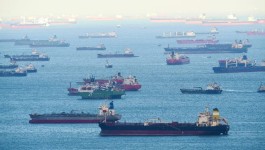
Oil markets have experienced sharp fluctuations since the outbreak of the Iran-Iraq War, following the closure of the Strait of Hormuz, through which approximately one-fifth of the world's oil supply passes, leading to a significant price surge. Despite a temporary lull after a ceasefire was declared, prices rose again after negotiations between the United States and Iran stalled, and US President Donald Trump announced a comprehensive naval blockade of the strait and Iranian ports.
At the close of trading last week, Brent crude futures for August settlement settled at $93 a barrel, while West Texas Intermediate crude futures for August delivery fell 2.2% to $87.82 a barrel.
The next meeting of the seven OPEC+ countries is scheduled for July 5.