










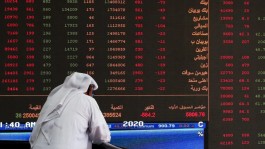


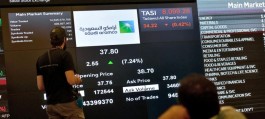





















Oil prices rose, while bonds fell across much of Asia, as renewed tensions in the Middle East raised concerns about disruptions to energy supplies, complicating inflation and interest rate forecasts.
Brent crude jumped more than 2% to trade above $76 a barrel after the United States launched new airstrikes in Iran and canceled a waiver that had allowed it to sell oil globally following attacks on ships in the Strait of Hormuz.
Ten-year bond yields rose in Australia, Japan, and South Korea, as well as in New Zealand, where the central bank raised interest rates as expected. US Treasury yields were steady.
Sean Keane, chief Asia Pacific strategist at JB Drax Honore, said: “Overall, the jump in oil prices and the removal of the Iranian oil waiver reinforce the case for central banks to make precautionary interest rate hikes, due to the continuing risk of a second wave of inflation taking hold.”
The broader stock market reaction was relatively muted, with the MSCI Asia Pacific Index slipping 0.2%. S&P 500 futures were flat, while Nasdaq 100 futures rose 0.2%.
This came after US stock indices declined on Tuesday, with a chip stock index falling by more than 4%. The Nasdaq 100 index dropped by 1.8%.
The Central Command said in a post on the X platform that US forces had completed a round of offensive strikes against Iran, targeting more than 80 targets.
Hormuz escalation tests market calm
The recent escalation in geopolitical tensions risks triggering renewed disruptions in energy markets and undermining the interim peace agreement reached last month between the United States and Iran.
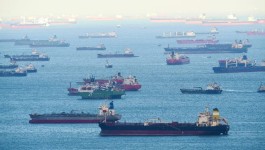
However, a limited number of ships appeared to have passed through the Strait of Hormuz in the early hours of Wednesday, even after a series of attacks on tankers left ship owners struggling to assess the risks of operating in the vital waterway.
“Traders aren’t pricing in a full-blown escalation, and at the moment that reading seems defensible,” said Dellen Wu, a strategist at Pepperstone Group. “As long as the memorandum of understanding framework holds and vessel traffic continues to recover rather than sharply reverse, the market reaction should remain limited to increased volatility rather than a trend reversal.”
Brent crude prices peaked near $125 a barrel in late April, two months after the US and Israel launched their military campaign against Iran. Prices have since returned to pre-conflict levels as signs of a supply recovery have emerged following the peace agreement.
Elsewhere in the markets, the Bloomberg Dollar Spot Index held steady after rising 0.2% on Tuesday. Gold hovered around $4,100 an ounce, while Bitcoin fell by about 1%.
Nick Twidall, senior market analyst at AT Global Markets, said: “After AI and technology sentiment dominated market movements over the past two weeks, investors are now forced to refocus on geopolitical tensions.”
He added: This should dominate market sentiment, especially if we see further escalation in the upcoming sessions.