


































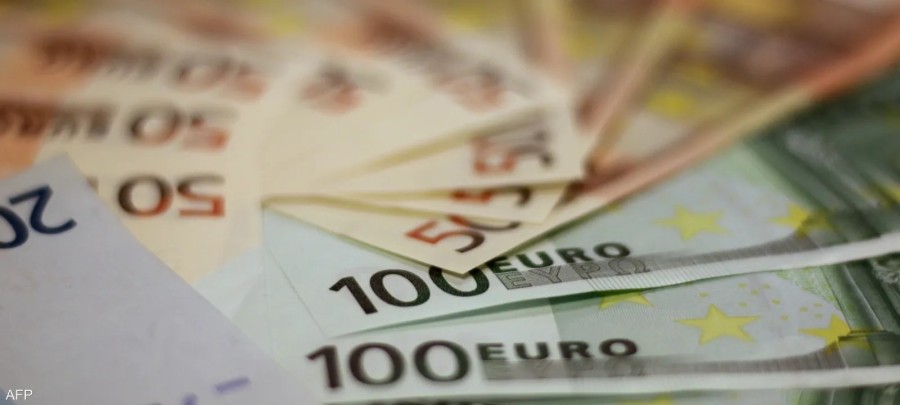


The euro rose slightly in European trading on Tuesday against a basket of global currencies, maintaining its gains for the fourth consecutive day against the US dollar and approaching its highest level in two weeks, amid a series of weak economic data in the United States, which reduces the likelihood of a US interest rate hike this year.
The likelihood of a European interest rate hike this June has diminished, particularly following less aggressive comments from the European Central Bank president and lower-than-expected data on key European inflation levels for June.
Price overview
Euro exchange rate today: The euro rose against the dollar by less than 0.1% to ($1.1448), from today’s opening price of ($1.1441), and recorded a low of ($1.1436).
The euro ended Monday's trading session up less than 0.1% against the dollar, its third consecutive daily gain, near its highest level in two weeks at $1.1473.
US dollar
The dollar index fell by about 0.1% on Tuesday, extending its losses for the second consecutive session and moving down to its lowest levels in two weeks, reflecting the decline in the US currency against a basket of major and minor currencies.
This decline comes amid a series of weaker-than-expected economic data releases in the United States, the latest of which was the Institute for Supply Management report, which showed a slowdown that exceeded expectations for US services sector activity last June.
Those data reduced the likelihood of the Federal Reserve raising US interest rates at least once this year, and in order to reassess those prospects, markets are awaiting the release on Wednesday of the minutes of the first monetary policy meeting of the US central bank under its new chairman, Kevin Warsh.
European interest rate
Christine Lagarde, the president of the European Central Bank, said last week in Sintra, Portugal, that the risks to inflation and economic growth in the Eurozone are now more balanced overall than they were a few weeks ago, in light of the recent drop in oil prices.
Official inflation data in the Eurozone showed a slowdown in consumer prices in June that exceeded market expectations, thanks to falling fuel prices following the end of the Iran war.
Following the above comments and data, the money market's pricing of the probability of the European Central Bank raising European interest rates by about 25 basis points in July has fallen from 30% to 5%. In order to reprice these probabilities, investors are awaiting the release of more economic data in the Eurozone on inflation, unemployment and wage levels.