












The euro fell in the European market on Wednesday against a basket of global currencies, continuing its losses for the second day in a row against the US dollar, as investors flocked to buy the US currency as a safe haven, amid renewed military tensions between the United States and Iran in the Strait of Hormuz.
The renewed rise in global oil prices has also led to renewed concerns about inflationary pressures on monetary policymakers at central banks, increasing the likelihood of interest rate hikes in the near future.
Price overview
The euro fell 0.1% against the dollar to $1.1399, from today's opening price of $1.1412, and hit a low of $1.1393.
The euro ended Tuesday's trading down 0.25% against the dollar, its first loss in four days, amid a correction and profit-taking from a two-week high of $1.1473.
US dollar
The dollar index rose 0.1% on Wednesday, extending its gains for a second consecutive session, reflecting the continued strength of the US currency against a basket of major and minor currencies.
This rise is supported by increased demand for the dollar as a safe haven, especially with the renewed military confrontations between the United States and Iran, which could lead to the collapse of the ceasefire agreement and the failure of peace negotiations.
The minutes of the Federal Reserve's first monetary policy meeting, led by its new chairman Kevin Warsh, are due to be released later today and are expected to contain important indications about the likelihood of US interest rate hikes this year.
global oil prices
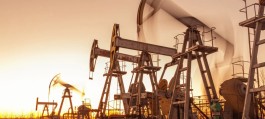
Oil prices rose by about 0.5% on Wednesday, extending gains for the second day in a row and hitting their highest level in two weeks, driven by renewed concerns about supply disruptions through the Strait of Hormuz and the potential for shipping to stop.
Developments in the Iranian war
The United States launched a fierce wave of airstrikes targeting more than 80 military targets inside Iran, including the cities of Bandar Abbas, Sirik and Qeshm Island in the south of the country.
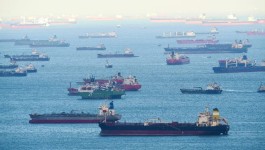
The US response came after an attack by the Iranian Revolutionary Guard on three commercial oil tankers, including a Qatari gas tanker and another flying the Saudi flag, as they crossed the Strait of Hormuz.
Tehran justified its missile attacks by claiming that those ships did not adhere to the Iranian-approved shipping routes and attempted to use passages close to the Sultanate of Oman to avoid the fees that Iran seeks to impose.
The US Treasury Department also formally revoked a temporary license that had granted Iran the right to produce and sell crude oil, considering the maritime attacks a flagrant violation of the memorandum of understanding signed on June 17.
In response, Tehran vowed a decisive and devastating response to the American bombing, and Iranian Foreign Minister Abbas Araqchi said that no final negotiations could be discussed as long as the threats and military strikes continued.
Pakistan was scheduled to host a new round of technical negotiations between the United States and Iran on July 11, to discuss three main issues: sanctions imposed on Tehran, the release of frozen funds, and the nuclear file.
For his part, US President Donald Trump stated in a decisive tone that Washington will either reach a final agreement with Iran, or it will end the mission through a comprehensive military operation.
European interest rate
Christine Lagarde, the president of the European Central Bank, said last week in Sintra, Portugal, that the risks to inflation and economic growth in the Eurozone are now more balanced than they were a few weeks ago, in light of the recent drop in oil prices.
The pricing in financial markets for the likelihood of the European Central Bank raising interest rates by 25 basis points during July is settling at around 10%.
In order to reprice those probabilities, investors are awaiting the release of more economic data in the Eurozone, particularly data on inflation, unemployment and wages.