





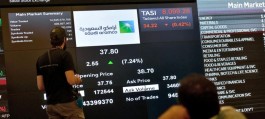


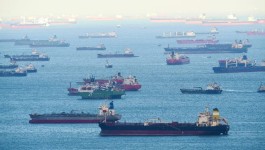











Oil prices rose 2 percent in early trading on Tuesday to their highest level in four weeks as the United States reimposed its naval blockade on Iran and the two countries escalated attacks in the Strait of Hormuz, increasing uncertainty about energy flows.
Brent crude futures rose $1.68, or 2%, to $84.98 a barrel by 0051 GMT, while U.S. West Texas Intermediate crude gained $1.65, or 2.1%, to $79.79 a barrel. Brent crude jumped 9.6% in the previous session, its biggest daily gain since May 2020.
Oil prices are currently at their highest levels since the two countries signed a memorandum of understanding on June 17 to end the war, according to Reuters data.
The UAE Ministry of Defense announced that the two national tankers, Mombasa and Al Bahia, were targeted by two Iranian cruise missiles while sailing in the southern passage of the Strait of Hormuz within Omani territorial waters.
The ministry explained that the attack resulted in the death of one of the crew members of the tanker Mombasa, who was of Indian nationality, and the injury of eight others, including four serious injuries, six of whom were of Indian nationality and two of Ukrainian nationality.
She added that the attack caused material damage to the two tankers as a result of a fire breaking out on board them, noting that the fire was brought under control in both tankers.
The UAE Ministry of Defense condemned the attack, considering it a serious violation of international law and a threat to the security and stability of the region, stressing that the country reserves its full right to respond to this escalation, and to take all necessary measures to protect its territory, its people and residents, and to preserve its sovereignty, security and stability, and to protect its national interests and capabilities.
Trump reinstates naval blockade
Meanwhile, US President Donald Trump told reporters that the United States had reinstated its blockade on Iranian shipping, adding that he wanted the United States to collect fees for protecting countries that provide it with assistance in the Strait of Hormuz.
Tim Waterer, chief market analyst at KCM Trade, told Reuters: “It’s clear that the recent escalation, including the reimposition of the US embargo and the Iranian responses, has introduced new risks to the market.”
He added that although there has been no complete shutdown, the conflicting objectives of the two sides make the supply picture extremely unclear.