





















Iran’s war has reshaped the economic landscape of the Arab region in just a few weeks, pushing up energy, shipping and insurance prices and putting new pressure on growth and inflation from the Gulf to North Africa.
Instead of the recovery path that was expected this year, the region’s economies found themselves facing a shock that revealed a disparity in resilience: oil-producing countries were relatively successful in absorbing part of the blow thanks to export alternatives and fiscal space, while others were directly affected by supply disruptions or the fragility of their economic structure, while energy and food-importing countries paid the price through accelerating inflation, currency pressure, and a rising cost of living.
In between, international institutions and banks began to widely lower their forecasts.
Middle East: Growth slows amid mixed pressures
In the overall regional picture, international institutions seem to agree that the Middle East has entered a phase of sharp slowdown, as the region’s economies face a comprehensive repricing of growth expectations, with the war turning from a geopolitical event into an economic shock that is putting pressure on energy, trade and supply chains.
The International Monetary Fund (IMF) lowered its growth forecast for the region, released last Tuesday, to 1.1% in 2026 from 3.9% in January—a reduction of 2.8 percentage points—with a projected recovery to 4.8% in 2027. However, this remains contingent on energy production and transportation returning to normal levels in the coming months, an assumption that may need to be revised if the war continues.
The IMF’s deputy managing director, Bo Leigh, said that the Middle East and North Africa region faces unprecedented challenges and exceptional uncertainty about its future prospects, adding that even if production and exports return to normal by mid-year, growth and its outlook are already severely affected, and that the countries most directly affected will still have production below pre-war levels in the near and medium term.
The picture is not much different at the World Bank, which estimates growth in the region, excluding Iran, at 1.8% in 2026 compared to 4% in 2025, a reduction of 2.4 percentage points from its January forecast. This slowdown is concentrated in the Gulf economies and Iraq, where the forecast has fallen to just 1.3% after a significant reduction of 3.1 percentage points, due to disruptions in energy exports and declining revenues.
The Gulf: Strong foundations despite the damage of war
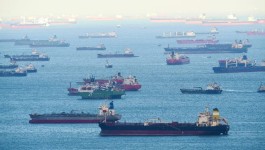
The Gulf economies are at the forefront of those affected by the war's repercussions in terms of growth, given their role as the primary energy exporters and the attacks targeting vital facilities, ports, and sites, in addition to the disruption of shipping through the Strait of Hormuz. This reality has made the growth trajectory of the Gulf states contingent on their ability to maintain oil and gas flows and ensure their continued access to markets.
The World Bank lowered its forecast for the growth of the Gulf Cooperation Council (GCC) economies to about 1.3% in 2026, compared to 4.4% in 2025, a decrease of 3.1 percentage points from its January estimates, due to a decline in expected oil and gas revenues caused by supply disruptions.
The war's repercussions also extend to domestic demand, tourism, and trade, with rising energy costs and shipping disruptions. In this context, Oxford Economics predicted that Gulf economies would enter a recession during the first half of the year, with growth forecasts for 2026 lowered by approximately 4.6 percentage points compared to pre-war levels, resulting in a contraction of 0.2% due to declining oil production and exports.
However, the Gulf states tend to maintain lower and more stable levels of inflation, benefiting from the strength of their financial positions and the pegging of their currencies to the dollar.
Despite these pressures, the Gulf economies are entering this phase with strong economic fundamentals. In this context, IMF Managing Director Kristalina Georgieva affirmed that the Gulf states have worked over the past decade to build robust foundations, implement sound policies, and establish buffers, noting that this is the result of a long process of reforms and strengthening economic resilience. This strength has been reflected in the economies of the region as a whole.
For his part, the Executive Director of the International Energy Agency, Fatih Birol, said that the disparity in impact is evident even within the exporting countries themselves, depending on the level of dependence on oil, the availability of infrastructure and financial margins, noting that some economies are more vulnerable to fluctuations, while others, such as Saudi Arabia, are more resilient.
Saudi Arabia: Resilient growth supported by oil infrastructure
Saudi Arabia has emerged as the clearest example of an oil economy capable of absorbing shocks, supported by an infrastructure that allows oil flows to be maintained despite supply disruptions, most notably the East-West pipeline that transports oil from the Eastern Province to the port of Yanbu on the Red Sea.
Saudi Arabia’s Manifa oil facility and East-West pipeline have recently regained operational capacity after being damaged by Iranian attacks, according to the Saudi Ministry of Energy.
The ministry explained that the repair and rehabilitation work for the two facilities has been completed, allowing operations to return to normal levels, while confirming the readiness of the energy sector's infrastructure and the continued flow of supplies without interruption, in a step that enhances the stability and reliability of supplies.
For its part, Bloomberg Economics forecasts that the Saudi economy will grow by 2.9% in 2026. While this is lower than last year, it is considered a resilient performance in the context of an unprecedented regional conflict. This is explained by the fact that oil is still largely flowing, prices are significantly higher, and the crucial factor is the pipeline.
The organization estimates that oil exports may have fallen by about 30% since the start of the conflict, but higher prices have more than compensated for that, likely boosting oil revenues, with the main risk remaining the potential collapse of the ceasefire and attacks on Red Sea infrastructure.
For its part, the International Monetary Fund lowered its forecast for Saudi Arabia’s economic growth in 2026 to 3.1%, after three consecutive positive revisions, a decrease of 1.4 percentage points compared to 4.5% in the January forecast and 4% in October, with growth expected to rise to about 4.5% in 2027, supported by non-oil sectors.
On the fiscal front, the World Bank projects the budget deficit will decline to around 3% of GDP in 2026, compared to 6% last year, while the Saudi government anticipates a deficit of 165 billion riyals this year. The Bank attributes this performance to stable growth in non-oil sectors and the ability to diversify exports away from the Strait of Hormuz.
In contrast, inflationary pressures remain limited, with inflation in Saudi Arabia recording 1.8% in March compared to 1.7% in February, with a slowdown in housing and transportation prices and a slight increase in food prices.
This resilience is based on a clear logistical infrastructure. The effectiveness of this infrastructure is evident in export flows during the recent period, as Saudi crude shipments in February, before the outbreak of the war, rose to about 7.3 million barrels per day, the highest level since April 2023, and an increase of more than 400,000 barrels per day compared to January, according to tanker tracking data.