


































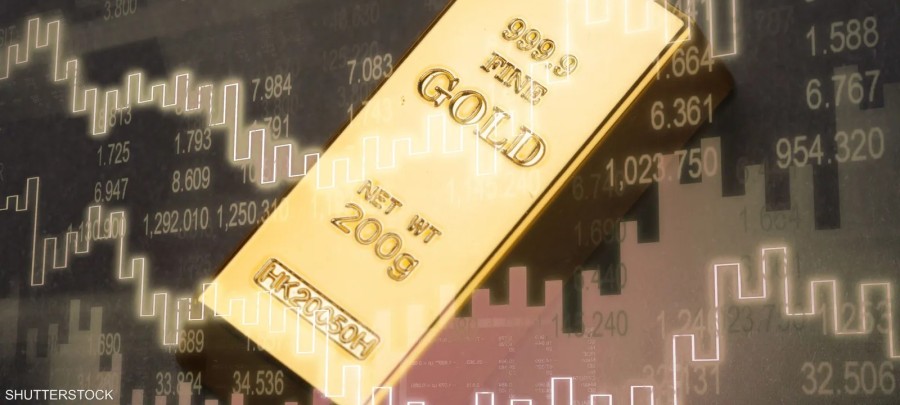


The sharp fluctuations in gold prices at the start of the year raised questions about whether the precious metal could regain its momentum, but UBS analysts believe the forces behind its previous rise are still in place.
After hitting a record high of $5,594.00 an ounce on January 29, gold fell 9 percent the following day and dropped to its lowest point of the day at $4,400.00, a move that worried investors, according to UBS strategist Vincent Henney.
Prices have since stabilized below $5,000,000, caught between buys on dips and shifts in Federal Reserve interest rate expectations.
UBS believes the recent turmoil is best viewed as a reset rather than a change in the system, noting that spot prices are still about 15 percent higher in 2026.
The bank believes that the $4,500.0000 to $4,800.0000 range is where fundamentals reaffirm their influence, supported by expectations of two further US interest rate cuts this year, as well as continued strong demand from central banks and exchange-traded funds.
Evidence for this demand remains strong. UBS highlighted that central banks purchased 863 metric tons of gold in 2025 and now expect purchases to reach 950 tons in 2026. Inflows into exchange-traded funds (ETFs) are also projected to rise to 825 tons.
The bank argues that the volatility may reflect previous mid-cycle pullbacks, as happened in 1974 and 2020, when prices fell but soon resumed their upward trend.
UBS remains confident that gold can rise in 2026, predicting prices will reach $6,200.0000 per ounce by mid-year before settling at $5,900.0000 by December.
The bank recommends allocating a mid-singles percentage to investors seeking to hedge against inflation and geopolitical risks.