










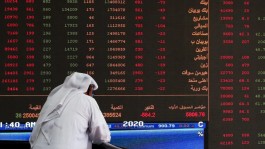




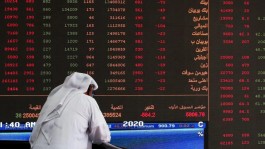


















Oil prices fell below $100 a barrel after the United States and Iran agreed to a two-week ceasefire, expected to halt the US and Israeli military campaign in exchange for Tehran reopening the Strait of Hormuz.
Brent crude fell by as much as 16% before trading near $95 a barrel, while West Texas Intermediate crude fell at its fastest pace in nearly six years, hitting around $96.
US President Donald Trump said the ceasefire is conditional on Iran reopening the Strait of Hormuz, and will allow the agreement to be finalized and concluded.
Iran accepted Pakistan's ceasefire proposal, adding that safe passage through the Strait of Hormuz would be possible through coordination with the country's armed forces for a period of two weeks, according to a statement by Foreign Minister Abbas Araqchi. Israel also agreed to a cessation of hostilities, according to a White House official.
The current plan includes allowing Iran and Oman to impose fees on ships passing through the Strait of Hormuz, according to the Associated Press, citing a regional official.
Negotiations begin Friday in Pakistan
Pakistani Prime Minister Shehbaz Sharif said in a post on the X platform that delegations from the United States and Iran are invited to meet in Islamabad on Friday to continue negotiating for a decisive agreement to resolve all disputes.
Jason Schenker, president and chief economist at Prestige Economics, said: It would take something truly extraordinary for us to get back below $80 a barrel.
He added in an interview with Bloomberg Television: Any flaw or mistake in these ceasefire talks could very quickly send prices back above $100.
Prices of refined products also declined, with benchmark European diesel futures falling by as much as 23%, their biggest drop in more than four years. Futures contracts linked to Murban crude, Abu Dhabi's main crude, fell by 19%, the largest decline since the contract's launch in 2021.
The Strait of Hormuz crisis is causing market turmoil.
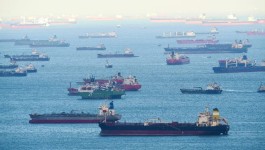
The near-total closure of this vital corridor, through which about one-fifth of the world’s oil and liquefied natural gas usually passes, has disrupted energy markets, with West Texas Intermediate crude remaining more than 40% higher since the conflict began at the end of February.
The US government estimates that reduced shipments will halt production of more than 9 million barrels per day of oil from major Middle Eastern producers during April.
Josh Gilbert, an analyst at eToro, said: This was a market lacking good news. He added: We saw an immediate sell-off in crude, with prices dropping 16% to below $100, as markets priced in the possibility of the Strait of Hormuz reopening.
He added: This illustrates how much geopolitical risk was embedded in crude prices, and how quickly it unravels when there is a credible path to de-escalation.
Increase in trading volumes
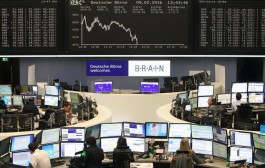
Trading volumes saw a significant increase as the escalation subsided. Around 240,000 Brent crude contracts were traded in the first hour of trading on the global index, whereas a normal session might only see a few thousand contracts traded in the same period.
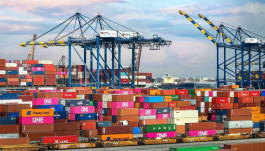
Physical traders remain cautious despite the ceasefire, awaiting clearer signs of its continuation before seeking to purchase shipments from the Gulf. Meanwhile, ship owners say they need to see vessels leave the region safely before sending tankers to load supplies. Currently, more than 800 ships are stranded due to the conflict.
Vivek Dhar, an analyst at Commonwealth Bank of Australia, said: “Oil prices could fall further as key details of the ceasefire agreement are released to the market. The extent to which Iran escalates its position will be closely watched, and this could limit further significant declines in oil prices.”
Trump's ceasefire announcement came roughly 90 minutes before the original deadline he had set for Iran to reopen the Strait of Hormuz or face widespread bombardment. The preceding period saw escalating military tensions and increasingly strident threats from the US president directed at Iran, including a post in which he declared that an entire civilization would perish that night.
Earlier today, U.S. forces targeted sites on Iran’s Kharg Island similar to those struck in last month’s round of attacks, but did not target energy infrastructure, according to U.S. officials.
In the latest trading, Brent crude futures for June delivery fell 14% to $94.39 a barrel by 12:17 PM Singapore time. Meanwhile, West Texas Intermediate crude futures for May delivery dropped 15% to $96.10 a barrel.