





















European stocks fell to their lowest levels in nearly four months, amid a toxic mix of a massive wave of corporate bond issuance in the United States, ongoing energy shocks in the Middle East, and hawkish signals from the Federal Reserve.
The pan-European STOXX 600 index fell 1% to its lowest level since 11/06, after ending a three-session winning streak on Wednesday.
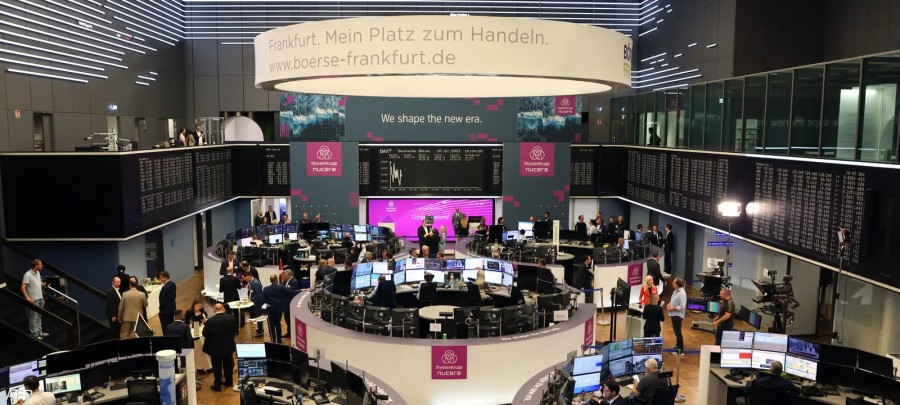
Germany's DAX index fell by 1%, while France's CAC 40 index declined by 0.90%. The UK's FTSE 100 index lost 0.70%, while Italy's FTSE MIB index recorded the largest drop at 1.30%.
Although European stocks saw a fragile midweek recovery to recoup some of their losses from three-month lows, risk appetite remains severely constrained by the sell-off in global fixed-income markets and widening financial gaps across continental exchanges.
A wave of massive debt issuances by US technology companies is putting pressure on global fixed-income markets.
New reports added an additional source of friction to international bond markets overnight, revealing that major US technology giants – including SpaceX and Broadcom – are preparing to raise up to $80 billion through massive debt issuances.
This anticipated wave of large-scale issuances has raised concerns about direct competition for corporate capital, which could crowd out sovereign bonds and widen corporate credit spreads.
Although European stock exchanges have less direct exposure to AI-related technology giants, continental stocks have faced indirect headwinds, given that major European industrial and technology companies are key suppliers and beneficiaries of those American giants.
Technology stocks declined, with Infineon falling 2.70% and ASML dropping 2.30%. BE Semiconductor and STM Incroelectronics each fell 2.60%.
Strikes in the Arabian Gulf reignite oil and gas price fluctuations
The rise in wholesale European crude oil and natural gas futures contracts, amid escalating military tensions at maritime chokepoints in the Middle East, has exacerbated stagflationary pressures.
A new wave of drone and missile attacks targeting commercial shipping and energy infrastructure in the Arabian Gulf and the Red Sea has reignited geopolitical risk premiums.
This escalation has erased recent price declines, forcing energy-intensive European sectors to factor in higher winter fuel costs, just as the heating demand surge begins in northwest Europe.
The Fed's hawkish minutes and the Bank of France's warning weigh heavily on the CAC 40.
Further cooling macroeconomic sentiment across continental markets was the release on Wednesday of the minutes from the Federal Open Market Committee (FOMC) meeting in September. The minutes revealed that a majority of Federal Reserve policymakers still believe a further interest rate hike is likely before the end of the year, dashing hopes for a rapid shift toward monetary easing.
The governor of the Bank of France, Emmanuel Moulin, acknowledged on Wednesday that the country's financial and economic situation had become serious, driven by a widening budget deficit and political uncertainty.
However, Moulin firmly rejected calls for central bank intervention, stressing that Paris did not need help from the European Central Bank and that it should address its structural deficit through internal budget reform.
The French CAC 40 index lagged behind its continental counterparts, remaining near its lowest levels since March. The French index is on track for its second consecutive weekly decline, as investors demand a high risk premium for holding French stocks and sovereign bonds, pending the protracted budget negotiations.
French banks were hit by sharp sell-offs due to their large holdings of local government bonds. Shares in Société Générale and BNP Paribas fell by more than 2.00% each.