









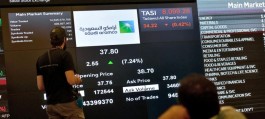



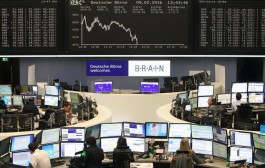












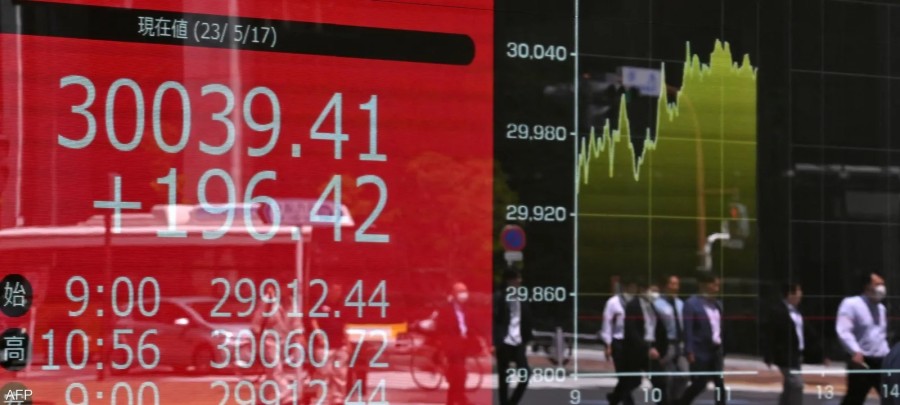


European stocks rose after their Asian counterparts hit new record highs, fueled by optimism surrounding artificial intelligence and better-than-expected earnings from major technology companies. Meanwhile, the yen briefly jumped as traders awaited potential intervention from the Bank of Japan.
The pan-European STOXX 600 index rose 0.1%, with technology stocks among the top gainers, while technology stocks fell after US President Donald Trump announced his intention to raise tariffs on European car imports.
Futures for the S&P 500 and Nasdaq 100 indexes held steady after Wall Street closed at record highs on Friday, buoyed by better-than-expected earnings from major technology companies, including Apple. The MSCI Asia Pacific Index rose as much as 2.3%, hitting an all-time high during intraday trading.
The market has shifted its focus to profits.
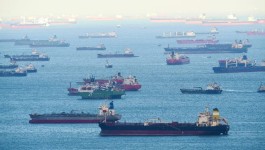
Brent crude prices fluctuated sharply, initially falling 2.4% before recovering to trade slightly above $107 a barrel. The volatility followed Trump's announcement that the United States would begin directing ships unrelated to the conflict with Iran through the Strait of Hormuz starting Monday. However, a senior Iranian official warned that Tehran would consider any US intervention in the strait a violation of the ceasefire, according to an AFP report.
Global stocks have risen for a month, as traders largely shrugged off concerns about the economic fallout from the Middle East war, amid signs that corporate resilience has led U.S. stocks to their best monthly performance since 2020. The percentage of companies whose financial results fell short of analysts' expectations hovered near its lowest level since 2021, with the earnings season nearing its end for two-thirds of the stocks listed on the S&P 500, which recorded its fifth consecutive weekly gain.
Vincent Juvens, chief investment strategist at ING in Brussels, said: “We’ve shifted from a market primarily driven by geopolitical factors to one focused on corporate earnings, which have been very positive overall.” He added: “While technology stocks have been a driving force, financial and energy stocks have also lifted the indices and earnings expectations.”
Currency and bond movements
The yen jumped as much as 0.8% in Asian trading on Monday before giving up most of its gains. Traders are watching for the possibility of further intervention by the Japanese government, after its intervention last week to curb the currency's decline. Japan is believed to have spent around 5.4 trillion yen ($34.5 billion) last week to support the yen, a warning sign to traders after the Japanese currency fell below 160 yen to the dollar.
Japan has the financial capacity to intervene 30 times the amount recorded last week, according to analysts at Goldman Sachs, but officials are expected to maintain reserves and intervene at more effective times.
David Forrester, chief strategist at Credit Agricole in Singapore, said that if the dollar/yen exchange rate reaches 157, it will be worth watching, as the exchange rate has twice stumbled slightly above this level following alleged intervention.
Meanwhile, gold prices dipped slightly below $4,600 an ounce, while Bitcoin led the cryptocurrency gains, rising 1% to nearly $80,000. US Treasury bonds saw no cash trading until the New York opening due to holidays in Tokyo and London. The mainland Chinese market was also closed.
The S&P 500 ended April at record highs, after the first-quarter financial results of about 81% of the companies listed on the index exceeded expectations, according to data compiled by Bloomberg.
Joe Gilbert, portfolio manager at Integrity Asset Management, said: “The market is showing a great deal of patience in the face of this level of uncertainty, as it focuses on what might happen after the conflict ends, which could be overly optimistic. The economic damage being done now will become more apparent over the next month.”
Bloomberg strategists' opinion
For his part, Mark Cranfield of Bloomberg Market Life believes that the conflicting reports leave traders in a state of uncertainty regarding the role of the US Navy, which is said to be working within a coordination process with countries, insurance companies and maritime organizations, which does not appear to amount to actual protection of ships.
Market bets temporarily ignore risks
On the geopolitical front, Trump described discussions with Tehran as very positive after Washington received its response to the latest proposal to end the war. Steps to reroute neutral shipping through the Strait of Hormuz could pave the way for smoother energy flows from the Middle East, following a near-total blockade that lasted two months.
The semi-official Tasnim news agency reported that Iran's proposal calls for a complete end to the conflict within 30 days, along with guarantees that the strikes will not be renewed.
He also reiterated Tehran’s previous demands, including the withdrawal of US forces from Iran’s vicinity, the lifting of the naval blockade, the cancellation of sanctions, and the payment of compensation.
Iran said on Sunday that it had received the US response to its plan via Pakistan and was currently reviewing it.
Rodrigo Catril, a strategist at National Australia Bank in Sydney, said: “Details are always crucial, but this is a positive sign because it shows both sides are willing to find common ground.” He added that it’s difficult to gauge whether this optimism will last; “We’ve been through this before.”