












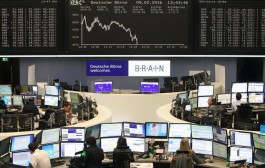












European stocks edged lower on Tuesday as investors awaited Washington's response to Iranian peace proposals, as well as monitoring earnings reports from several companies in the region.
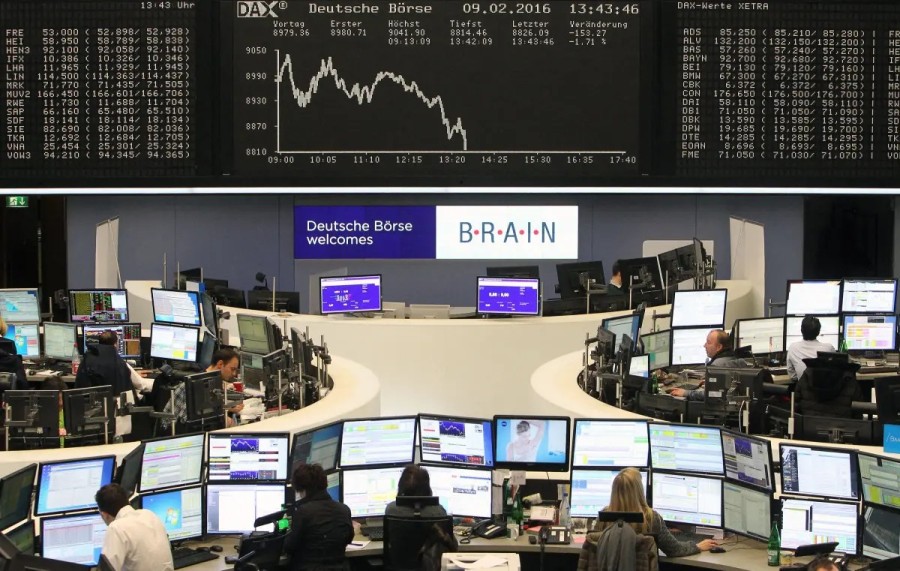
The pan-European STOXX 600 index fell 0.3% to 606.90 points, as oil prices rose.
At the level of major markets, Britain’s FTSE 100 index settled at 10,312.49 points, while Germany’s DAX index fell by 0.3% to 24,013.47 points, and France’s CAC index dropped by 0.2% to 8,118.20 points.
European markets are awaiting the release of earnings reports from several major companies, including Novartis, Airbus, BP and Barclays.
Barclays shares fell by about 2.7% after the British bank revealed it had incurred a loss of £200 million ($270 million) related to private credit activities, as a result of its exposure to troubled mortgage lender Market Financial Solutions.
Despite this, the bank announced pre-tax profits of £2.81 billion for the first quarter, up 3% from £2.72 billion in the same period last year, with a core capital ratio (CET1) of 14.1%.
The bank also unveiled a £500 million share buyback program, in addition to an existing £1 billion program, as part of a wider plan to return more than £15 billion to shareholders between 2026 and 2028.
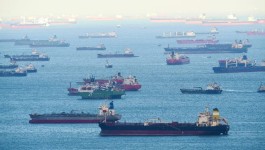
In a related context, investors are monitoring developments in the geopolitical situation, after the White House confirmed that US President Donald Trump and his national security team discussed an Iranian proposal to reopen the Strait of Hormuz in exchange for lifting the US embargo and ending the war.
According to media reports, the proposal includes postponing negotiations on the Iranian nuclear program to a later stage, while Trump's position remains unclear, as he has previously pledged not to lift the embargo before reaching a 100% complete agreement.
Amid continued uncertainty, oil prices continued to rise slightly during overnight trading, driven by concerns about supply disruptions as a result of developments in the two-month-long war.
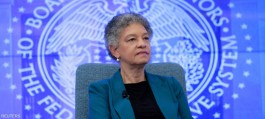
Global financial markets are focused this week on monetary policy decisions, with key meetings taking place at the US Federal Reserve, the European Central Bank and the Bank of England, as geopolitical conflict continues to reshape inflation and growth expectations.
The US Federal Reserve is scheduled to make its decision on Wednesday, in a meeting that could be the last for its current chairman, Jerome Powell, before Kevin Warsh takes over as head of the bank next May.
In a related development, the U.S. Department of Justice decided to end a criminal investigation that had targeted Powell, prompting Senator Thom Tillis to lift his objection to Warsh's nomination.
In Europe, both the European Central Bank and the Bank of England are expected to keep interest rates unchanged at their meetings this month, while leaving the door open to the possibility of raising rates later this year, given the continued inflationary pressures related to energy price volatility and the repercussions of the war.