


























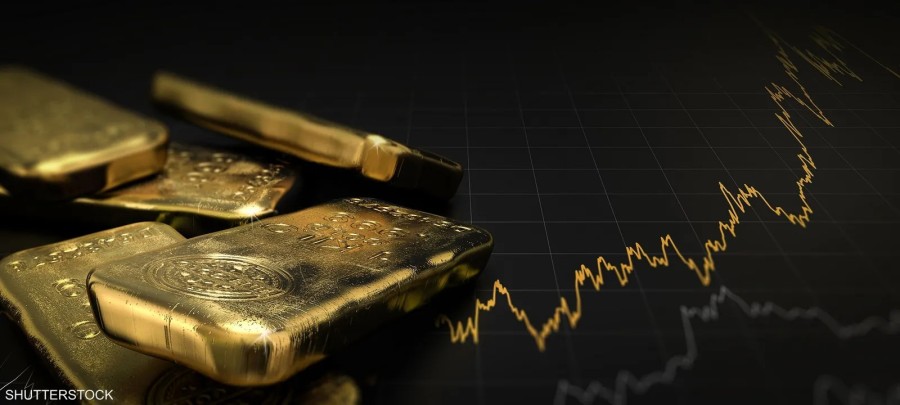


Gold prices rose on Wednesday to their highest level in nearly two weeks, supported by a decline in the dollar following comments by US President Donald Trump indicating that the war with Iran could end within a few weeks.
In contrast, the US dollar fell by 0.4%, making gold priced in US dollars less expensive for holders of other currencies, which supported demand for it.
Don't let geopolitical volatility in the world's most important shipping lane cause you to miss golden investment opportunities. Subscribe today to InvestingPro and get a comprehensive system that allows you to navigate confidently in a market that reprices risk with every development.
The impact of Trump's statements on the markets
Donald Trump said Tehran is not obligated to make a deal as a condition for ending the conflict, indicating that he will provide an update on Iran in a highly anticipated speech at 9 p.m. Eastern Time, 0100 GMT on Thursday.
Edward Meir, a market analyst at Marks, explained that talk of the war potentially ending within two to three weeks, even if the strait is not reopened, revived momentum in US stock markets overnight and contributed to pushing gold prices higher simultaneously.
This reaction reflects the markets' extreme sensitivity to any political developments related to the conflict.
Previous pressures are still influential
Gold saw a decline of more than 11% during March, its biggest monthly drop since October 2008, as a result of rising oil prices that boosted inflation fears and prompted markets to anticipate tighter monetary policies.
Meanwhile, oil prices continued to rise on Wednesday despite hopes of de-escalation, as damage to infrastructure is likely to keep supplies tight.
Christopher Wong, market strategist at OCBC Bank, said markets remain wary of over-interpreting the conciliatory statements, especially after previous rounds that seemed positive but ended without results.
Interest rate expectations and their impact on gold
Traders have almost completely ruled out any US interest rate cut this year, compared to previous expectations of two cuts before the outbreak of the war, according to Investing Saudi Arabia's interest rate forecast tracker.
Although gold is commonly used as a hedge against inflation and geopolitical risks, rising interest rates reduce its appeal, given that it is a non-yielding asset.
Wong noted that if geopolitical tensions subside further, expectations of interest rate cuts may return, which could lead to lower real yields and provide additional support for gold prices.
Gold at settlement yesterday
Gold prices rose at the close of trading on Tuesday, but recorded their deepest monthly loss since the financial crisis hit the global economy 17 years ago, as inflation fears and expectations of higher interest rates as a result of the war in the Middle East weighed on the precious metal.
Gold futures for June delivery rose 2.65%, or $121.10, to $4,678.60 an ounce, but fell 11.51% over the course of March.
Gold now
Gold rose 1% in spot trading to $4,717.82 an ounce, its highest level since March 20.
Meanwhile, US gold futures for April delivery rose 1.4% to $4,744.30.
Other metal movements
Silver prices in spot trading fell by 0.1% to $75 an ounce.
In contrast, platinum rose 1.4% to $1,975.74, and palladium climbed 1% to $1,487.26.