























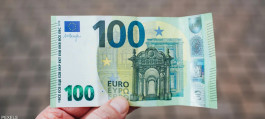


The euro fell in the European market on Monday against a basket of global currencies, for the first time in the last six days against the US dollar, moving away from its highest level in five weeks, due to profit-taking and corrective activity, in addition to renewed buying of the US currency as the best alternative investment, especially after the collapse of peace talks between the United States and Iran in Pakistan.
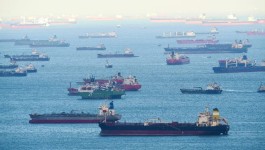
With the United States escalating threats to impose a naval blockade on the Strait of Hormuz and Iranian ports, global oil prices jumped by more than 10%, a development that brings back to the forefront fears of accelerating global inflation and increases pressure on central banks to take steps closer to raising interest rates in the near term.
Price overview
Euro exchange rate today: The euro fell against the dollar by 0.5% to ($1.1664), from Friday's closing price of ($1.1723), and recorded a high level during today's trading at ($1.1690).
The euro ended Friday's trading session up 0.2% against the dollar, its fifth consecutive daily gain, and hit a five-week high of $1.1740, ahead of the start of peace talks between the United States and Iran.
The euro gained 1.8% against the dollar last week, its second consecutive weekly gain and its biggest weekly gain since January, thanks to the agreement between the United States and Iran on a two-week ceasefire that includes opening the Strait of Hormuz to global shipping.
US dollar
The dollar index rose 0.5% on Monday at the start of the week's trading, beginning a broad recovery from one-month lows, reflecting the rise in the US currency against a basket of global currencies.
Apart from purchases from low levels, the US dollar rose due to fears of renewed war in the Middle East region, following the collapse of peace talks between the United States and Iran in Pakistan.
Shaul Kavonic, an analyst at MST Markit, said: The market is now largely back to where it was before the ceasefire.
Developments in the Iranian war
Talks between the United States and Iran in Islamabad ended in a deadlock, with Washington insisting on the complete dismantling of what remains of Iran’s uranium enrichment facilities, while Tehran demanded the immediate lifting of all economic sanctions before extending the truce.
Trump said the United States would impose a blockade on the Strait of Hormuz after peace talks with Iran failed, and ordered the U.S. Navy to enforce the blockade starting at 10 a.m. Eastern Time on Monday.
Trump believes that Iran will continue the dialogue, while Tehran seeks a balanced and fair agreement, while warning of a harsh response to the blockade and accusing the United States of being inflexible in the negotiations.
In the same context, the Wall Street Journal reported that Trump and his advisors are considering launching limited strikes on Iran.
global oil prices
Oil prices jumped more than 10% on Monday after US-Iranian talks failed to reach an agreement, leaving a fragile ceasefire hanging in the balance and continuing to choke off Middle East energy exports.
There is no doubt that rising global oil prices are renewing fears of accelerating inflation, which may prompt global central banks, especially the European Central Bank and the Bank of England, to raise interest rates in the near term, in a sharp departure from pre-war expectations of lowering or holding interest rates steady for a long period.
European interest rate
European Central Bank President Lagarde said the bank is prepared to raise interest rates even if the expected rise in inflation is short-term.
The money market's pricing of the likelihood of the European Central Bank raising European interest rates by about 25 basis points in April is currently stable around 35%.
Sources told Reuters that the European Central Bank is likely to begin discussing raising interest rates during its meeting this month.
In order to reprice the above probabilities, investors are awaiting further economic data from the Eurozone on inflation, unemployment and wage levels.