




































Global interest rates are experiencing a period of divergence, as central banks feel their way through an economic fog brought on by Donald Trump’s second year in the White House.
Bloomberg Economics said the tightening-easing cycle that followed the pandemic is giving way to a phase in which monetary policy paths in advanced economies diverge, predicting that interest rates will move in different directions for the world’s most traded currencies during the current year and beyond, with increasing uncertainty and volatility, often emanating from Washington, testing the nerves of central bank officials.
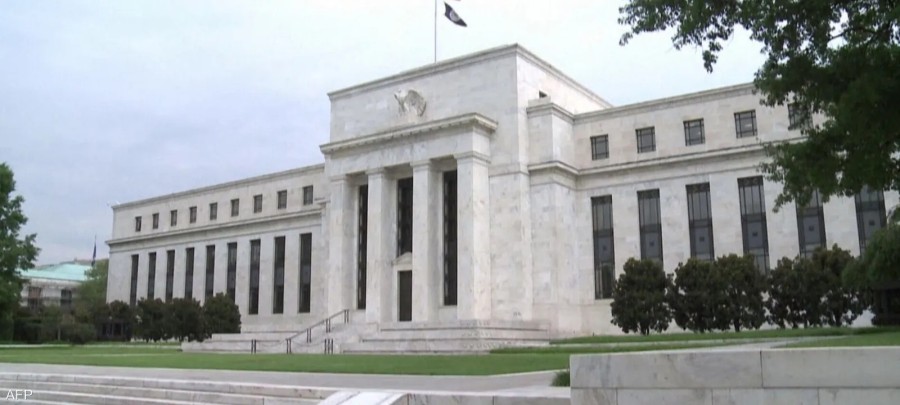
The Federal Reserve will be under more scrutiny than usual, as policymakers carefully gauge mixed signals from the U.S. economy, while also facing the prospect of a new chairman appointed by Trump, who has publicly criticized the bank, called for lower interest rates, and intensified legal pressure on it.
Major US interest rate cuts expected
Bloomberg Economics anticipates more easing from the Fed than the consensus view, which points to only two cautious cuts in 2026. Excluding the United States, the firm's composite measure of interest rates in advanced economies would end the year with little change, highlighting the extent of the expected divergence in monetary policies.
From potential rate hikes in Canada, Japan, and Switzerland, through steady borrowing costs in the Eurozone, to cuts in Australia and New Zealand, the trajectories of monetary policy – which were previously more consistent – may deviate significantly.
At the same time, central banks in emerging markets and elsewhere, from Brazil to Nigeria, are likely to cut interest rates significantly.
As with 2025, geopolitics, trade policies, and Trump’s unpredictability could easily confound forecasts. But with these caveats in mind, and as far as predictions are possible at present, here is the latest edition of Bloomberg Economics’ quarterly guide to 23 central banks around the world—collectively representing 90% of the global economy.
Central banks of the G7:
US Federal Reserve
The current federal funds rate (upper limit): 3.75%
Bloomberg Economics forecast for the end of 2026: 2.75%
Market forecast: Two quarter-point cuts this year, the first by June, and the second before the end of the year.
It appears the Federal Reserve will keep interest rates unchanged in January and take a more cautious approach this year, after cutting its benchmark interest rate at three consecutive meetings to end 2025.
Following the latest cut – which faced an unusual level of resistance within the bank’s monetary policy committee – Jerome Powell announced that those three cuts should be sufficient to stabilize the US labor market, while continuing to curb inflationary pressures.
The US economy continues to pull monetary policy in opposite directions, with net employment largely stalled while inflation remains above the Fed's target. Even Christopher Waller, a strong advocate for the three rate cuts, said in December that there was no urgent need for another cut in early 2025. Investors do not expect another cut before April.
Major questions loom for the Federal Reserve, as the U.S. Supreme Court is scheduled to hear later this month whether Governor Lisa Cook can remain in her position, while lower courts consider Cook's appeal against Trump's attempt to remove her over unsubstantiated allegations of real estate fraud. Her removal could deal a severe blow to the central bank's independence.
Then there is the anticipated announcement of Trump’s choice for the next Federal Reserve chair. Powell’s term ends in May, and Trump has hinted that the position is up for grabs between his longtime aide Kevin Hassett and former Fed Governor Kevin Warsh. Both have pledged to pursue lower interest rates and sweeping changes within the central bank. But both are also likely to struggle to maintain credibility with investors and Fed policymakers while simultaneously pleasing Trump.
If the economy fails to provide a clear reason for a rate cut, and the new Fed president exerts strong pressure to ease, the Federal Reserve could face a period of unprecedented internal division.
Another dramatic development occurred late Sunday evening when Powell revealed that the Federal Reserve had received grand jury subpoenas from the Justice Department, threatening a criminal indictment related to his previous testimony before Congress about the bank's headquarters renovation work.
Powell said in a written and video statement that this move should be understood in the broader context of the administration's threats and ongoing pressure.
European Central Bank
Current interest rate on deposits: 2%
Bloomberg Economics forecast for the end of 2026: 2%
Market outlook: Swap contracts indicate a slim chance of a mid-year interest rate cut, but investors expect the deposit rate to remain at 2% in December.
The European Central Bank has not changed its interest rate since June, keeping it at 2% after nearly halving borrowing costs in about a year. Data showing that inflation reached its 2% target in December reinforces policymakers' determination to avoid any disruption. Furthermore, forecasts released last month indicate that inflation will fall only slightly below this target in 2026 and 2027, leading most officials to be reluctant to take further action, though they will remain vigilant against global shocks.
Amid this pause in policy action, the focus may shift to other important issues, such as who will succeed the four members of the European Central Bank's executive board whose terms expire by the end of 2027. The first to leave will be Vice President Luis de Guindos, and the race to succeed him in June attracted six candidates from across the region.
Bank of Japan
Target interest rate (upper limit): 0.75%
Bloomberg Economics forecast for the end of 2026: 1%
Market outlook: Traders predict a quarter-point increase by June, and a 70% probability of a second increase by the end of the year.
Bank of Japan Governor Kazuo Ueda is likely to return to a wait-and-see approach this quarter after raising borrowing costs last month to their highest level in three decades. Despite Ueda's hints that further interest rate hikes are forthcoming, the yen remains weak, trading near levels that previously prompted intervention by Japanese financial authorities.
Any further currency depreciation could accelerate interest rate hikes compared to the anticipated pace of monetary policy tightening, which typically occurs roughly every six months. Political dynamics also play a role, as Prime Minister Sanae Takaichi—known for her preference for monetary easing—will have her first direct opportunity to influence the composition of the nine-member policy council, with one member's term ending at the end of the current quarter.
Bank of England
Current interest rate: 3.75%
Bloomberg Economics forecast for the end of 2026: 3.5%
Market expectations: Money markets are pricing in a 25 basis point cut by June, and giving an 80% probability of another cut by December.
The Bank of England indicated that it is nearing the end of its interest rate-cutting cycle, with officials warning that decisions to further reduce borrowing costs will be met with greater hesitation in 2026.
Governor Andrew Bailey said the Bank of England now has more limited room to cut interest rates, after lowering its benchmark rate to 3.75% ahead of Christmas.
While recent data suggests that price growth, the economy, and the labor market are all weakening, the Bank of England believes it is nearing the neutral level for interest rates—the point at which interest rates neither boost nor curb inflation. Economists and markets expect one or two further quarter-point cuts before borrowing costs stabilize. However, some analysts anticipate policymakers will go further, given the weak economic backdrop.
Bank of Canada
Current overnight lending rate: 2.25%
Bloomberg Economics forecast for the end of 2026: 2.5%
Market outlook: Swaps are pricing in interest rates remaining largely stable until the last quarter, and estimate a 60% probability of a quarter-point increase.
The Bank of Canada held its key interest rate steady at 2.25% in December, a level policymakers believe is appropriate to help the economy cope with the impact of U.S. tariffs. Inflation remains close to the 2% target, and while core inflation indicators are still above that level, officials expect weak growth to keep price pressures in check.
Governor Tiff McCollum indicated that his colleagues are comfortable with holding borrowing costs steady unless there are major shifts in inflation and growth, and officials have made it clear that they see fiscal policy as the most appropriate tool to offset the occasional shock from the trade war.
With population growth slowing rapidly, billions of dollars in spending announced last year in Prime Minister Mark Carney’s first budget, and large upward revisions to the size of the economy, the central bank will also have to provide a new assessment of the scale of the economic slowdown in the coming months.
Central banks of the BRICS countries:
People's Bank of China
The current 7-day reverse repurchase rate is: 1.4%
Bloomberg Economics forecast for the end of 2026: 1.2%
China has kept its central bank on the sidelines in managing an economy plagued by weak demand and deep imbalances through 2025, and this approach is likely to continue. Authorities are seeking to address challenges such as deflation and weak consumer confidence by increasing government spending, while extensive monetary easing is seen as ineffective given the reluctance of households and businesses to borrow.
After the People’s Bank of China implemented its smallest interest rate cut since 2021 last year, it is expected to maintain its cautious approach in 2026, with a total reduction in borrowing costs of around 20 basis points. It is likely to use various tools, including lowering the reserve requirement ratio for banks, to maintain ample liquidity in the economy.
Reserve Bank of India
Current repurchase rate: 5.25%
Bloomberg Economics forecast for the end of 2026: 5%
The Reserve Bank of India cut its repurchase rate in December to its lowest level in more than three years, after inflation had remained below 1% for several months, as policymakers sought to support demand amid the impact of punitive US tariffs on Indian goods.
Bank Governor Sanjay Malhotra said in a televised address: “The balance between growth and inflation, and in particular the positive inflation outlook at both the headline and core levels, still provides ample room to support growth momentum.”
The Reserve Bank of India subsequently injected significant liquidity into the bond markets to further reduce borrowing costs. The bank expects economic growth to reach around 7% in the fiscal year ending in March, with inflation remaining subdued. However, the delayed signing of a trade agreement with the United States and the continued imposition of 50% tariffs have prompted policymakers to adopt a more cautious, data-driven approach to policymaking in 2026.
Brazilian Central Bank
Selik's current target key interest rate is 15%
Bloomberg Economics forecast for the end of 2026: 11%
Brazil's central bank kept its benchmark interest rate unchanged at a level near its highest in almost two decades in its final decision of 2025, without providing clear signals about when it might begin easing monetary policy. Policymakers, led by Gabriel Gallipolo, are adopting a data-driven approach, given the slowing economic growth and the gradual decline in inflation within acceptable limits.
The continued low unemployment rate and inflation expectations remaining above the 3% target until 2028 are prompting caution among council members. President Luiz Inácio Lula da Silva's fiscal policy is also a source of concern, given the likelihood of increased public spending during the 2026 election year.
Analysts are currently divided on when interest rate cuts will begin, with some predicting a January start, while others anticipate easing will begin in March. Gallipolo has confirmed that the central bank is not closing any doors when it comes to policy.
Bank of Russia
Current key interest rate: 16%
Average economist forecast for the end of 2026: 12%
Policymakers in Russia are closely monitoring the inflationary impact of raising the value-added tax to 22% from 20%, which came into effect this month, before deciding whether to continue cutting the key interest rate at the Russian central bank’s first meeting of the year, scheduled for February 13.
Despite the sharp slowdown in price growth in recent months, the central bank expects a temporary acceleration in inflation at the beginning of 2026, and has made it clear that continued high inflation expectations among households and businesses will affect its interest rate decisions.
South African Reserve Bank
Current average repurchase rate: 6.75%
Bloomberg Economics forecast for the end of 2026: 6.5%
The South African Reserve Bank is poised to extend its monetary easing cycle after two-year inflation expectations, a key factor in determining borrowing costs, fell to a record low of 3.7%, bolstering confidence in its new target of keeping consumer price growth at 3%.
The January 29 meeting will be the second since Finance Minister Enoch Godongwana formally adopted this target, a move that has long been supported by central bank officials. Policymakers resumed cutting interest rates at the November meeting, reducing borrowing costs by 25 basis points.
Governor Lesiga Kganyago said after the decision that he and his colleagues agreed there was room to ease monetary policy tightening given the improved inflation outlook, supported by the strength of the rand and lower oil prices.
Other central banks within the G20:
Bank of Mexico
Current overnight interest rate: 7%
Bloomberg Economics forecast for the end of 2026: 6%
The Bank of Mexico is moving to temporarily suspend its interest rate cut cycle before resuming its monetary easing path later in 2026. The board justifies this by saying that the strength of the peso and the slowdown in the pace of economic activity will help to ease pressures on consumer prices in the coming period.
Most policymakers also expressed satisfaction that inflation remained slightly above the 3% target, within the one percentage point margin allowed for deviation. Current projections indicate that the central bank is close to achieving its inflation target by the third quarter of 2026.
Conversely, the recently approved tax increases, along with new customs duties imposed on more than 1,400 goods, mostly imports from Asia, represent potential drivers of rising inflation that could test the central bank's expectations in the next phase.
Turkish Central Bank
Current one-week repurchase rate: 38%
Bloomberg Economics forecast for the end of 2026: 27.5%
The Turkish central bank is expected to continue its interest rate cuts throughout 2026, benefiting from a slowdown in inflation that fell to just under 31% year-on-year in December. However, economists are urging caution regarding the pace of the cuts, given the wide divergence between their forecasts and the central bank's projections for price growth by the end of 2026.
Monetary policymakers aim to halve inflation by the end of the year, while current analyst forecasts indicate it will remain above 20%, with close monitoring of food and energy price developments.
Meanwhile, the replacement of the hardline deputy governor, Cevat Akçay, who is scheduled to retire in April, stands out as a key factor to be closely watched in the coming months. The central bank recently recruited Murat Taşçı, a former economist at JPMorgan Chaz and the Federal Reserve Bank of Cleveland, appointing him chief economist—a position that had been vacant since 2019.