






























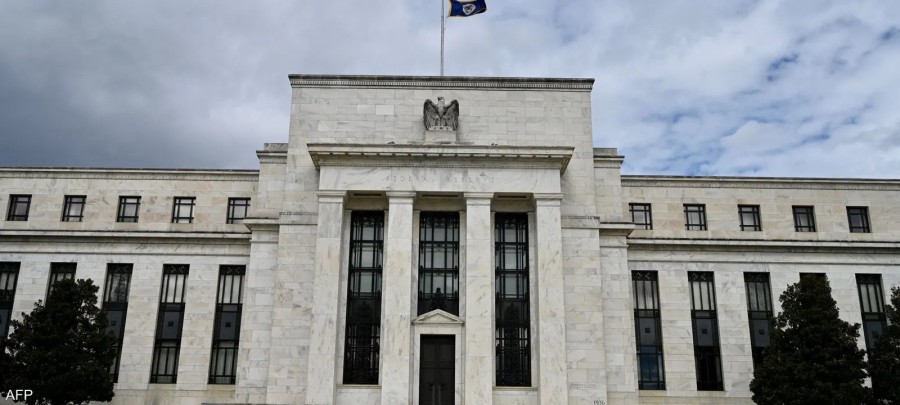


Austan Goolsbee, president of the Federal Reserve Bank of Chicago, revealed in new statements that the stability of the US labor market is currently pushing him to focus on the most important question for monetary policymakers, which is whether high inflation will continue for a long time or will gradually decline as the impact of high tariffs recedes and tensions in the Middle East subside.
During an interview with the radio program Market Place on Monday, Goolsbee said that the Federal Reserve still faces an inflation problem that is far above the target level, noting that the price trajectory during the past period has not been moving in the desired direction.
He added that the main issue currently occupying his thoughts is determining whether the factors that have driven inflation up are temporary in nature, or whether they will continue for a longer period and hinder a return to the 2% target.
He explained that the Federal Reserve has pledged to bring inflation back to this level, which makes assessing the sustainability of price pressures a top priority at the present stage.
There is consensus within the Federal Reserve regarding caution.
Federal Reserve Chairman Kevin Warsh stated last week that none of the central bank's 19 members supported raising interest rates during the June meeting.
Goolsbee did not disagree with this characterization, and he agreed with Warsh on the need for the Federal Reserve to refrain from providing advance guidance to markets about the likely path of future interest rates.
This trend reflects the desire of monetary policymakers to maintain the flexibility needed to deal with changing economic data and not to restrict their decisions with prior expectations.
But despite this caution, Goolsbee made it clear that the risk of inflation remained a major concern for him and a number of central bank officials.
According to the US interest rate monitoring tool available on Investing Saudi, the probability of an interest rate hike during the December meeting has risen to 88%, compared to only 61% before last week’s Federal Reserve meeting.
Inflation figures are raising concerns
Goolsbee noted that the Consumer Price Index, one of the most popular measures of inflation, rose by 4.2% in May compared to the same period last year.
He also noted that the personal consumption expenditures index, the Federal Reserve's preferred measure for tracking inflation, rose 3.8% in April, according to the latest available reading.
He stressed that the fundamental question that policymakers must answer is whether current inflation rates, which are between 3% and 4%, will remain at these levels or whether there are natural reasons that will cause them to decrease over time.
He added that determining the nature of these inflationary pressures is a crucial factor in charting the course of monetary policy in the coming months.
He explained that this is one of the most important issues in his personal assessment of the current economic situation.
The expansion of services raises concerns
Goolsbee noted that one of the aspects that most worries him is the continued rise in inflation in the services sector.
He explained that this type of inflation is not directly related to the rise in oil prices resulting from the war with Iran, nor is it significantly related to the increase in commodity prices resulting from customs duties.
He added that there are some indicators that support the hypothesis of a decline in inflation in the future, including that part of the price pressures came as a result of customs duties, which are factors whose impact is supposed to be temporary and non-recurring.
He also noted that reaching a settlement to the conflict in the Middle East could help alleviate energy-related inflationary pressures, which could help reduce overall inflation rates.
Why is the Federal Reserve concerned about services?
Despite factors that could push inflation down, Goolsbee stressed that continued price pressures in the services sector are a greater concern.
He explained that inflation in the services sector is historically known to be more persistent and harder to reverse than inflation in the goods sector.
He added that the perception of inflation taking root in this sector makes it difficult to be confident that the current wave of price increases will disappear automatically in the coming period.
He concluded his remarks by emphasizing that monitoring developments in services inflation will remain one of the most important factors that will determine the Federal Reserve’s stance on interest rates during upcoming meetings, as the central bank seeks to bring inflation back to its target level without harming labor market stability or economic growth.