










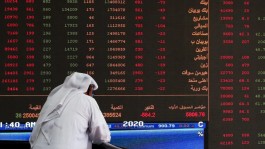
























Oil prices fell as investors assessed the prospects for a nuclear deal between the United States and Iran, with further negotiations on the issue expected later this week, while U.S. forces massed in the Middle East.
Brent crude prices fell to around $71 a barrel after closing virtually unchanged on Friday, even after US President Donald Trump said he was considering a limited military strike against Iran. West Texas Intermediate crude also declined on Monday.
Iranian Foreign Minister Abbas Araqchi told CBS on Sunday that there is a good chance of reaching a win-win diplomatic solution, and that the solution is within reach. He added that he expects to meet with US Special Envoy Steve Wittkopf for talks in Geneva.
Fears of conflict with Iran are supporting prices.
Oil prices rose at the start of the year, despite general expectations of a global surplus, as concerns about a US conflict with Iran helped push prices higher.
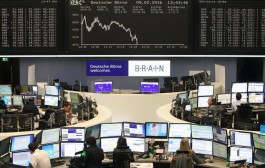
Traders rushed to take precautionary measures against the possibility of escalating tensions, leading to increased activity in the futures and options markets.
Harris Khurshid, chief investment officer at Carobar Capital, said: “Markets can tolerate headlines, but they will not ignore the loss of supply.”
He added: If exports from Iran are affected or there is a credible intervention in the Strait of Hormuz, which is very likely if things get worse, that is when oil prices quickly reassess themselves.
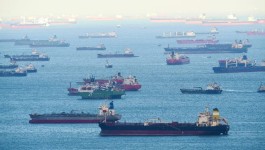
The Strait of Hormuz is a narrow waterway separating Iran from the Arabian Peninsula, and tankers carrying oil and liquefied natural gas pass through it daily to deliver shipments worldwide. However, Tehran would only need to disrupt these flows, rather than impose a complete blockade of the strait, to impact global oil markets.
Saudi Arabia, Iraq and Kuwait ship oil through the Strait of Hormuz, with the vast majority of their shipments heading to Asia, while Iran pumps more than 3 million barrels per day of crude oil, or about 3% of global production, with most of the flows going to China.
Brent crude spot price differential narrows despite escalating tensions
Despite concerns about escalating hostilities in the Middle East, the spot spread for Brent crude, i.e., the difference between its two nearest contracts, has narrowed in a bullish backwardation structure.
This widely watched indicator was at 41 cents a barrel on Monday, compared with more than a dollar at the end of January.
Khurshid of Carobar Capital said: Watch the time differences, watch diesel/gas oil inventories, and OPEC's discipline. If the product markets tighten or the curve moves toward a sharper decline, that tells you it's real.
In the latest trading, Brent crude futures for April settlement fell 1% to $71.02 a barrel at 3:06 p.m. in Singapore, while West Texas Intermediate crude futures dropped 1.1% to trade at $65.74 a barrel.