



































Oil prices rose as traders assessed the prospects for a nuclear deal with Iran, at a time when US President Donald Trump said he preferred a diplomatic solution, but warned of consequences if no agreement was reached.
Brent crude rose to near $72 a barrel after closing slightly lower on Monday, while West Texas Intermediate crude traded at around $67.
Trump said in a social media post that it would be a very bad day for Iran if a deal was not reached, and he dismissed reports that the Pentagon was concerned that a prolonged military campaign could be difficult.
Negotiations on a nuclear agreement are scheduled to resume on Thursday in Geneva, where Trump's special envoy Steve Wittkopf and his son-in-law Jared Kushner are expected to meet again with Iranian Foreign Minister Abbas Araqchi.
Geopolitical risk premium
Fears of the fallout from a possible US strike on Iran have helped push futures higher this year, despite expectations of a global supply glut.
The United States has amassed military forces in the Middle East, and on Monday the State Department ordered the evacuation of non-essential personnel from its embassy in Beirut.
Saul Kavonic, senior energy analyst at MST Marquee, said: “Oil markets are on tenterhooks awaiting developments in the Iranian situation, with a healthy degree of skepticism toward any rhetoric calling for de-escalation.” He added that the US military buildup has added a risk premium of about $10 per barrel to prices.
The Strait of Hormuz is in the spotlight
Any potential disruption by Tehran to shipping through the Strait of Hormuz remains a key focus for the oil market, should the United States proceed with a military strike.
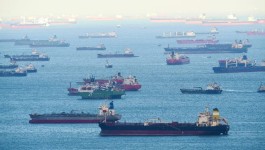
Tankers carrying crude oil and liquefied natural gas pass through this narrow waterway daily to deliver shipments to customers around the world.
The recent closure of parts of the Strait of Hormuz due to Iranian military maneuvers has contributed to a rise in the chartering rates of giant oil tankers.
Chartering a very large crude carrier (VLCC) for a year currently costs more than $92,000 per day on average, according to data from Clarksons Research Services Ltd., the highest level in available data since 1988.
In the latest trading, Brent crude futures for April settlement rose 0.5% to $71.83 a barrel at 1:04 p.m. in Singapore, while West Texas Intermediate crude futures for April delivery rose by the same percentage to trade at $66.65 a barrel.