



















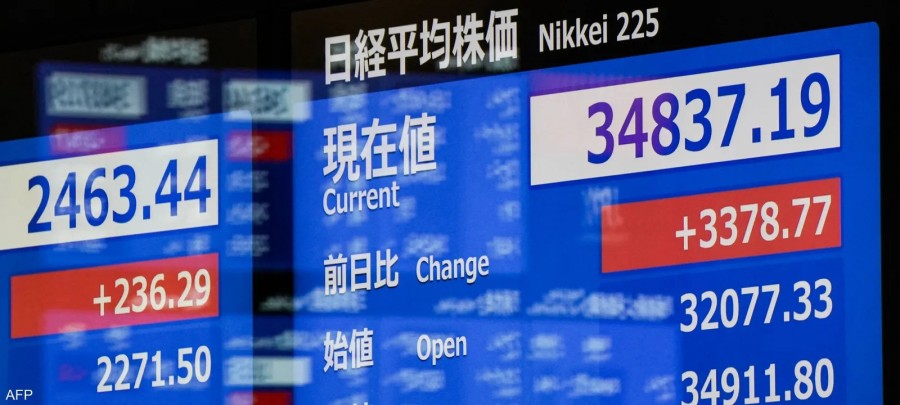


Nvidia's optimistic sales forecast boosted Asian stocks and US stock futures, reinforcing optimism that the AI stock rally this year still has room to run. Shorter-term US Treasury bonds fell as traders increased their bets on an interest rate hike.
The MSCI Asia Pacific Index rose 0.5%, with semiconductor maker SK Hynix and Samsung Electronics leading the gains. The Kospi, a leading index for artificial intelligence investments, climbed 2.2%.
Futures for the Nasdaq 100, which is dominated by technology stocks, rose 0.9% after Nvidia pointed to strong sales growth extending to 2028. The company's stock jumped 4.7% in extended trading, helping to lift other AI-related stocks, such as Marvel Technology and SanDisk.
Caution remained in the bond markets as traders increased their bets on a Federal Reserve interest rate hike this year, after a key U.S. inflation gauge stayed above the central bank's target. The yield on the two-year Treasury note rose one basis point to 4.22%, as the entire financial markets priced in an interest rate increase by December.
Nvidia's forecast provided further evidence that spending on AI infrastructure remains robust, easing concerns that the investment boom is losing momentum. The optimistic outlook comes at a time when investors are increasingly scrutinizing whether the massive AI spending can sustain earnings growth after a volatile period for technology stocks.
Ivan Vincith, chief investment officer and head of research at Tigress Financial, said: “The results provide further support for my optimistic outlook on AI investment and the wider technology sector.”
He added: The AI infrastructure cycle is still in an early to mid-stage, rather than being close to its peak.
Nvidia's chief financial officer, Collette Kriss, said during a conference call following the results announcement that the company expects revenue growth of about 70% in fiscal year 2028. Analysts expect an increase of about 45% for that year, according to data compiled by Bloomberg.
The war in Ukraine is putting pressure on wheat prices.
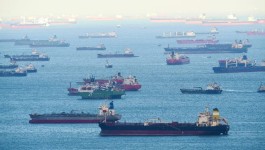
Elsewhere, wheat futures hit a three-year high as continued attacks on ships and infrastructure in the Black Sea region restrict shipments from Russia, one of the world's largest food baskets, reigniting fears of soaring food prices.
Gold rose 0.8% to over $4,625 an ounce, while Brent crude traded at around $87.40 a barrel. The South Korean won strengthened against the dollar after the country's central bank raised interest rates for the second consecutive time to curb inflation risks.
Bonds in Australia, New Zealand, and Japan fell as expectations grew that their central banks would tighten monetary policy to curb inflation. Overnight swaps indicated that the Reserve Bank of Australia would raise its official cash rate this year, while tightening in New Zealand could come as early as next week.
Bank of Japan Deputy Governor Ryozo Himino left the door open to raising interest rates next month in a speech on Thursday, without explicitly objecting to growing market expectations of such a move.
Australian three-year bond yields rose seven basis points to 4.67%. New Zealand two-year bond yields climbed six basis points to 3.60%. Japanese two-year bond yields edged up one basis point to 1.695%.
Look forward to the Jackson Hole symposium
Investors also received a fresh reading of US inflation on Wednesday. The core personal consumption expenditures price index, which excludes food and energy, rose 0.2% from the previous month and 3.3% from a year earlier. Inflation-adjusted consumer spending was unchanged after increases in May and June.
All eyes are now on the Jackson Hole Economic Symposium. Kevin Warsh will deliver his first major speech as Federal Reserve Chairman, giving investors fresh clues about the outlook for monetary policy after facing criticism for a lack of clarity regarding his views on the economy.
“What matters here is not a simple judgment on whether it is hawkish or accommodative, but how it balances inflation, employment, long-term bond yields and the credibility of the Federal Reserve,” wrote Dellen Wu, a strategist at Pepperstone Group Ltd, in a note.
He added: If market anxiety about a policy mistake increases, that could continue to put pressure on US stocks.