







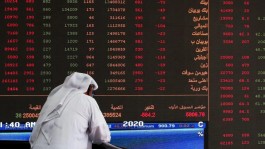

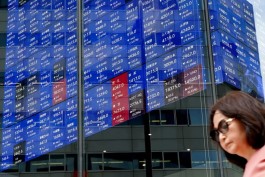
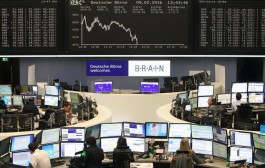












Asian stocks extended their losses and oil prices rose as the Iranian-backed Houthis entered the Middle East conflict and the US military presence expanded, raising fears of a protracted confrontation. Meanwhile, government bonds rose.
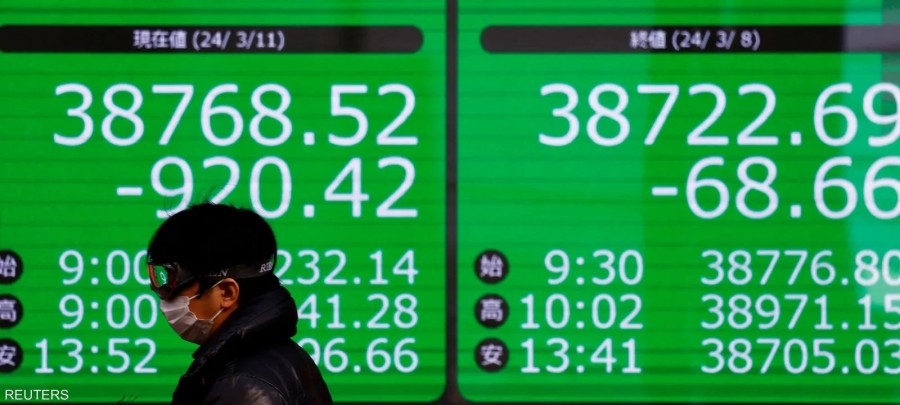
South Korea's benchmark index fell as much as 5.3% as technology stocks tumbled, while Japan's Nikkei 225 index dropped 4.6% as some companies traded without dividend payouts.
A benchmark for Asian stocks also fell to its lowest level this year, amid concerns that high oil prices will negatively impact economic growth. Futures contracts for stock indices suggest that losses will extend to the United States and Europe.
Oil and minerals lead the moves
Brent crude rose 3.3% to trade above $116 a barrel, bringing its year-to-date gains to nearly 90%, as the conflict widened into its fifth week. Aluminum also climbed as much as 6% after Iran attacked two production sites in the Middle East.
These renewed market turmoil coincided with the arrival of additional US troops in the Middle East, raising fears of a risky ground attack on Iran. The Wall Street Journal reported that US President Donald Trump is considering a military operation to extract uranium from Iran, but has not yet made a decision on whether to authorize it.
Hebei Chen, senior market analyst at Vantage Global Prime, said markets had spent a month pricing in a short, limited conflict. She added: “That wishful optimism collapsed with the Houthis’ advance over the weekend. The rules of the game are now being rewritten as of this week, with the likelihood of a protracted war increasing.”
A shift in investor sentiment
After weeks of resilience amid sharp volatility stemming from oil market turmoil, high-risk assets have begun to show signs of weakening in recent sessions. Traders are also assessing the impact of persistently high energy costs on global growth and whether this will prompt policymakers to keep interest rates elevated for longer.
Meanwhile, Trump said his country was having good negotiations with Iran, and that Tehran had given the United States most of the fifteen demands it had sent to Tehran to end the war, even though Iran had publicly rejected the list.
Yugo Tsuboi, chief strategist at Daiwa Securities, said: “These American claims are often denied by the Iranian side, which maintains that no negotiations are underway. It would be much more reassuring to receive clearer confirmation from Iran that it is indeed engaged in negotiations with the United States.”
Expectations of a global economic slowdown
Garfield Reynolds, head of Bloomberg Markets Live's Asia team, said stocks will continue to decline this week as the fallout from the Iran war spreads across various sectors.
He added: Bonds have the potential to outperform as supply shocks widen, highlighting the possibility of a sharp slowdown in global economic growth.
Conflicting statements are adding to the pressure on US stock markets. The S&P 500 fell 3.4% over Thursday and Friday, its biggest two-day drop this year, leaving it more than 8% below its January high. The Nasdaq 100 also fell over the same two days, entering a 10% correction.
The yen rose against all currencies after Japan's currency official, Atsushi Mimura, said his country might take decisive action in the foreign exchange market if the current situation continues.
Bonds rise amid recession fears
US Treasury bonds rose, with the yield on the benchmark 10-year note falling three basis points to 4.40%.
Some Wall Street bond fund managers believe that markets are underestimating the risk that a US war in Iran could lead to a sharp slowdown in an already fragile economy. Government bonds in Australia and Japan also rose.
At firms such as Pimco, JPMorgan Chase and Columbia Threadneedle Investments, money managers are preparing for an economic impact that could ultimately lead to a bond market rebound and lower yields.
Economists have begun to lower their growth forecasts and raise the likelihood of recession, as rising energy prices, borrowing costs, and falling stocks impact businesses and consumers.
Goldman Sachs said the probability of an economic downturn in the coming year has risen to about 30%, while Pimco believes the probability exceeds one-third.
Oil scenarios are putting pressure on markets
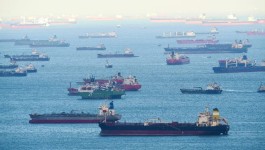
Macquarie Group has warned that oil prices could reach $200 a barrel if the Iran war continues into June and the Strait of Hormuz remains closed.
Analysts, including Vikas Dwivedi, said that a conflict extending into the second quarter would lead to historically high real price levels, in a scenario with an estimated probability of about 40%. In an alternative scenario with a 60% probability, the war could end by the end of this month.
Wei Kun Chung, chief strategist at BNY in Hong Kong, said: Market behavior reflects a clear shift towards capital preservation.
He added: Assets that have recently outperformed are more susceptible to profit-taking and position unwinding, however, flows are unlikely to shift significantly to fixed income, amid concerns about rising inflationary pressures.