










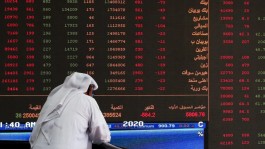


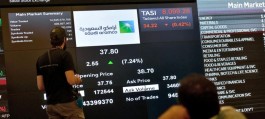


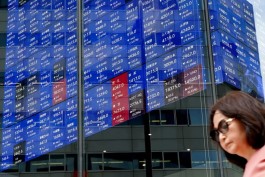


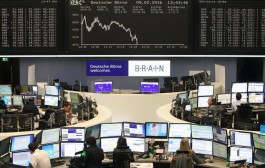














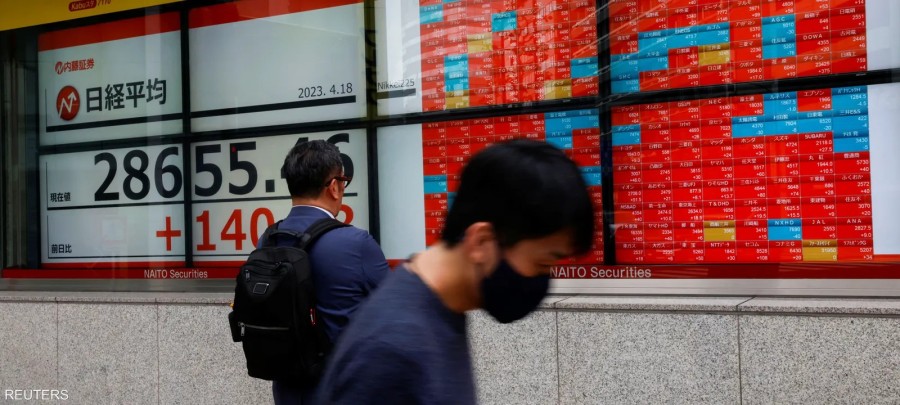


Asian stocks rose for a third day after positive momentum boosted gains on Wall Street, suggesting that the anticipated year-end rally in global stocks is beginning to take hold.
The MSCI Asia Pacific Index rose 0.6% on Tuesday, after the global stock index hit a new record closing high.
US stock futures also rose slightly in Asian trading, after the S&P 500 index added 0.6% overnight.
In the commodities markets, gold continued its rise to achieve a new record level, marking the fiftieth day it has broken records this year.
The Japanese yen remained a major focus for currency traders, rising for the second day and surpassing the 157 yen level against the dollar.
This came after Finance Minister Satsuki Katayama said in an interview that the country has complete freedom to take bold action regarding currency movements.
These remarks constituted the strongest warning yet to speculators, following the yen's decline to 157.78, even after the central bank raised interest rates on Friday.
As the yen's recovery extended, the dollar index continued its decline after falling 0.4% on Monday.
Positive momentum extends from Wall Street to Asia
Rodrigo Catril, currency strategist at National Australia Bank, said the positive risk sentiment that prevailed in the New York session is now extending into the Asia-Pacific morning session.
He added: We are in a quiet trading environment ahead of the Christmas holiday, but at the moment the most likely trend is for the US dollar to continue weakening.
Positive sentiment among equity investors helped the S&P 500 erase its December losses overnight, putting it on track for its eighth consecutive month of gains, which would be its longest winning streak since 2018. Tesla and Nvidia led the gains in major stocks.
The market expects the upward trend to continue in 2026.
After a strong year for stocks, the big question remains whether investors will carry this positive mood with them into 2026.
Investment positions in stocks continue to rise, while fund managers maintain record low levels of cash liquidity.
Their expectations of continued gains outweigh concerns about soaring technology stock valuations. Investors are also closely monitoring the Federal Reserve's monetary policy path, with two interest rate cuts expected next year.
Federal Reserve Governor Stephen Miran said in an interview with Bloomberg Television that the central bank risks triggering an economic recession unless it continues to cut interest rates next year.
Ken Wong, an Asian equity portfolio specialist at Eastspring Investments in Hong Kong, noted in an interview with Bloomberg Television that although we have seen some pullback and a bit of AI-related fatigue, we believe 2026 is still poised to be fairly strong, as companies in general are still spending heavily on AI-related capital expenditures.
Chinese stocks decline
Chinese stocks underperformed their Asian peers after Citigroup analysts downgraded their ratings, citing less positive earnings revisions and a subdued macroeconomic outlook. Conversely, the team upgraded Taiwan's rating to overweight from neutral, citing its deep integration into global AI supply chains.
In a separate development, the U.S. Federal Communications Commission said it would ban most foreign-made drones and their key components, one day before the deadline to include Chinese drone maker SZDGI Technology on its Entity List.
Elsewhere, oil prices stabilized after four days of gains, as the United States continued to block crude shipments from Venezuela.
Brent crude settled near $62 a barrel after rising about 5% over the previous four sessions, while West Texas Intermediate crude approached the $58 level.
The United States had seized two oil tankers and was seeking to pursue a third, as Washington intensified pressure on the government of Nicolas Maduro.