









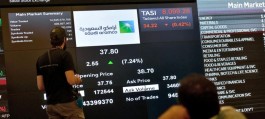



















Oil prices surged as the threat of a war with Iran disrupted shipping lanes, fueling inflation fears that weighed on bonds, while the likelihood of a US interest rate cut diminished. The dollar strengthened, and US stocks erased their losses.
Figures showing expansion in the US manufacturing sector, driven by a surge in input prices, also impacted Treasury bonds. Ten-year yields headed for their biggest gain since April.
The S&P 500 was little changed after falling more than 1% earlier in the day. Energy and defense stocks rose, shares of several well-balanced technology companies rebounded, and airline stocks declined. Gold surpassed $5,300.
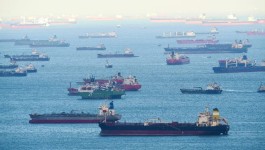
Near-complete halt of traffic through Hormuz
The near-complete halt of traffic through the Strait of Hormuz and the attempted attack on a major Saudi refinery highlighted the threats to oil supplies. West Texas Intermediate crude jumped 6.3% to settle at $71.23, and European natural gas prices rose after Qatar shut down the world's largest liquefied natural gas export terminal.
Currently, the global economy appears capable of absorbing a moderate and temporary rise in energy prices, but fragility remains, according to Seema Shah in Principal Asset Management.
She said: Inflation has declined but remains above central bank targets, and a continued rise in oil prices would put new pressure on consumers, while potentially delaying the expected interest rate cut.
As the repercussions of US and Israeli strikes on Iran reverberated throughout the Middle East, President Donald Trump called on the country's leaders to surrender, while the head of Iran's security apparatus ruled out negotiations. US Defense Secretary Pete Higseth dismissed the idea of endless war.
The recovery in major stock indices from session lows suggests that the market, for the time being, sees the conflict as a geopolitical risk associated with it, but one that remains financially contained in the near term, according to Antonio Di Giacomo at XS.com.
Financial market forecasts
The yield on 10-year Treasury notes rose 10 basis points to 4.04%. Traders are now fully pricing in the Federal Reserve's first rate cut in September, with bets on a third cut in 2026 fading. The dollar rose 0.7%.
Ryan Detrick of Carson Group said: “We believe the market has already priced in the possibility of a month-long conflict, which could limit the size of any further move and could trigger a faster recovery when the market sees a possible path to resolution.”
Strategists at Morgan Stanley, led by Mike Wilson, believe that the conflict in the Middle East is unlikely to derail their optimistic outlook on US stocks, unless there is a sharp and sustained rise in oil prices.
For his part, veteran strategist Louis Naveller noted that, in the end, military action on Iran should remove the great uncertainty in the world, and the stock market is expected to see a comfortable recovery with the emergence of a new pro-Western leadership in Iran and the resumption of crude oil exports.
According to strategists at JPMorgan Chase & Co., led by Mislav Matejka, the current geopolitical escalation should ultimately be a buying opportunity in stocks as the fundamentals remain positive.
At the same time, Laurie Calvasina says investors should be wary of relying too heavily on studies that always suggest buying stocks after geopolitical conflicts.
RBC Capital Markets added that evidence of recoveries does not always reflect the risks surrounding wider wars.