










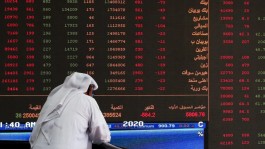


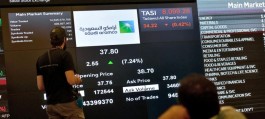



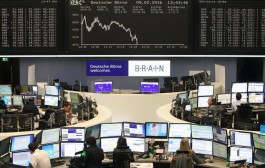









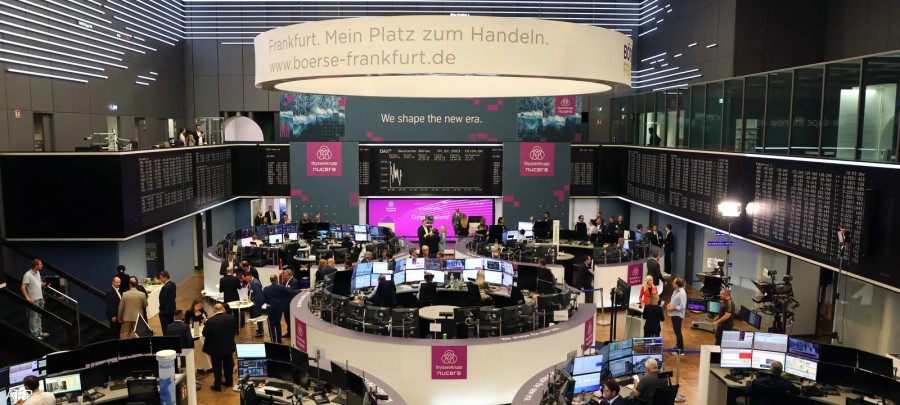


European stock markets opened broadly lower on Thursday, as investors took a cautious stance ahead of a series of central bank interest rate decisions and monitored developments in the Middle East.
Markets are bracing for monetary policy announcements from the European Central Bank and the Bank of England during the session, both of which may offer new insight into how central bank officials view the impact of the war in Iran on economies across Europe.
The European Central Bank and the Bank of England are expected to leave interest rates unchanged, mirroring similar moves by a host of other policymakers on Wednesday. The Federal Reserve, the Bank of Japan, and the Bank of Canada all kept their rates steady but indicated that inflationary pressures could intensify if a joint US-Israeli attack on Iran escalates into a protracted conflict.
However, policymakers face the difficult task of balancing these concerns about price growth without triggering broader economic growth, a situation similar to what they faced during the energy shock following Russia’s large-scale invasion of Ukraine in 2022.
Fears of stagflation, a trend of stagnant economic activity and high inflation, have increased as a result. Traders have adopted a more risk-averse approach, lowering their expectations for immediate interest rate cuts, selling off equities, and moving towards the US dollar.
Oil jumps above $110 a barrel
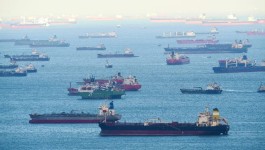
Meanwhile, oil prices rose again, with Brent crude futures – the global benchmark – climbing above $110 a barrel.
Iranian attacks on energy facilities in the Middle East, including the vital South Pars gas field, have triggered the new surge.
Supply risks continue to grow in energy markets amid an escalation of attacks on energy infrastructure in the Persian Gulf, analysts at ING said in a note.
By 9:59 a.m. (12:59 p.m. Saudi time), Brent crude futures had jumped 6.0% to $113.74 a barrel, while U.S. West Texas Intermediate (WTI) crude futures rose 1.0% to $96.26 a barrel. WTI is trading at its largest discount to Brent in more than a decade, partly due to the release of U.S. strategic petroleum reserves.