





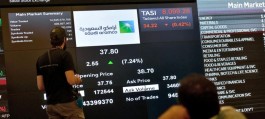

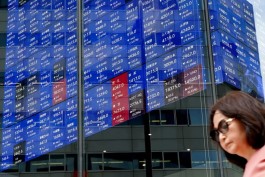








Oil prices fell and global stocks rose, amid growing optimism about Washington's diplomatic efforts to resolve the month-long Middle East conflict.
Brent crude fell 5.1% to $99.12 a barrel, while an index of Asian stocks rose 1.6%, on expectations that de-escalation in the Iran war would ease inflationary pressures and reduce the need for monetary policy tightening.
The Bloomberg Dollar Index fell 0.1%, while bonds in Australia and New Zealand rose alongside US Treasury bonds. S&P 500 futures also climbed 0.5% in Asian trading, supported by reports of US diplomatic efforts.
The United States had prepared a 15-point plan aimed at ending the war with Iran, according to people familiar with the matter. Earlier, Israel's Channel 12 reported that Washington was seeking a month-long truce.
The focus remains on the Strait of Hormuz.
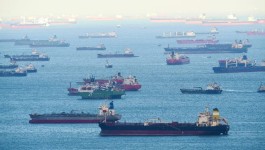
The focus has remained on the Strait of Hormuz, the vital artery for oil flows from the Middle East, which remains effectively closed to ships.
Rebecca Babin, a senior energy trader at CIBC Private Wealth Group, said: Crude oil remains at the forefront of the news-sensitive market.
She added that reports suggesting a possible 30-day truce might be in the works are mitigating worst-case pricing scenarios and concerns about demand destruction. Evidence of a potential end to the war is also reducing some of the risk premium in the market.
Financial markets have experienced sharp fluctuations since the outbreak of the conflict in late February, with news-driven moves causing traders to exit their positions.
Extreme volatility in oil prices also complicates risk assessment, as higher commodity prices fuel inflation fears and increase the likelihood that policymakers will keep borrowing costs high or even tighten them further.
The urgency to end the conflict is growing
The US plans highlight the growing urgency within the Trump administration to end the conflict, as its economic cost mounts.
US President Donald Trump was pushing for talks with Iran in an attempt to halt the fighting, but those efforts were marred by uncertainty over the structure of the negotiations, the Iranian participants, and how any agreement would be formulated.
The details of the 15-point proposal remain unclear, although Trump has publicly suggested that any agreement must include a ban on Iran acquiring a nuclear weapon or enriching radioactive materials for civilian purposes.
Qian Su, head of Asia investments at Indosuez Wealth Management, said it was difficult to take Trump's words at face value. She added: We are taking a defensive stance, not chasing the news, and waiting for clearer signs of a real solution on the ground before investing at a more opportune time.
Garfield Reynolds, head of Bloomberg Markets Live in Asia, believes that investors will focus on the calm US rhetoric regarding the possibility of peace negotiations, as it pushes stocks and bonds higher while putting pressure on oil futures.
He added: But this strategy may be risky given that the actions of the three main parties to the conflict, the United States, Iran and Israel, indicate very little actual de-escalation.
Interference of markets with monetary policy
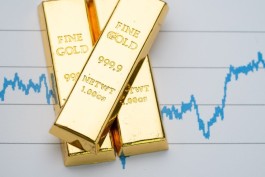
In other parts of the market, gold rose for a second day to trade near $4,600 an ounce, while Bitcoin climbed to around $71,000.
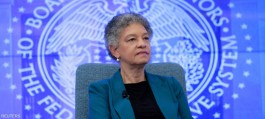
Attention was also focused on bond markets, where Federal Reserve officials Michael Barr and Austin Goolsbee indicated that inflation remains a major concern for policymakers.
However, the decline in oil prices has helped to ease concerns about prices and has reduced the justification for the Federal Reserve to raise interest rates.
Yields on two-year Treasury bonds, which are sensitive to monetary policy, fell one basis point to 3.87%.
Oliver Livingston, Group Ten currency and interest rate strategist at Bank of America, said it was difficult to draw a clear signal from the news.
He added: Investors who believe there will be a partial pullback in the rise in oil prices should invest in interest rates, particularly in real and medium-term returns.
Tensions persist despite talk of de-escalation
Despite reports suggesting a possible de-escalation, the conflict continued to escalate. Kuwaiti authorities said on Wednesday they were dealing with a fire after drones targeted a fuel tank at the airport, according to the country's civil aviation authority. Israel also announced it had carried out a series of strikes on targets across Tehran.
The Trump administration also ordered the deployment of about 2,000 troops from the 82nd Airborne Division to the region, according to a person familiar with the matter, as the White House considered options to loosen Iran’s grip on the Strait of Hormuz, the vital waterway at the heart of the conflict.
Iran has begun imposing transit fees on some commercial vessels passing through the Strait of Hormuz, according to people familiar with the matter, in the latest sign of its growing control over this crucial energy chokepoint. However, Tehran has stated that non-hostile foreign vessels are permitted to pass through under its terms.
Matt Malley of Miller Tabak said: It all hinges on the reopening of the Strait of Hormuz. So, if we hear of good progress being made in the negotiations by the end of this week, it won't be enough if the strait remains virtually closed.
Risks facing credit markets
Aside from geopolitical risks, Malley also pointed out that the problems facing the private credit market are not abating, so ignoring these problems is not a good idea.
Ares Management and Apollo Global Management, two of the biggest names in private credit, have barred investors from withdrawing even half of the money they wanted to redeem from their funds, signaling mounting pressure in a $1.8 trillion market.
According to Thierry Wezeman of Macquarie Group, any optimism about an end to the war in the Middle East, without the United States first attempting to secure and control the Strait of Hormuz, or without first gaining greater leverage in talks with Iran, is still misplaced.
He said: The longer oil prices remain high, the more central banks feel compelled to suggest they will tighten policy.