
















The European Union faces a crucial moment this week, as it seeks to prove itself as a significant geopolitical force.
In the coming days, the European bloc faces two pivotal dates: the first is to finance Ukraine in its war against Russia without Washington's support, and the second is to prove its ability to diversify supply chains away from the increasingly hostile United States and expand its trade with South America.
Any failure on these two tracks would deal a blow to the European Union’s reputation at a critical moment and give US President Donald Trump fresh material for his narrative that the continent is weak, according to diplomats and officials familiar with the bloc’s thinking.
After a week in which NATO Secretary General Mark Rutte warned that past world wars were once again a real possibility, many still do not realize the seriousness of the moment, according to one official.
Europe's geopolitical leadership is at stake
The issues of Ukraine and trade with South America represent a direct test of the European Union's ability to play a global leadership role.
With the Trump administration cutting off aid to Ukraine, the onus fell on Europe to prevent Kyiv from accepting an unequal peace agreement, or even from being completely overrun by Russian forces. At the same time, the trade deal became a crucial test of Europe's ability to offer credible alternatives to the United States and China.
The issue of financing Ukraine will reach a climax on Thursday when EU leaders meet in Brussels to try to find a solution to a massive proposed loan to Kyiv. By Friday, the bloc must finalize a trade agreement, with a tentative signing date set for Saturday. Any further delays on either front could jeopardize the entire plan.
Is Trump marginalizing Europe?
These developments are taking place at a time when Trump is attacking the post-World War II global order that has supported Europe for 80 years, leading to the marginalization of the European Union.
In the same vein, China is ignoring European leaders and businesses. The pressure is mounting on the bloc to prove it can be an active player in the emerging global order, not just a bystander.
If Europe wants to be a true geopolitical player, it must match strong words with decisive actions, according to Estonian Foreign Minister Margus Tsachna. He added: This is a moment for decision. Europe's credibility, security, and leadership are at stake.
Seeking funding for Ukraine
The European Union's preferred plan to support Ukraine is based on using billions of dollars in frozen Russian assets on its territory.
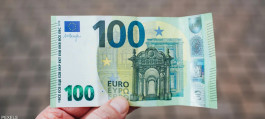
The plan involves lending Ukraine €90 billion ($106 billion) of those funds over the next two years, enabling Kyiv to continue providing essential services and operating its military. Ukraine would only be required to repay these funds if Russia repairs the damage it caused during the war.
However, these efforts face strong opposition from Belgium, where the majority of the frozen assets are held. The country fears being forced to repay the loan if Russia recovers the funds through a court ruling. France, for its part, does not object to using the funds frozen in Belgium, but refuses to use the assets held in its banks.
The United States is also pressuring the European Union behind the scenes not to touch these funds, arguing that they would be more effective as a bargaining chip in peace talks.
Confronting Europe and Trump
This has led to a race against time within the EU to preserve what German Chancellor Friedrich Merz recently described as Europe's strongest bargaining chip. An EU official stated that it is the bloc's responsibility to honor its promise to support Ukraine. Time is running out, and Ukraine is expected to run out of funds by April.
If the European Union fails to reach an agreement this week, it will be forced to seek temporary solutions while it reassessss its approach, according to people familiar with the discussions. This means more delays and more talks, playing into the hands of the narrative Trump has been repeating with a sarcastic tone.
Europe needs to find a solution to the unavoidable reality of continuing to support Ukraine, according to Portuguese Finance Minister Joaquim Miranda Sarmiento, who noted that the required amount represents only 0.5% of the EU's GDP. He added: It's a large figure, but it's still possible, and absolutely necessary.
Mercosur Agreement
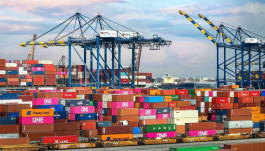
The trade agreement between the European Union and the Mercosur bloc, which includes Argentina, Bolivia, Brazil, Paraguay and Uruguay, has become of great symbolic importance.
Besides being the largest trade deal the EU has ever signed, it will send a message to Trump, according to diplomats and officials who asked not to be named.
The US president is currently working to reassert his country's role in Latin America, recently asserting in his national security strategy the right to dominance in the Western Hemisphere. If Europe can sign the agreement a few days later and reduce trade barriers with South America, especially at a time when Trump is threatening tariffs, it will remain a key player, according to officials.
Gabriel Mato, the Spanish center-right MEP who led the parliamentary work on the agreement, considered this the right moment to prove to our Mercosur partners and our agricultural sector that we are capable of opening up trade without jeopardizing our production.
Deepening Europe's relations with South America
The agreement will also bolster the EU's argument that it is capable of decoupling economically from the US and China by deepening its ties with other democracies, a key element of the bloc's plan to respond to Trump.
But the atmosphere is looking gloomy as the signing ceremony approaches on Saturday. France, fearing protests from its farmers, is pushing to postpone the final agreement until at least January. Some see this as an attempt to kill the deal altogether.
A senior European diplomat argued that if the EU does not sign the agreement by the end of the year, it will be evidence that Europe simply does not want to establish stronger ties with South America, and this will negatively affect the world's confidence in the bloc.
European test
Trump’s national security strategy blames EU policies, claiming they have helped push the continent toward cultural obliteration, and even threatened to fuel resistance within Europe, questioning whether European countries still deserve to be considered reliable NATO allies.
These attacks are another nail in the coffin of the decades-long Western alliance. As Mertz said last week, What we used to call the 'value-based West' no longer exists in that form.
Instead, a new world order is emerging in which major powers, such as America and China, dictate the rules. The European Union is trying to prove that it can forge its own path.
Upcoming decisions on Ukraine and the trade agreement will determine whether Europe can do this, according to one official, or whether it will be the beginning of a systematic decline.