

























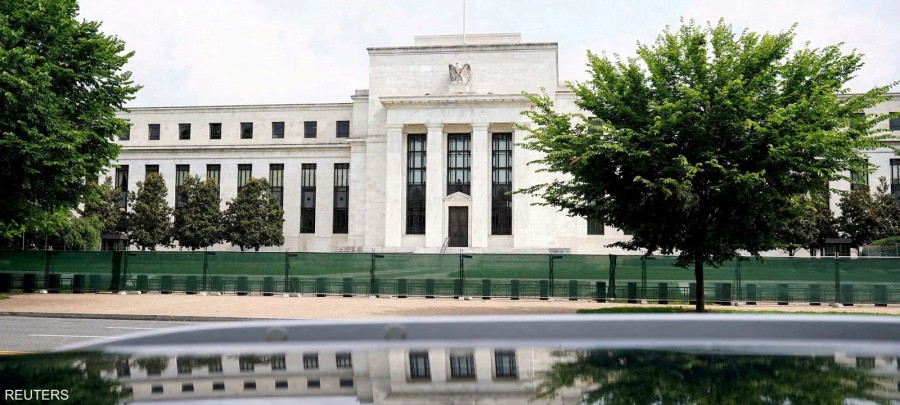


The US Federal Reserve kept interest rates unchanged on Wednesday, continuing its wait-and-see approach to assess the impact of the Middle East conflict on US inflation.
The Federal Open Market Committee voted on Wednesday to keep the benchmark interest rate unchanged in the 3.5% to 3.75% range for the fifth consecutive meeting.
Three members support raising interest rates.
The vote to keep interest rates unchanged saw nine members of the committee in favor, compared to three who voted in favor of raising interest rates by a quarter of a percentage point: Dallas Federal Reserve President Lori Logan, Cleveland Federal Reserve President Beth Hammack, and Minneapolis Federal Reserve President Neel Kashkari.
Drafting the statement
In its statement today, the Federal Reserve left its assessment of the economy unchanged from its June statement, reiterating that economic activity is expanding at a robust pace and that productivity growth and capital investment are strong. It also maintained the same characterization of the labor market, noting that job gains have kept pace with labor force growth, while the unemployment rate has remained virtually unchanged.
The central bank made no changes to its inflation statement, saying that inflation remained high compared to the committee's 2% target, partly reflecting supply shocks that have pushed prices up in some sectors, including energy. It also reiterated its commitment to price stability.
Market reactions
Following the Fed's decision, the Bloomberg Dollar Spot Index fell to its lowest level in a week, spot gold rose by more than 1%, US Treasury yields continued to decline, and the S&P 500 index reduced its losses to 0.3% and the Nasdaq 100 to 0.2%.
Warsh tone
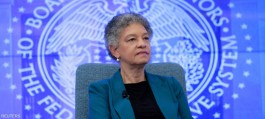
During the press conference following the interest rate decision, Kevin Warsh affirmed the Federal Reserve's commitment to achieving its price stability goal, and stressed that the central bank would not compromise on achieving this objective.
Inflation target
He said: For some households, businesses, and market professionals, five years of high inflation have created a false, and difficult-to-dispel, impression that the Federal Reserve's implied inflation target was, for some reason, above 2%.
He stressed: Let me repeat, there is no flexible inflation target, nor an implied flexible target, and there will be neither as long as this committee exists... Our inflation target is 2%.
Regarding the impact of artificial intelligence on inflation, Warsh emphasized that the significant increase in capital spending on advanced technology was noteworthy, as capital expenditure paves the way for future growth. However, he pointed out that it remains difficult to predict the precise timing and magnitude of the supply-side effects.
Opposition to the decision
Regarding the dissenting vote of three members against Wednesday's decision to maintain interest rates, Warsh said: There was disagreement about today's decision, but that doesn't fully capture the discussions. He added that the discussions revealed a consensus on the economy, the impact of shocks, our tools and capabilities, and the effect on prices and output. There was much common ground with only minor differences.
An expected interest rate hike?
Regarding the Fed's decision today, Warsh said, I wouldn't describe today's decision as 'keeping interest rates steady,' but rather as a review of the economic situation and the important, difficult questions, and a look at what we at the Federal Reserve need to do to address these issues going forward. He added, The decision to hold interest rates steady is the beginning of the story, not the end.
Regarding the possibility of raising interest rates in the coming period, Warsh said in response to journalists' questions: If inflation remains high, interest rates may be part of the solution.
Warsh stressed that the Federal Reserve is doing well on the full employment side of its mandate, but our performance is much less good with regard to prices.
The Federal Reserve does not direct the markets.
Regarding market performance over the past period, Warsh noted his satisfaction that markets are performing some of the work of monetary policymakers, as the tightening of market conditions has done a significant amount of work on behalf of policymakers. He added: I was reassured that the markets were not reacting to our statements, but rather, more than ever, to current events.
He emphasized: We (the Federal Reserve) do not dictate to the markets, nor do we provide forward signals. The message from the markets is the message from the markets.
He added that the Federal Reserve doesn't want to interfere with market signals, but rather wants us to try and assess for ourselves what that means for our mandate. How are we performing with regard to inflation? How are we performing with regard to employment?
Markets are divided in their interpretation of the Fed's messages.
Analysts and strategists in global markets agreed that the Federal Reserve's decision to hold interest rates steady was in line with expectations, but it left the door open to differing interpretations of the course of monetary policy in the coming months.
Deutsche Bank's chief global investment strategist, Dirk Steffen, believes that keeping interest rates unchanged was a wise decision given the seasonal fluctuations in markets during the summer and the declines in stocks. In an interview with Asharq Bloomberg, he stated that the Federal Reserve prefers to wait and monitor geopolitical developments before making any new interest rate hikes, although he expects monetary policy to tighten at a later stage.