























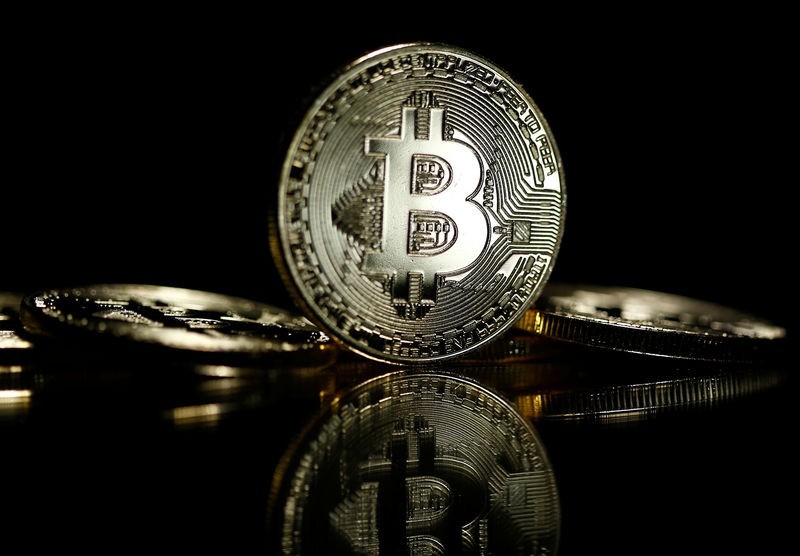
Bitcoin's price held steady near $83,000 in Wednesday's trading, after buyers failed to close above the key $85,000 level earlier in the week. Investors in the largest cryptocurrency remain cautious amid rising US Treasury yields and a series of important economic data releases this week.
Meanwhile, a report from K33 Research indicates that the Bitcoin market structure remains relatively stable, after the market managed to absorb a large wave of reduced leveraged positions in the derivatives market without registering a sharp drop in price.
Rising bond yields are putting pressure on Bitcoin.
Bitcoin buyers are losing momentum after the price failed to recover the $85,000 resistance level at the start of the week, and has since settled below that level.
Cryptocurrency markets are under pressure from the same factor affecting high-risk assets in general: the sharp rise in US Treasury yields. The 5-year Treasury yield has surpassed 5%, while the 10-year yield has exceeded 5.2%, reaching its highest levels in 19 years.
Higher returns are driving investors away from high-risk assets, limiting Bitcoin's ability to continue rising.
Buyers are also hesitant to increase their long positions ahead of a series of key economic data releases this week. The Personal Consumption Expenditures (PCE) price index, the Federal Reserve's preferred inflation gauge, is due on Wednesday, along with the final reading of second-quarter U.S. GDP.
Traders will also be watching the Institute for Supply Management's (ISM) manufacturing purchasing managers' index (PMI) on Thursday, along with the important non-farm payrolls (NFP) report on Friday.
In addition, investors are awaiting statements from several members of the Federal Open Market Committee for further clues about the future path of US monetary policy. These developments could impact the US dollar, thus giving high-risk assets like Bitcoin a boost.
Reduced leverage supports market structure
A report by K33 Research released on Tuesday indicated that Bitcoin was able to absorb a large wave of de-leverage in the derivatives market without a sharp decline, keeping the technical market structure relatively cohesive.
The report explained that Bitcoin derivatives markets have undergone an orderly reset, with total open interest in Chicago Mercantile Exchange (CME) perpetual contracts falling by 49,028 bitcoins over the past seven days, the largest weekly decline since October 2025.
The reset appears to have been driven by profit-taking, while spot trading volumes remained below their annual averages despite rising prices, indicating limited selling pressure.
The analyst said that lower leverage levels, which could lead to forced liquidations, coupled with Bitcoin holders' reluctance to sell despite the currency trading about 33% below its all-time high, indicate a significant divergence in the probabilities of future price movement.
The report noted that previous regulated leverage reductions did not provide clear signals about the direction of price, but they typically preceded periods of lower future volatility, with traders remaining on the sidelines.
Structurally, the market remains cohesive, according to the report.
The total open interest is approaching the level of 400,000 Bitcoin, a level that has only been recorded twice in the past two years: between March 9 and April 10, 2025, and between February 15 and March 15, 2026.
Both periods saw phases of price consolidation followed by a notable rise in Bitcoin as traders returned to the market.
The report concluded that lower leverage levels limit the risk of a broad short-term liquidation of long positions, providing a more stable environment for Bitcoin, which remains above its key moving averages.

UAE's Mubadala leads a $400 million financing round for German insurance company Wefox
Wefox, an insurance technology company founded by former emp.. Read more

Saudi Arabian Centers distributes dividends to shareholders for the second half of 2022 with a total of 356.25 million riyals
Arabian Centers Company has approved the distribution of cas.. Read more

The largest sovereign funds: "Abu Dhabi Investment Authority" advances to third place globally, with assets of $708.8 billion
The Abu Dhabi Investment Authority has advanced to the third.. Read more

Accumulated losses place Emirati companies on the "second category" screen, pending anonymity
Special Report - (Namazone): A group of companies listed.. Read more

Details 142 Saudi initiative to face the consequences of "Corona" B214 billion riyals
Special Report (Nmazzon): The government announced that.. Read more

Will gold remain a safe haven asset?
Gold has long been a source of controversy and contention am.. Read more

Global trade is expected to decline in the coming months
The economics department of Qatar National Bank (QNB) said t.. Read more

Analysis .. How will major central banks respond to the increasing cases of financial instability?
The global macroeconomic environment is experiencing some of.. Read more

The euro is below the dollar .. the lowest level in 20 years
For the first time in 20 years, the euro fell below $1 on Tu.. Read more

"OPEC"...The pressures of supply shortage will continue next year
OPEC expected global demand for oil to increase next year, b.. Read more
Bitcoin holds below $85,000 as US Treasury yields rise and leverage falls

NamaaZone " The Power of Knowledge"


Analysis Service |
Its a free service for technical consultation provided by NamaaZone to the website visitors. |
Open account Request |
NamaaZone provides a range of integrated trading solutions in local and global financial markets |