



























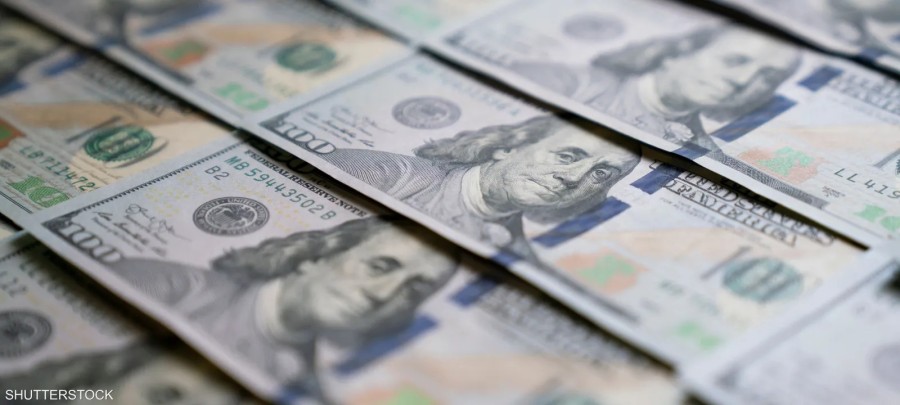
The dollar held near its highest level this year against the euro on Wednesday and was on track for its biggest monthly gain against the single currency in 14 months, supported by strong U.S. economic growth and rising interest rate expectations.
In trading, the euro rose slightly to $1.135, but remained close to its lowest level since May 2025, which it reached in the previous session. It also tested a support level near 178 yen.
The euro was among the worst-performing G10 currencies this year, weighed down by European concerns about energy and debt. The dollar rose about 2.3% against the euro in September, putting it on track for its third consecutive quarterly gain.
A series of data showing the resilience of the US economy and persistent inflation prompted the Federal Reserve to raise interest rates earlier this month for the first time in three years. Following this, markets began pricing in a more hawkish path for US monetary policy compared to the Eurozone, where growth remains weak and debt concerns are mounting.
Some bets on a Federal Reserve tightening monetary policy also eased on Wednesday, after New York Fed President John Williams said there was no need to rush in raising interest rates, while French data showed consumer price inflation accelerated more than expected in September.
The main drivers for the euro are the monetary policy expectations of both the Federal Reserve and the European Central Bank. Comments made earlier this week by ECB President Christine Lagarde were interpreted as a rejection of the possibility of successive interest rate hikes.
The options markets in recent sessions also reflected increased demand for hedging instruments against further euro weakness.
Economic data in the spotlight
Investors are awaiting economic data from both sides of the Atlantic, including German inflation data for September, along with the Federal Reserve's preferred inflation measure, the Personal Consumption Expenditures Price Index, for August.
Traders have lowered their expectations for a 25-basis-point Federal Reserve interest rate hike next month to around 44%, down from about 70% earlier this week, according to the CME Group's FedWatch tool. Markets also expect the European Central Bank to leave interest rates unchanged in October, according to LSEG data.
The dollar has risen against most major currencies this month, supported by U.S. Treasury yields climbing to multi-year highs.
As for the yen, it has become less attractive as a funding currency after Japan’s intervention to buy yen in July, repeated warnings from Japanese authorities about excessive currency movements, and the accelerating pace of raising domestic interest rates.
The dollar fell 1.7% against the yen in September, and by about 3.4% during the third quarter.

UAE's Mubadala leads a $400 million financing round for German insurance company Wefox
Wefox, an insurance technology company founded by former emp.. Read more

Saudi Arabian Centers distributes dividends to shareholders for the second half of 2022 with a total of 356.25 million riyals
Arabian Centers Company has approved the distribution of cas.. Read more

The largest sovereign funds: "Abu Dhabi Investment Authority" advances to third place globally, with assets of $708.8 billion
The Abu Dhabi Investment Authority has advanced to the third.. Read more

Accumulated losses place Emirati companies on the "second category" screen, pending anonymity
Special Report - (Namazone): A group of companies listed.. Read more

Details 142 Saudi initiative to face the consequences of "Corona" B214 billion riyals
Special Report (Nmazzon): The government announced that.. Read more

Will gold remain a safe haven asset?
Gold has long been a source of controversy and contention am.. Read more

Global trade is expected to decline in the coming months
The economics department of Qatar National Bank (QNB) said t.. Read more

Analysis .. How will major central banks respond to the increasing cases of financial instability?
The global macroeconomic environment is experiencing some of.. Read more

The euro is below the dollar .. the lowest level in 20 years
For the first time in 20 years, the euro fell below $1 on Tu.. Read more

"OPEC"...The pressures of supply shortage will continue next year
OPEC expected global demand for oil to increase next year, b.. Read more
The dollar is on track for its biggest monthly gain against the euro in 14 months.

NamaaZone " The Power of Knowledge"


Analysis Service |
Its a free service for technical consultation provided by NamaaZone to the website visitors. |
Open account Request |
NamaaZone provides a range of integrated trading solutions in local and global financial markets |