












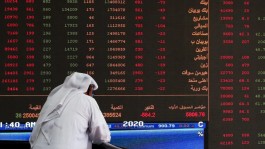




















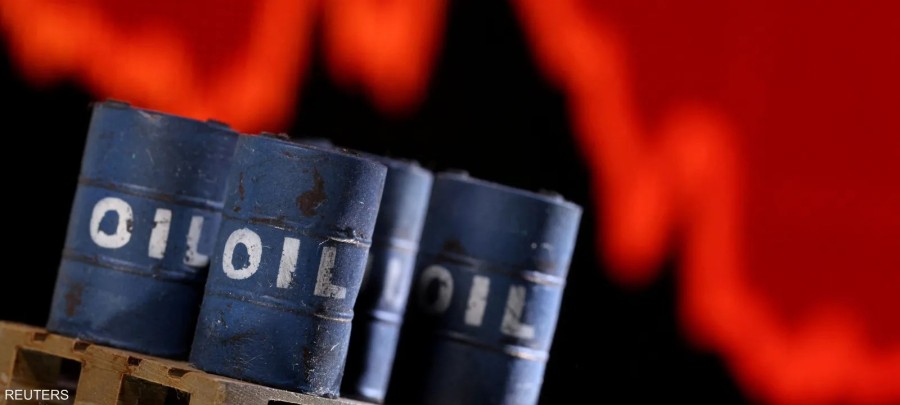


Oil rose for a second day, as the lack of progress in talks between the United States and Iran and signs of strong demand overshadowed the resumption of flows through a major pipeline from Saudi Arabia, the world's largest oil exporter.
Brent crude traded near $107 a barrel after a slight rise in the previous session, while West Texas Intermediate crude headed towards $94.
In private conversations, Iranian officials expressed pessimism about reaching an agreement to end hostilities with Washington and reopen the Strait of Hormuz before the US midterm elections in November, after US President Donald Trump rejected a proposal to reopen the waterway within seven days.
Saudi Arabia recovers half of East-West flows
Meanwhile, Saudi Arabia has restored about half of the flow through its East-West pipeline, a vital route bypassing the strait, after it was temporarily shut down following drone attacks earlier this month. Flows through the pipeline to the Red Sea have reached at least 3.5 million barrels per day, according to people familiar with the matter.
Harris Khurshid, chief investment officer at Karobaar Capital LP, said: “There are still enormous geopolitical risks, but the market has learned that barrels keep finding a way out. We don’t see a sustained repricing as expected if traders believe that actual supply is about to deteriorate substantially.”
Crude oil is on track for its third consecutive monthly gain, fueled by escalating tensions between the United States and Iran, disruptions to the Saudi pipeline route bypassing the Strait of Hormuz, and the possibility of Washington imposing restrictions on diesel exports. Brent crude has risen by more than 70% this year, following more than seven months of conflict in the Middle East.
Trump denied an Axios report that he had offered Iran sanctions relief and the release of frozen assets in exchange for concrete steps on its nuclear program. Iranian Foreign Minister Abbas Araqchi also denied that Tehran was prepared to show flexibility on the nuclear issue, according to the official IRNA news agency.
Downside risks prevail despite signs of tight supplies
Khorshid said that Brent crude faces greater downside risks than upside risks. He added that a credible agreement between the United States and Iran could reduce prices by as much as $15, while reaching $120 a barrel would require a real disruption in supply.
However, key indicators of tight supplies have emerged in recent days, pointing to a rush for barrels that can be delivered quickly. Meanwhile, fuel prices are rising sharply as global refining capacity remains constrained.
The spot spread for Brent crude, the difference between the two nearest contracts, widened to more than $7 a barrel, from less than $1 at the end of last month. This upward trend, known as backwardation, is a traditional indicator of a tight market. In Europe, dated Brent, a key benchmark for the physical market, traded at a significant premium to futures contracts.
Separately, Patrick Pouyanné, CEO of Total Energies, said that a US ban on diesel exports being considered by Trump to curb high prices could backfire by driving up gasoline costs. He said it was a bad idea because it would force the country's refineries to reduce operating rates, which could push up domestic gasoline prices.
Latest price movements
Brent crude for November delivery rose 1.4% to $106.72 a barrel at 10:13 a.m. in Singapore. The November contract expires on Wednesday. The more actively traded December contract rose 1.5% to $99.26 a barrel.
West Texas Intermediate crude for November delivery rose 1.1% to $93.58 a barrel.