


















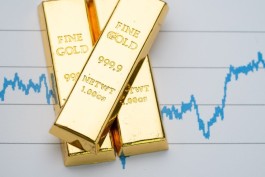










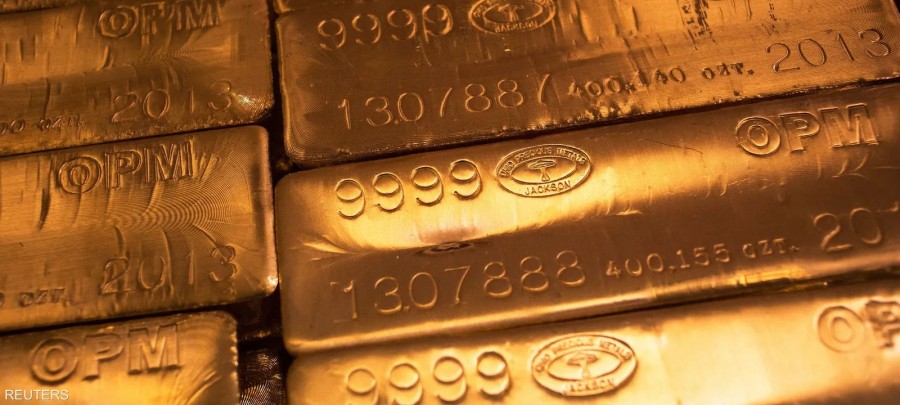


Gold prices declined during trading on Tuesday, as investors focused on developments in the Middle East conflict and expectations of US interest rates, ahead of the release of inflation data, which is one of the most important indicators capable of determining the direction of markets in the coming period.
Hopes for de-escalation fade after the agreement with Iran falters
Hopes for an agreement to end tensions with Iran have faded after US President Donald Trump said the chances of reaching a ceasefire are in a very precarious position.
Trump's remarks came after Tehran rejected the American proposal to end the conflict, and clung to a set of demands that the US president described as unacceptable and not worth considering.
These geopolitical developments have brought uncertainty back to global markets, increasing investors' sensitivity to any economic data that could affect the course of US monetary policy.
Markets are re-evaluating US interest rate expectations
Ilya Spivak, head of global macroeconomics at Tasty Life, said that market expectations toward major central banks have become more hawkish recently.
He explained that this shift was clearly reflected in investors' expectations regarding the Federal Reserve, as the likelihood of US interest rate cuts during 2026 declined significantly.
He added that attention is now turning to US consumer price index data, which may reveal whether inflationary pressures are actually stronger than expected.
This data is expected to be released later today and could provide crucial signals regarding the future course of US monetary policy.
Oil and the dollar add pressure on the precious metal
Meanwhile, oil prices rose, while the US dollar continued its gains from the previous session.
Higher crude oil prices typically lead to increased inflationary pressures, which in turn strengthens the likelihood of interest rates remaining high for a longer period.
Although gold is a traditional way to hedge against inflation, rising interest rates reduce its appeal because it is an asset that does not provide a periodic return like bonds or fixed-income instruments.
Major banks lower their expectations for interest rate cuts
Both Bank of America Global Research and Goldman Sachs have lowered their forecasts for the number of times US interest rates will be cut this year.
The two banks attributed this adjustment to continued inflationary pressures resulting from rising energy prices, in addition to the strength of the US labor market.
This change in expectations reflects a growing conviction among major financial institutions that US monetary policy may remain tighter for longer than markets had hoped.
Trump's visit to China is under close scrutiny from investors.
Markets are also watching President Trump's two-day visit to China, which includes a meeting with Chinese President Xi Jinping.
The two leaders are expected to discuss a wide range of issues, including developments in the Middle East and economic relations between the world's two largest economies.
This visit is of particular importance, given its potential to influence global risk appetite and the direction of financial and commodity markets.
Gold at settlement yesterday
Gold prices settled at the end of volatile trading on Monday, as investors assessed developments in the US-Iran conflict and the outlook for inflation and the global economy.
Gold futures for June delivery settled at $4,728.70 an ounce, after posting gains of 1.85% last week.
Gold now
The price of gold in spot trading fell by 0.6% to $4,705.99 an ounce, after having risen earlier in the session to its highest level in three weeks.
US gold futures for June delivery also fell by 0.3% to $4,714.50 an ounce.
Other precious metals are recording collective losses.
The decline was not limited to gold alone, but extended to the rest of the precious metals during Tuesday's trading.
Silver prices fell by 1.3% to $84.98 per ounce.
Platinum also fell by 2.3% to $2,083.47, while palladium dropped by 1.8% to $1,482.19 an ounce.