














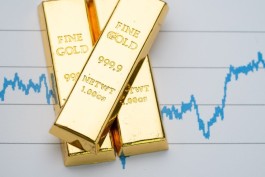









Gold fell to its lowest level in more than three weeks during trading on Wednesday, as the escalating conflict in the Middle East and the resulting rise in oil prices fueled inflation fears and raised expectations of higher interest rates, while investors awaited important data on the US labor market.
Spot gold fell 0.6% to $4,302.99 an ounce, its lowest level since August 7.
The precious metal is thus heading towards recording losses for the fourth consecutive session, and its price has remained below the 200-day moving average, a technical level that is widely followed by traders and investors.
US gold futures for December delivery fell 1.1% to $4,349.90 an ounce.
Oil and US-Iranian tensions increase pressure on gold.
The US dollar maintained its strength during trading, making metals priced in US dollars more expensive for buyers using other currencies.
The United States and Iran have returned to a state of war after one of the largest exchanges of attacks between the two sides in recent weeks, raising concerns about the repercussions of the escalation on energy markets.
Oil prices rose for the third consecutive session, coinciding with a rise in US Treasury yields, in moves that increased pressure on gold.
Bas Kuijman, CEO and asset manager at DHF Capital, said that the renewed rise in oil prices following renewed tensions between the United States and Iran has increased concerns about inflation.
He added that the rising cost of crude oil could further tighten monetary policy expectations and push bond yields to higher levels, limiting gold's ability to achieve any strong rebound.
Interest rate hike bets threaten the precious metal's recovery
Gold is commonly seen as a hedge against inflation, but rising interest rates reduce its appeal because it does not provide a return to its holders, compared to bonds and other yield-generating assets.
Markets are currently pricing in a 68% probability of the Federal Reserve raising interest rates at its meeting scheduled for this month, according to the US interest rate tracking tool available on Investing Saudi Arabia.
Federal Reserve Governor Michael Barr said that if inflation does not decline as quickly as desired, it will be the right time for the central bank to raise interest rates.
Federal Reserve Chairman Kevin Warsh indicated last week that the central bank might need to raise interest rates if inflation does not approach its 2% target.
US jobs data under investor scrutiny
Markets are currently awaiting the ADP jobs report due later on Wednesday, ahead of the more important non-farm payrolls data on Friday.
This data will be pivotal in determining the strength of the US labor market, and may directly affect interest rate expectations and therefore the movement of gold, the dollar, and bond yields.
Kuijman said weaker-than-expected data could ease pressure on gold, while strong data or more hawkish statements from Federal Reserve officials could push the metal to continue its decline.
These developments reflect gold's growing sensitivity to a combination of economic and geopolitical factors, as rising oil prices have become a source of inflation concerns, while investors await labor market data to see if the Fed will move forward with raising interest rates.
Other precious metals are also declining
Losses extended to most other precious metals during Wednesday's trading.
Spot silver fell 0.9% to $63.68 an ounce, while platinum dropped 0.9% to $1,725.03 an ounce.
Palladium also fell by 1.3% to $1,293.86 an ounce.
Gold is thus facing simultaneous pressure from rising oil, bond yields, and a strong dollar, along with markets re-evaluating the likelihood of a US interest rate hike. Upcoming jobs data may limit the severity of the decline or give sellers a new boost, depending on its strength and implications for the course of monetary policy.