

































The conflict in the Middle East escalated on Wednesday, as the United States continued its ongoing assault on Iran and Israel bombed sites linked to Tehran’s missile and air defense systems, although stock futures on Wall Street rose following a media report of possible secret discussions about a ceasefire.
Tehran targeted sites in Israel, as well as US bases and embassies across the Middle East, in retaliation. Iran also vowed to choose a new Supreme Leader to succeed Ayatollah Ali Khamenei, who was killed in an airstrike over the weekend.
Concerns then grew that the conflict could last longer than President Donald Trump's initial four-to-five-week timeline. A senior U.S. military commander said American forces were engaged in round-the-clock strikes against Iran, from the seabed to space and cyberspace, adding that more assets would be used.
Admiral Brad Cooper, the overall commander of the U.S. campaign, said the ongoing offensive has weakened Iran's air defenses and that it is now without operational ships on key waterways, Reuters reported, citing a video briefing.
Israeli Defense Minister Israel Katz also warned that any new leader appointed by Iran could be an unequivocal target for removal.
The prospect of a prolonged crisis that would choke off a large part of the world's oil and gas supply has pushed up prices for both and reignited upward pressure on inflation.
US futures erase losses
The specter of renewed price gains – and a possible delay in interest rate cuts by the Federal Reserve this year – triggered a volatile session in U.S. stock markets on Tuesday.
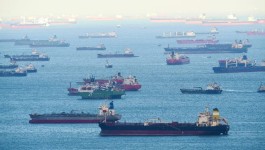
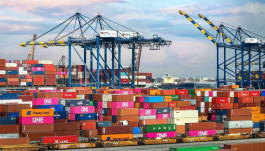
For the markets, the main concern is that violence in the Middle East could cause prolonged disruptions to tanker traffic through the Strait of Hormuz, a vital waterway through which much of the world’s oil and gas supply flows.
Brent crude prices, which were trading at around $73 a barrel before the attack on Iran, have risen sharply. Brent futures were recently trading at $83.48 a barrel, up 1.6%, while U.S. West Texas Intermediate crude futures rose 0.9% to $75.26 a barrel.
Early on Tuesday, oil prices jumped as much as 8%, but later gave up most of it after President Trump suggested the United States might start escorting ships through the Strait of Hormuz.
Meanwhile, the cost of natural gas, essential for everything from electricity to heating, has risen in Europe and Asia. Iranian attacks on a Qatari natural gas facility halted gas flows from the major producer, reducing supplies to several countries that rely on these shipments.
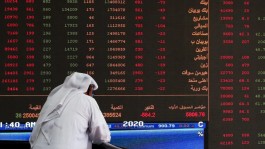
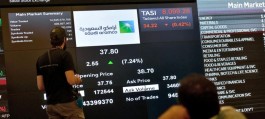
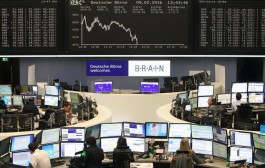
Concerns about rising energy costs have particularly affected Asian stocks. East Asian countries such as South Korea and Japan are heavy importers of oil and gas that transit the Strait of Hormuz, making them vulnerable to reduced shipping activity through the narrow waterway south of Iran. South Korea's Kospi index, in particular, fell so sharply on Wednesday that trading had to be temporarily suspended.
But Wall Street futures turned positive on Wednesday, while oil prices stabilized, after a New York Times report that Iranian intermediaries had offered to discuss terms for ending the conflict. Citing officials briefed on the efforts, the newspaper indicated that U.S. officials were skeptical that either the Trump administration or Iran was prepared to pursue such a path.
Israeli officials, eager to inflict maximum damage on Iran’s military apparatus and possibly topple the Tehran government, have told the United States to ignore this approach, according to The New York Times.
Publicly, Iran’s leaders have made no moves to try to negotiate with Washington.