































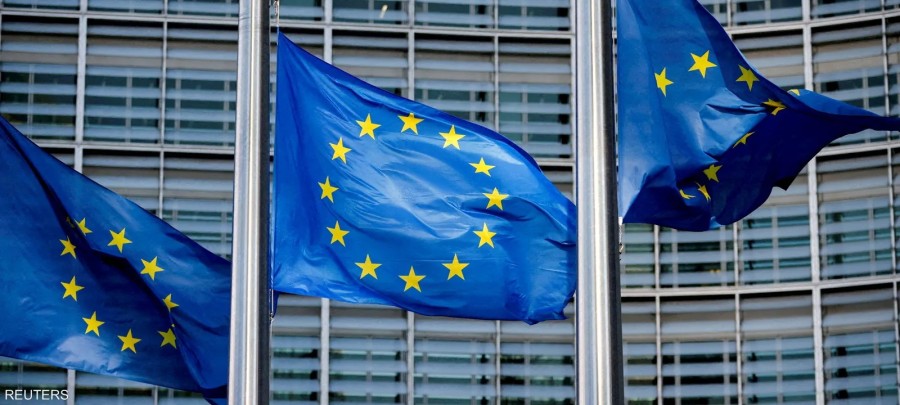


The European Central Bank is expected to postpone raising interest rates for the second time next week, keeping that option open for its September meeting.
After raising borrowing costs in June following a surge in energy prices, monetary policymakers initially expressed confidence that peace negotiations between Washington and Tehran would limit the impact of the conflict on consumer prices in the Eurozone.
But renewed fighting and uncertainty over shipping traffic through the Strait of Hormuz have brought them back to square one, according to Greek central bank governor Yannis Stournaras.
Economic data supports keeping interest rates unchanged.
The data released since the June meeting is unlikely to prompt immediate action from European Central Bank officials on Thursday. Oil and gas prices are close to the baseline scenario levels outlined by policymakers last month, and inflation has slowed more than expected. The bank lending survey due on Tuesday is unlikely to significantly alter the picture.
This gives monetary policymakers time to assess developments over the summer. President Christine Lagarde can point to the abundance of data expected before the September meeting, including two additional inflation reports, a reading of second-quarter economic growth, and several business surveys.
The first of these data points will arrive on Friday, when S&P Global publishes its monthly Purchasing Managers' Index (PMI) survey. In June, the Eurozone's composite PMI rose to exactly 50 points, the threshold separating growth from contraction.
Expectations of an interest rate hike in September
Investors and economists expect that the new data will ultimately convince the European Central Bank's Governing Council to continue tightening monetary policy in its anticipated decision on September 10.
Ruben Segura Cayewala, an economist at Bank of America, said: “If we see a significant deterioration in economic activity data between now and the September meeting, it could increase the case for maintaining interest rates, as long as energy prices don’t rise sharply. But there’s nothing to suggest that activity will deteriorate sharply.”
Bloomberg Economics experts' opinion:
We expect the European Central Bank to keep borrowing costs unchanged in July before raising them for the last time in September. Tighter credit conditions, coupled with factors limiting the inflationary impact of the energy shock, such as the limited aftershocks of the energy shock, will prevent the need for further interest rate hikes.
Simona Deli-Kiai, senior economist for the Eurozone at Bloomberg Economics
Meanwhile, purchasing managers' indices from around the world are expected to be released, along with the appointment of a new prime minister and chancellor in the UK, and the release of inflation data from Japan, Britain, and Mexico. Twelve interest rate decisions are also anticipated globally, with expectations of rate hikes in Indonesia and South Africa, and potential cuts in Russia and Hungary.