



































Oil prices extended their gains as traders assessed the growing fallout from the US-Israeli war on Iran, at a time when both sides vowed to press on in the conflict that is roiling energy markets.
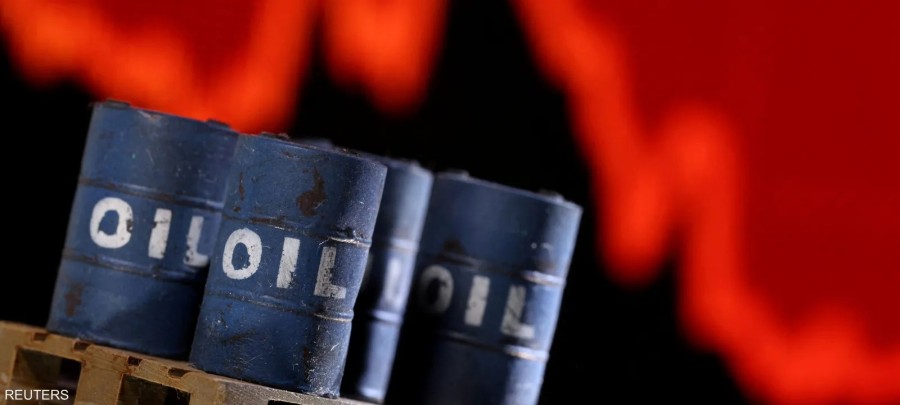
Brent crude rose to near $84 a barrel, after climbing 12% during the first three days of the week, while West Texas Intermediate crude traded near $77.
US President Donald Trump expressed confidence in the military campaign, even as the timeline for operations remained unclear. Meanwhile, Iran's Revolutionary Guard vowed to intensify and expand its strikes in the coming days.
The Strait of Hormuz is at the heart of concerns
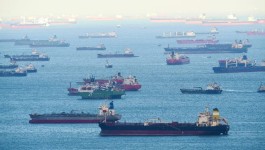
The main concern in the market remains the Strait of Hormuz, where traffic through the waterway, including oil and gas tankers, has come to a near standstill. The de facto closure of this strait has halted oil supplies from Iran, as well as from other Gulf states, forcing some of them to begin reducing production.
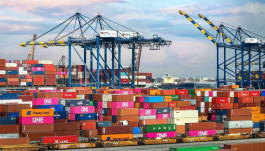
Global energy markets have been severely disrupted by the war, now in its sixth day with no immediate end in sight. The conflict has spread across the Middle East, driving up oil, gas, and petroleum product prices, pushing up shipping rates, and causing increasing disruption for producers as well as importing countries that rely on energy flows from the region.
Analysts at JPMorgan Chase, including Natasha Caneva, wrote in a note that supply cuts driven by full storage facilities in the Middle East have begun.
They added: The key question now is how quickly production can resume once export routes return to normal. We estimate that most fields can restart production within days, with full capacity typically returning within two to three weeks.
Security incidents and plans to secure navigation
In waters off the coast of Kuwait, the captain of a tanker that was at anchor reported seeing and hearing a large explosion on the port side of the vessel, and then seeing a small boat leaving the area, according to the United Kingdom Maritime Trade Operations (UKMTO). UKMTO added that the ship was taking on water, but the crew was safe.
In an attempt to break the deadlock in the Strait of Hormuz, which connects the Persian Gulf to the Indian Ocean, Washington proposed a plan to provide insurance guarantees for ships and possibly naval escorts. Marsh, the world's largest insurance broker, said arranging such a move could take weeks.
Ship-tracking data compiled by Bloomberg shows that traffic through the strait has plummeted by more than 95%, with supertankers and LNG carriers avoiding the route. The few vessels still navigating are leaving the Gulf with their transponders switched off, a common practice in conflict zones.
Global repercussions and diplomatic moves
Around 15 million barrels per day of oil will pass through the Strait in 2025, in addition to about 5 million barrels of petroleum products, according to the Paris-based International Energy Agency, which advises major economies.
A study by the agency on its website stated that the enormous volume of oil exported through the Strait of Hormuz, and the limited options for bypassing it, mean that any disruption to flows would have major consequences for global oil markets.
In a sign of the crisis's impact, India's Mangalore Refinery and Petrochemicals Company informed its customers that it would suspend exports of refined petroleum products because it might not be able to receive crude oil shipments. The state-owned company operates a 300,000-barrel-per-day refinery in the southern state of Karnataka.
China's concern about the crisis
In a related development, China, the world's largest oil importer, said it would send its special envoy for Middle East affairs to the region to conduct mediation efforts. While details of the envoy's mission were not disclosed, the move reflects Beijing's concern about access to crude oil supplies.
For his part, David Solomon, CEO of Goldman Sachs, stated in an interview with Bloomberg Television in Sydney that there is a great deal of uncertainty surrounding the course of the conflict in the Middle East and how it will be resolved. He added that investors are trying to understand how events are unfolding.
The spot price spread for Brent crude, the difference between the two nearest delivery contracts, widened to $3.86 per barrel in the backwardation pattern, a bullish pattern indicating tighter supplies in the near term.
Last month, the difference was only 57 cents. And along the futures curve, prices look considerably lower for the coming months, with the October contract trading at about $11 less than the May contract.
Priyanka Sachdeva, senior market analyst at brokerage firm Phillip Nova, said that if we see one more successful strike on an oil tanker or energy infrastructure, or continued unrest, prices could jump sharply again.
In the United States, nationwide crude oil inventories rose by about 3.5 million barrels last week, reaching their highest level since last May, according to the U.S. Energy Information Administration.