
























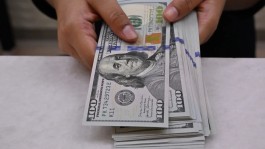











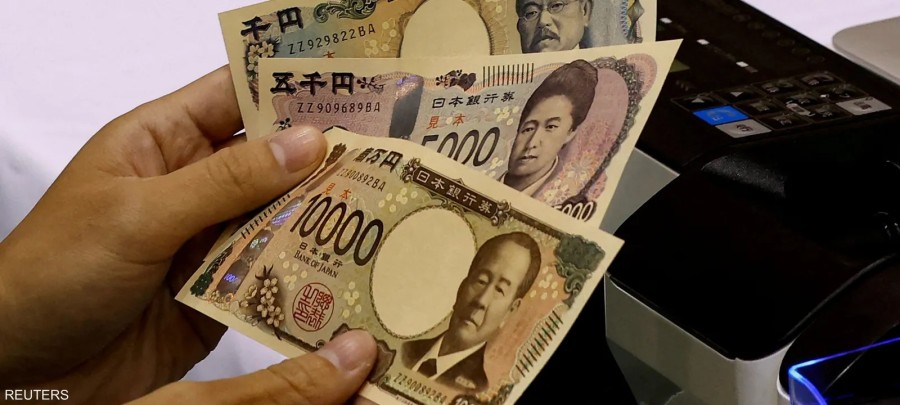


The Japanese currency fell below 163 against the dollar for the first time since 1986, continuing its decline and putting the authorities' resolve to intervene to a new test.
The Japanese currency fell 0.5% to 163.24 yen against the dollar during overnight trading, as the US currency rose in conjunction with US Treasury yields, after renewed tensions in the conflict between the United States and Iran led to a rise in oil prices.
The Japanese currency traded virtually unchanged at 163.12, after Finance Minister Satsuki Katayama reiterated that authorities could take bold steps at any time when needed.
Interest rate pressures and geopolitical factors on the yen
These moves highlight how geopolitical tensions, the outlook for Japan’s financial situation, and wide interest rate differentials continue to undermine efforts to stabilize the currency.
Authorities spent 11.73 trillion yen ($71.9 billion) intervening in the foreign exchange market between April 28 and May 27, but the yen remains at its weakest level in four decades. Last week, Katayama used her strongest language in weeks to warn of the possibility of further currency intervention.
Kyle Rodda, an analyst at Capital.com, said that rising oil prices, the prospect of higher US interest rates, and the expansionary fiscal and monetary policy environment in Japan are fueling this trend, which is unlikely to end without a significant course correction by Japanese authorities. He added that, as a result, markets will remain on the lookout for any potential intervention.
Potential government support for the yen exchange rate
Bloomberg market strategist Mark Cranfield says the dollar/yen rally has gained its own momentum, suggesting traders will view any official intervention as an opportunity to rebuild short positions in the yen rather than abandon the trade. Japanese officials have also threatened decisive action on numerous occasions without following through, meaning that warnings of intervention no longer trigger the automatic dollar sell-offs they once did.
He adds that at this stage, changing course might require more impactful measures, such as persuading Japan's Government Pension Investment Fund to repatriate funds, or a sudden drop in US Treasury yields that would wipe out interest rate trades. But the latter scenario doesn't seem likely given high oil prices and persistent inflation risks, Cranfield says.
Japan's trade deficit worsened due to the weak yen.
Japan's trade deficit widened unexpectedly in June, as a weak yen inflated the value of imports and the war in Iran pushed oil prices even higher.
Investors largely ignored a series of monetary policy decisions that were, in theory, supposed to support the currency.
Earlier this week, the Japanese cabinet approved an economic and fiscal policy plan that includes a margin stipulating that specific monetary policy decisions be left to the Bank of Japan while respecting its independence, a move seen as helping to ease concerns that political pressure could delay further interest rate hikes.
Efforts to stimulate domestic investment in Japan
Officials put forward proposals to encourage more domestic investment, including asking the Government Pension Investment Fund to review its asset allocation and considering allowing Japanese government bonds to be included in NISA tax-exempt accounts.
While these measures may support the yen over time by encouraging repatriation, many investors believe they will not be enough to offset the downward pressures facing the currency in the near term. Katayama also confirmed that she does not have the authority to interfere in the fund's investment decisions.
By law, the Government Pension Investment Fund must manage assets solely in the interests of pension beneficiaries, not to support government policies. Some strategists believe the gradual decline of the yen reduces the urgency of the need for intervention.
Expect new lows for the yen against the dollar
Rinto Maruyama, senior currency and interest rate strategist at SMBC Nikko Securities, said: “Although the USD/JPY pair has now broken above 163, this move has been very gradual. My base case remains that the authorities will refrain from intervening. In the absence of any intervention, it appears that 165 will be the next key level that the markets will focus on.”