
























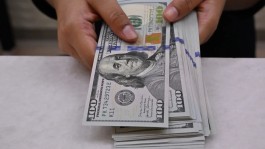











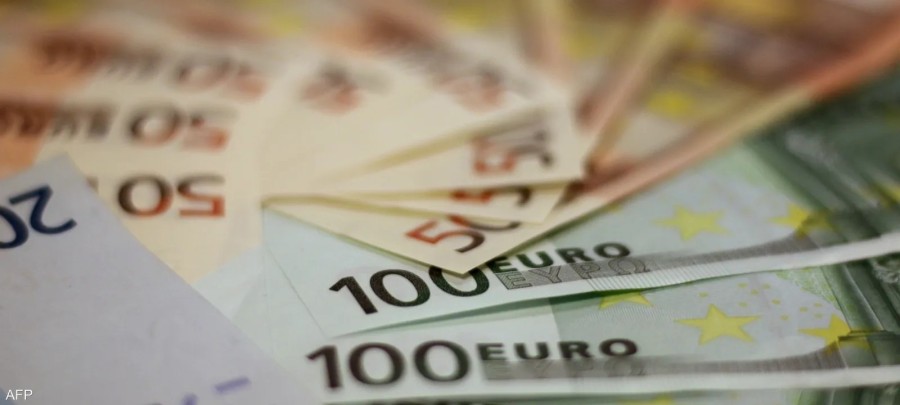


The euro rose in the European market on Monday against a basket of global currencies, beginning to recover from a four-week low against the US dollar, on its way to achieving its first gain in the last five days, thanks to buying activity from low levels, coinciding with increasing negative pressure on the US currency due to escalating concerns about the independence of the Federal Reserve, especially after the Justice Department opened a criminal investigation into Fed Chairman Jerome Powell.
With inflationary pressures easing on European Central Bank policymakers, the likelihood of at least one European interest rate cut this year has increased. Investors are awaiting further key economic data releases from the Eurozone to reassess these expectations.
Price overview
Euro exchange rate today: The euro rose against the dollar by 0.3% to ($1.1671), from today’s opening price of ($1.1634), and recorded a low of ($1.1622).
The euro ended Friday's trading down 0.2% against the dollar, its fourth consecutive daily loss, hitting a four-week low of $1.1618, after better-than-expected US labor market data was released.
The euro lost 0.75% against the dollar last week, its second consecutive weekly loss, due to increasing bets on a cut in European interest rates this year.
US dollar
The dollar index fell by about 0.3% on Monday, giving up a four-week high and heading for its first loss in the last five sessions, reflecting the decline in the US currency against a basket of global currencies.
Apart from profit-taking, the US dollar is declining due to renewed concerns about the stability of the Federal Reserve, the world's largest central bank, after US prosecutors opened a formal criminal investigation into Fed Chairman Jerome Powell.
The opening of a criminal investigation by the US Department of Justice into the chairman of the Federal Reserve is an unprecedented step in US history and undermines confidence in the independence of US monetary policy.
Analysts believe that this investigation, which revolves around Powell's previous testimonies, puts the stability of the global financial system at risk and threatens to increase the pace of volatility in financial markets in the coming period.
For his part, Jerome Powell broke his silence, confirming that he was subject to this criminal investigation, and directing a strongly worded message to both the authorities and the markets, stressing that he would not yield to what he described as attempts at intimidation by the Trump administration.
Ray Attrell, head of foreign exchange strategy at National Australia Bank in Sydney, said: “Powell has grown tired of being criticized from afar, and he’s clearly going on the offensive.” Attrell added: “This open war between the Fed and the US administration—and if we take Powell’s comments at face value—is certainly not good for the US dollar.”
European interest rate
Data from last week showed that key inflation levels in Europe slowed during December, indicating a decrease in inflationary pressures on the European Central Bank.
Following that data, the money market's pricing of the likelihood of the European Central Bank cutting European interest rates by about 25 basis points next February rose from 10% to 25%.
Traders have revised their expectations from the European Central Bank keeping interest rates steady throughout this year to at least one cut of around 25 basis points.
In order to reprice the above probabilities, investors are awaiting further economic data from the Eurozone on inflation, unemployment and wage levels.