






















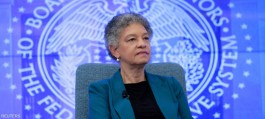











Federal Reserve Chairman Jerome Powell said the U.S. central bank has received subpoenas from the Justice Department to appear before a grand jury, which include a threat of criminal charges, in a dramatic escalation of the Trump administration's attacks on the Fed.
In a statement released Sunday evening, Powell said the move was related to his testimony before Congress in June regarding the ongoing renovations at the Federal Reserve headquarters. However, he said the action should be understood within the broader context of the administration's threats and continued pressure.
He added that the threat of criminal charges is a result of the Federal Reserve setting interest rates based on our best judgment of what is in the public interest, rather than following the president's preferences.
Powell continued in his statement: The crux of the matter is whether the Federal Reserve will be able to continue setting interest rates based on evidence and economic conditions, or whether monetary policy will instead be guided by political pressure or intimidation.
Immediate repercussions in the markets amid an unprecedented escalation
The US dollar weakened on the news, falling against all major currencies, while gold continued its gains, reaching a record high. S&P 500 futures also declined by 0.3%.
This unprecedented move by the Donald Trump administration represents an escalation of the long-standing dispute between the president and the chairman of the Federal Reserve.
President Trump has repeatedly called for a sharp cut in interest rates, and has taken another extraordinary step by seeking to fire Lisa Cook, another member of the Federal Reserve Board. The Supreme Court is scheduled to hear Cook's case later this month.
Federal Reserve policymakers last month cut the benchmark interest rate to a target range of 3.5% to 3.75%, the third consecutive quarter-point cut, after keeping interest rates unchanged for most of 2025.
Officials indicated that they are in no hurry to cut prices again until they have additional data on inflation and jobs.
Policymakers are scheduled to hold their next meeting on January 27 and 28, and futures trading suggests little likelihood of a decision being made during that meeting.
Paul's future
Powell said in the statement that he intends to continue performing his duties with integrity and a commitment to serving the American people.
Powell's term as Fed chair is scheduled to end in May. His primary seat on the Federal Reserve Board of Governors, however, is not due to expire until 2028. He has not indicated whether he intends to leave the position in May or remain with the central bank.
Trump said he had already chosen his nominee to succeed Powell. He did not name Powell's successor, but Kevin Hassett, director of the National Economic Council, is considered a leading candidate.
Republican Senator Thom Tillis, a member of the Senate Banking Committee that oversees the Federal Reserve, defended the central bank Sunday evening.
He said in a statement that he would oppose the confirmation of any Federal Reserve nominee, including the anticipated vacancy for the chairmanship, until this legal issue is fully resolved.
He added: If there was any lingering doubt about whether advisers within the Trump administration were actively pushing to end the Federal Reserve's independence, there should be no doubt now. The independence and credibility of the Justice Department are now in question.
According to people familiar with the matter, the investigation is being conducted by the United States Attorney's Office for the District of Columbia.
One of the people, who asked not to be identified because of the sensitivity of the investigation, said that Attorney General Pam Bondi directed U.S. Attorneys' Offices to look into cases suspected of involving the misuse of taxpayer funds.
The White House referred questions to the Justice Department. A Justice Department spokesperson did not immediately respond to a request for comment.
Renovation work is the focus of the investigation
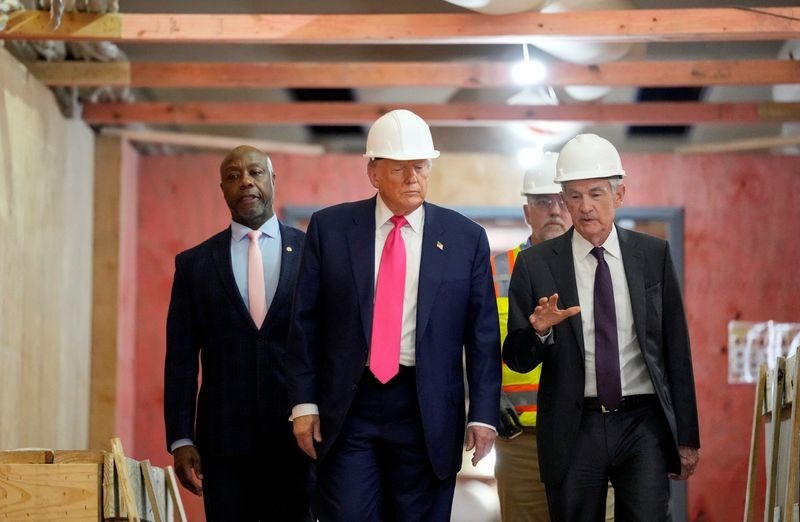
The Trump administration had intensified its scrutiny over the past summer of renovation work on two historic Federal Reserve buildings, and the increasing costs associated with the project.
Federal Reserve budget documents show that project cost estimates have risen to $2.5 billion in 2025, compared to $1.9 billion in 2023.
During his testimony last June, Powell categorically refuted media reports and criticism from administration officials and some Republicans in Congress, which alleged that the project included luxurious design elements, such as a VIP dining hall and rooftop gardens.
Powell also stated during the testimony that the project plans continued to evolve, and that some of the previous features were no longer in the plans.
For his part, Office of Management and Budget Director Russ Vought referred to that certificate in a letter he sent to Powell last July requesting details about the renovation work.
Bill Bolt, director of the Federal Housing Finance Agency and one of Powell's fiercest critics, also alleged that Powell lied about details of the project during the hearing, without providing specifics. He suggested that this might constitute sufficient legal grounds to justify removing the Federal Reserve chairman from his position.
Under the law that established the Federal Reserve, the president can only dismiss members of the Board of Governors for a reason, which is usually interpreted as including incompetence, misconduct in office, or negligence in the performance of duty.
Mark Spindell, author of *The Myth of Independence: How Congress Rules the Federal Reserve*, commented on the subpoenas: “It looks like Trump-style retaliation and an attempt to pressure Powell to leave in May.” He added: “If Powell stays on the Board of Governors, it complicates Trump’s majority; he needs those seats.”