










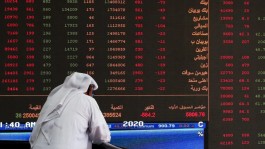







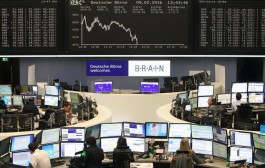













Oil prices edged lower on Monday as investors weighed U.S. and Iranian threats to target energy facilities, which could escalate the conflict, against the release of millions of barrels of Iranian oil by sea to global markets after Washington temporarily lifted sanctions.
Brent crude futures fell 0.3% to $111.84 a barrel, after hitting their highest level since July 2022 on Friday.
In contrast, U.S. West Texas Intermediate crude settled at $98.31 a barrel, following gains of 2.27% in the previous session.
The price difference between Brent crude and West Texas Intermediate crude reached more than $13 per barrel, the widest in several years.
Michael McCarthy, CEO of Momo Australia, said the temporary decline in prices was due to weak liquidity and short-term profit-taking.
He added to Reuters, The overall momentum is still tilted upwards, and testing levels near $120 is a realistic scenario this week.
In an escalation of tensions, US President Donald Trump threatened on Saturday to destroy Iranian power plants if Tehran did not fully reopen the Strait of Hormuz within 48 hours, just one day after he spoke of the possibility of ending the war, which has entered its fourth week.
In contrast, Iranian Islamic Consultative Assembly Speaker Mohammad Baqer Qalibaf warned that targeting Iranian power plants could lead to irreversible destruction of vital infrastructure and energy facilities in the Middle East.
Amrita Sen, founder of Energy Aspects, said these developments clearly mean further escalation, which supports higher oil prices, noting that some may be misjudging Iran's position.
She added, Trump is trying to demonstrate his ability to escalate further, which could ultimately lead to the destruction of infrastructure in the Gulf.
For his part, the Executive Director of the International Energy Agency, Fatih Birol, described the crisis in the Middle East as “extremely severe,” considering it to be more severe than the two oil shocks of the 1970s combined.
Prices remained stable despite sharp fluctuations in the markets earlier in the session, with Tim Water, senior market analyst at KCM Trade, noting that traders were wondering whether the US warning might succeed.
He said, Markets do not want to jump to conclusions, especially with the possibility of the Strait of Hormuz being reopened in response to this pressure.
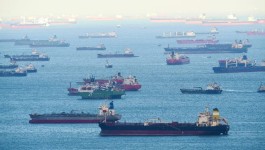
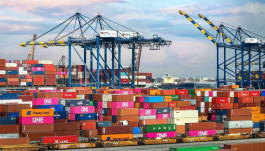
The war caused significant damage to energy facilities in the Gulf and nearly disrupted shipping through the Strait of Hormuz, through which about 20% of the world's oil and liquefied natural gas flows pass.
Analysts estimate that supply losses in the Middle East range between 7 million and 10 million barrels per day.
In a related context, three energy sector officials reported that Iraq has declared force majeure in all oil fields developed by foreign companies.
Iraqi Oil Minister Hayyan Abdul Ghani said that Basra Oil Company's crude production will be reduced from 3.3 million barrels per day to 900,000 barrels per day.
Meanwhile, traders indicated that refineries in India are preparing to resume purchasing Iranian oil, while other refineries in Asia are considering taking similar steps.