


































Oil prices stabilized after US forces concluded a new wave of strikes focused on military targets in Iran, while avoiding attacks on bridges, power plants, and civilian infrastructure. US inventories declined.
Brent crude settled near $90 a barrel after rising about 8% in the previous session, while West Texas Intermediate crude surpassed $84 a barrel.
The US military launched a new wave of strikes on Iran after several days of calm. The Central Command said in a statement that US forces began launching strikes on Iran at 8 p.m. Eastern Time today.
She added that the strikes were aimed at reducing the threats posed by Iran and its proxies to U.S. forces, commercial shipping, and neighboring Gulf states, noting that the targets included command centers, missile and drone facilities, coastal surveillance and defense sites, and naval capabilities.
These strikes came in response to Iranian attack attempts targeting US forces stationed in the Middle East yesterday, and after US President Donald Trump vowed to carry out strong strikes against Iran.
The United States and Iran had halted their exchange of strikes last weekend in an effort to bolster diplomatic talks and end the months-long war. However, this lull abruptly ended Tuesday night when the Revolutionary Guard launched a surprise attack, firing several ballistic missiles at a U.S. military base in Jordan. Washington announced that all the missiles were intercepted.
US commercial inventories decline
Washington’s conflict with Tehran appears set to continue, perhaps for months, as the two sides are unable to break the deadlock over the Strait of Hormuz and reach a permanent ceasefire agreement, according to a number of current and former officials from the United States, Iran and Europe.
In the United States, commercial crude oil inventories fell to their lowest level since 2018, reinforcing signs of a tight physical market after months of conflict in the Middle East. Inventories in the Strategic Petroleum Reserve declined for the 18th consecutive week, reaching their lowest level since 1983.
Rebecca Babin, senior energy trader at CIBC Private Wealth Management, said: “Inventories may not be the main factor, but the larger-than-expected drawdown of crude oil stocks and commercial inventories approaching the 400 million barrel level are likely to attract more attention.”
Renewed tensions exacerbate volatility in global markets
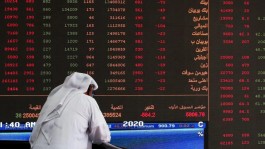
A new round of volatility has shaken global energy markets this month, as investors grappled with an initial lull in hostilities between Iran and the United States, followed by renewed fighting.
The conflict appears to be widening, with Iranian-backed Houthi rebels in Yemen threatening shipping lanes in the Red Sea, while Riyadh and Washington have launched targeted strikes against pro-Iranian armed groups in Iraq.
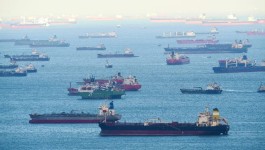
The Strait of Hormuz, which connects the Arabian Gulf to global markets, is at the heart of the conflict between the United States and Iran, with Tehran insisting on controlling it and attacking oil tankers that challenge its authority.
Israeli Prime Minister Benjamin Netanyahu, who met with Trump earlier in the week, told ABC News that they discussed options for ending the conflict, including negotiating a broader agreement, continuing the blockade of the Strait of Hormuz, or taking further military action, adding that it was his decision, referring to Trump.
In a related development, US Energy Secretary Chris Wright reported that approximately 13 million barrels of oil left the Arabian Gulf daily last week. He explained in an interview with Bloomberg Television that half of this amount passed through the Strait of Hormuz, while the other half flowed via alternative pipelines.
Bloomberg quoted Bart Melek, global head of commodity strategy at TD Securities, as saying: “Markets have been ahead of their game in their hopes for renewed peace, especially given Iran’s insistence on controlling the Strait under any potential agreement.”
He added: We continue to view lower flows and global tightness in the energy market as factors supporting further increases in crude oil prices.
Price movements:
Brent crude futures for September settlement fell 0.3% to $90.45 a barrel at 1:11 p.m. Singapore time.
Contracts for settlement in October, which have the largest number of outstanding contracts, fell 0.4% to $87.77.
West Texas Intermediate crude futures for September delivery also fell 0.3% to $84.25 a barrel.