










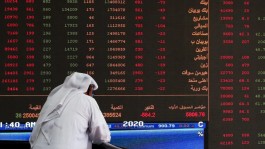




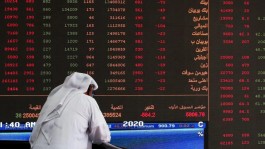


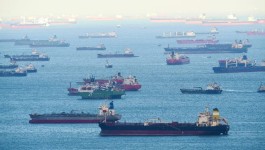

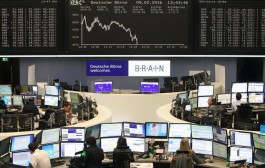














Oil prices fell as US diplomatic efforts to end the war with Iran gained momentum, overshadowing news of more troops being sent to the region and the continued closure of the Strait of Hormuz to a large extent.
Brent crude fell by as much as 7% to near $97 a barrel, while West Texas Intermediate crude traded near $88.
The United States has prepared a 15-point plan aimed at helping end the conflict, according to people familiar with the matter. The proposal, which was previously reported by The New York Times, was delivered to Iran via Pakistan.
Military moves parallel to diplomatic efforts
Earlier, the administration of US President Donald Trump ordered the deployment of about 2,000 troops from the 82nd Airborne Division to the region, according to a person familiar with the matter, as the White House considered options to loosen Iran’s grip on the Strait of Hormuz, the vital waterway at the heart of the conflict.
Robert Rennie, head of commodities and carbon research at Westpac Banking Corp., said: “We have clearly moved from a phase that could have turned into annihilation in a war between America and Iran, to a phase of negotiation, although the lack of trust on both sides means that this phase is likely to be complicated and lengthy.”
Oil is still on track for a significant monthly gain after a volatile trading period, as investors monitor the fallout from the war now in its fourth week. At the heart of the conflict, Tehran has moved to seize control of the Strait of Hormuz, choking off oil and gas supplies from Gulf producers to global markets and raising fears of an energy crisis.
Rapid changes in the American position
The public stance of the United States on the conflict has shifted rapidly in recent days. Over the weekend, Trump escalated tensions by threatening to bomb Iranian power plants if the Strait of Hormuz was not fully reopened within 48 hours.
The president then backed away from that deadline, saying he would allow five days for talks. The announced US initiative toward Tehran, along with the decision to deploy additional forces, came even as Iran tightened its grip on the vital strait.
The details of the latest proposal remain unclear, although Trump has publicly suggested that any agreement must include a ban on Iran acquiring nuclear weapons or enriching nuclear materials for civilian purposes. It was also unclear whether Israel had agreed to the proposal.
Charu Chanana, chief investment strategist at Saxo Markets, said the price decline reflects a lower war risk premium. She added, however, that this is unlikely to signal the end of the threat, as Iran has publicly denied holding direct talks, while military activities and troop deployments continue.
Tensions persist despite signs of de-escalation
On Tuesday, President Trump indicated that Iran had offered a gift as a gesture of goodwill in the talks he says are ongoing. He did not specify the nature of the gift, but confirmed it was related to energy flows through the Strait of Hormuz.
White House press secretary Caroline Leavitt said that while there was a new opportunity for diplomacy, U.S. military operations would continue uninterrupted.
Iran stated that foreign vessels are permitted to pass through the waterway, provided they do not support hostile actions against the country and adhere to regulations set by Tehran. These remarks were made in a letter distributed to members of the International Maritime Organization on Tuesday.
Israel, which launched the war in late February in a joint attack with the United States, has shown no signs of de-escalation, launching strikes across Tehran early Wednesday. In its report on the ceasefire plan, Channel 12 said Israel is concerned about the proposal and believes Iran may not accept it.
Wider implications for energy and markets
However, Chinese Foreign Minister Wang Yi urged his Iranian counterpart Abbas Araqchi to engage in negotiations with the United States as soon as possible to end the war, according to a government statement. China is the world's largest oil importer and a major buyer of Iranian oil.
Chris Weston, head of research at Pepperstone Group in Melbourne, said the market was influenced by the prospect of some kind of agreement that would push the conflict toward a ceasefire. He added that safe passage through the strait would be a cornerstone of any future agreement.
As refineries around the world, particularly in Asia, scramble to secure alternative oil supplies, U.S. crude exports are expected to jump next month, with some participants predicting record outflows.
In a sign of the shockwaves from the fighting, Chevron warned that California is headed for an energy crisis and that the company may abandon its refining operations in the state unless authorities roll back taxes and regulations. The state is particularly vulnerable given its reliance on imports of approximately 20% of its refined fuels from Asia.
Prices of petroleum products have risen at a faster pace than crude oil itself in recent weeks. In the United States, the average price of diesel nationwide has jumped well above $5 a gallon, its highest level since late 2022. In California, the price of fuel used in shipping, construction, and agriculture has surpassed $7 a gallon, setting a new record.
In Australia, hundreds of service stations reported fuel shortages. Energy Minister Chris Bowen told parliament on Tuesday that at least 600 retail stations had run out of at least one type of fuel, with the shortages concentrated in the two most populous states, New South Wales and Victoria.
South Korea has also strengthened its contingency plans in preparation for a worst-case scenario in the Middle East, with Prime Minister Kim Min-seok saying the government must bolster its proactive response systems as signs emerge that the conflict will continue.
In the latest trading, Brent crude futures for May settlement fell 5.5% to $98.79 a barrel at 10:49 a.m. in London, while West Texas Intermediate crude futures for May delivery fell 5.4% to trade at $87.33 a barrel.