






















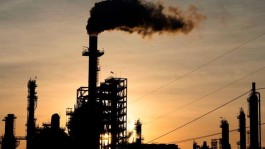












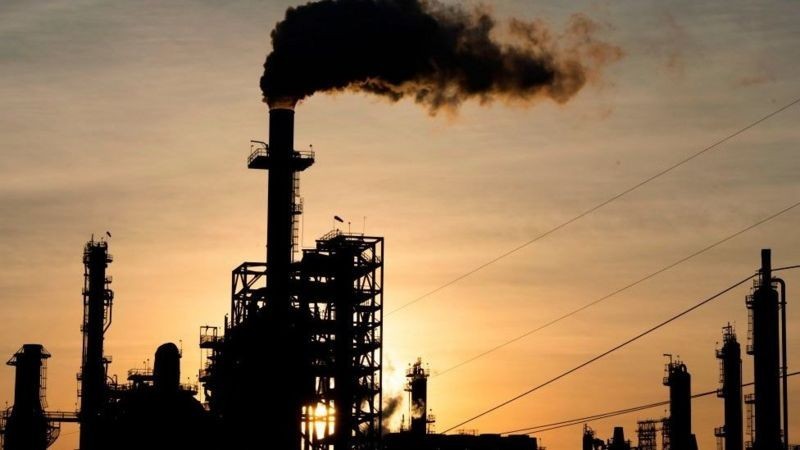


Oil prices rose after a report indicated the United States might resume strikes on Iran following next week's midterm elections, while traders monitored a closely contested Israeli election.
Brent crude rose 1.6% to $115.73 a barrel, after falling more than 2% in the previous two sessions. West Texas Intermediate crude also climbed 1.59% to $101.49 a barrel.
The Wall Street Journal quoted unnamed sources as saying that the United States had informed several Gulf Arab states to prepare for a short, intensive campaign, adding that President Donald Trump had not yet decided to proceed with the campaign, but that he was inclined to launch a large-scale attack after the election.
Trump has previously hinted at the possibility of resuming strikes against Iran and has sent additional forces to the region, including a third aircraft carrier strike group. Last weekend, he told Fox News that the time for a decision on whether to reach an agreement or resume the attack was drawing near.
Exit polls showed a tie between the bloc of opposition leader Gadi Eisenkot and that of Prime Minister Benjamin Netanyahu, according to two polls, while a third showed Netanyahu with a slight lead. This indicates that neither candidate secured the necessary majority, raising the possibility that neither will be able to form a coalition government and potentially triggering new elections.
These developments come amid renewed diplomatic efforts in the Middle East, with officials from Saudi Arabia, Pakistan, and Turkey traveling to Tehran for talks on Monday. Meanwhile, Iranian Supreme Leader Mojtaba Khamenei reiterated his country's existing conditions for ending the war.
Brent crude, the global benchmark for oil prices, has jumped more than 85% this year, after the war, which began in February when US President Donald Trump and Netanyahu ordered a joint attack on Tehran, disrupted energy flows.
The Israeli and American elections cast a shadow over the course of the war.
Following the Israeli elections, American voters will head to the polls next week for the midterm elections, which could reveal a decline in support for the Trump administration.
Eisenkot presented himself as a more moderate alternative to Netanyahu, emphasizing his commitment to addressing Israel's security challenges. Regarding Iran, he stated that its nuclear program must be curbed, militarily if necessary, but that regime change in Tehran was not an achievable goal.
For his part, Netanyahu said he was still awaiting the results, adding that his Likud party was the largest in Israel and stressing the need to form a strong right-wing government. Regarding Iran, Netanyahu reiterated that Israel had a historic opportunity to eliminate the Iranian threat.
However, given that the final formation of the new government will likely take days or weeks, Netanyahu will remain Israel's prime minister. This will allow him to join forces with Trump should he decide to launch a renewed bombing campaign against Iran after the midterm elections.
Trump urges Americans to be patient
During his US presidential campaign, Trump urged Americans to be patient with rising energy prices, which he said were partly fueled by the trade war. Speaking at a rally in Corpus Christi, Texas, he said: Short-term pain, yes, for long-term gains. You'll see that very soon.
Robert Yawger, director of energy futures at Mizuho Securities USA LLC, told Bloomberg that there is a very real possibility that President Trump could lose his hawkish partner on Iran, Benjamin Netanyahu. He added: “The vote in Israel can be seen as a lead-up to what to expect in the U.S. midterm elections.”
Meanwhile, the Iranian-established Strait of Hormuz Authority announced it will take legal action against oil tankers belonging to Sinocor, the world’s largest oil tanker owner, which have transported millions of barrels through the Strait of Hormuz in recent weeks.
The authority said in a social media post: Ships belonging to Sinocor Shipping Company committed the largest number of transit violations during the past three months, and appropriate enforcement measures have been taken against at least 7 of them so far, without specifying the nature of those measures.
On the physical market front, the American Petroleum Institute, funded by the oil industry, reported that U.S. crude inventories fell by 2 million barrels last week, according to a document seen by Bloomberg. Official data is due later on Wednesday.
Traders are also preparing to follow the Federal Reserve's interest rate decision during the session. Policymakers are expected to leave borrowing costs unchanged.