




































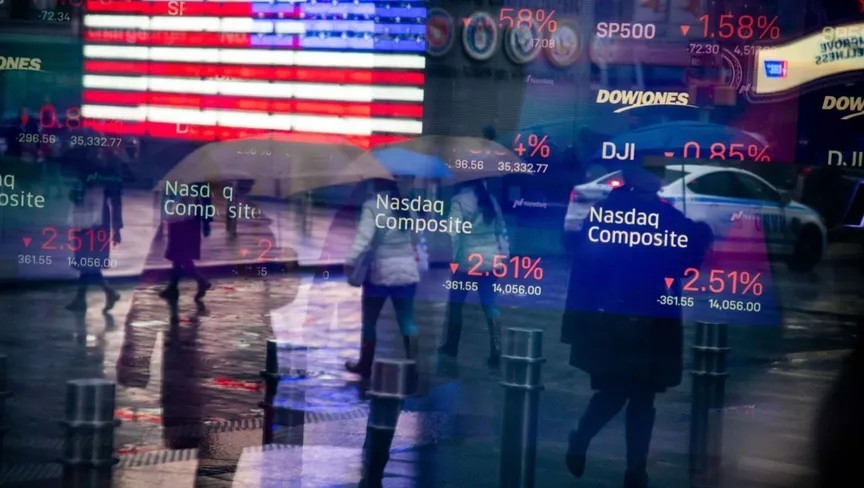


S&P and Nasdaq futures contracts pointed to a decline in Thursday's session, suggesting an extension of the downward trend seen in the previous session, which was fueled by concerns about artificial intelligence trading and fears of rising interest rates.
By 2:23 PM Riyadh time, S&P futures had fallen 23 points, or 0.3%, while Nasdaq 100 futures were down 366 points, or 1.2%. In contrast, Dow futures were up 127 points, or 0.2%.
Major Wall Street indexes closed lower on Wednesday, as a stronger-than-expected U.S. inflation report sparked a temporary surge of bets on a Federal Reserve interest rate hike later this month, sending U.S. Treasury yields higher.
Those bets subsequently declined. Investors now expect an interest rate hike of 30 basis points for the remainder of the year, compared to 25 basis points previously, while expectations of increases of around 50 basis points in 2027 remained largely unchanged, according to Vital Knowledge analysts in a research note.
US Treasury bonds also rebounded, with yields ending the day flat or slightly lower, before continuing their decline in later trading. Yields typically move in the opposite direction to bond prices.
Among the factors that supported the recovery in debt markets were renewed concerns about artificial intelligence, particularly questions about the impact of interest rates remaining high for a longer period on a capital-intensive sector that relies on debt financing and faces increasing competition both domestically and internationally.
Deutsche Bank analysts said in a note: Markets have had a very turbulent 24 hours, as strong US consumer price index data was followed by rising concerns about the AI trade.
They added: This shows how AI is dominating market attention right now, as fears of a wider tightening of credit conditions have led to growing doubts about whether the Federal Reserve will actually move interest rates, despite the strength of the data.
CoreWeave was among the hardest hit by the AI stock sell-off, falling more than 6% in pre-market trading after plunging more than 15% in the previous session. Some of the company's bonds also dropped to record lows in secondary markets.
Shares of rival Nebius Group fell more than 3% in premarket trading, following a drop of nearly 10%. Oracle shares also declined before the opening bell, potentially extending a decline of 8.83%.
Despite the sharp decline in AI stocks, prominent AI frontiers lab Anthropic sought to maintain the momentum surrounding this emerging technology, reporting that it informed institutional investors at a meeting on Wednesday that its third-quarter revenue jumped 45% to $16.80 billion. However, analysts noted a slowdown in revenue growth at the maker of the popular chatbot Claude, which is reportedly eyeing a major initial public offering.
Meanwhile, demand for AI-enabled technologies and infrastructure appears robust. Taiwan Semiconductor Manufacturing Co., better known as TSMC and the world's largest contract chipmaker, reported record profits of NT$763.06 billion for the three months ending September 30, a 69% year-on-year increase.
On the economic data front, the monthly reading of the US Producer Price Index is expected to be released, which may reveal further indicators about the reality of inflation in the world's largest economy.
Regarding the quarterly corporate earnings season, disclosures continue with the release of results from Charles Schwab, Bank of New York Mellon, U.S. Bancorp, and PNC Financial Services.