





































Oil prices fell on Thursday, pressured by a large jump in US crude inventories and growing concerns about weak global demand, while geopolitical tensions in the Middle East and the ongoing Strait of Hormuz crisis limited the extent of the losses.
Brent crude futures fell by about 1.7% to trade near $87.44 a barrel, while U.S. West Texas Intermediate crude dropped by 1.9% to about $81.66 a barrel, after both crudes had posted a series of gains in previous sessions.
The biggest pressure came from US inventory data, as figures showed that commercial crude oil stocks rose by about 17.4 million barrels during the week ending August 7, to reach 424.4 million barrels.
This is the largest weekly increase since January 2023, and it sharply contradicts market expectations that inventories would fall by about 1.4 million barrels, raising concerns about weak demand within the world's largest oil-consuming economy.
Pressure on prices increased after OPEC lowered its forecast for global oil demand growth in 2026 to about 580,000 barrels per day, the fourth consecutive reduction in its estimates, which reinforced concerns about the ability of demand to absorb the available supplies in the markets.
Meanwhile, the International Energy Agency presented a more pessimistic outlook, predicting that global oil demand would shrink by about 1.6 million barrels per day during the year, compared to previous estimates that indicated a decline of only 1 million barrels per day.
Despite pressures related to inventories and demand, geopolitical risks continue to provide some support for crude prices, especially with the ongoing disruption to shipping through the Strait of Hormuz and escalating tensions in the Middle East and the Black Sea.
Uncertainty is increasing as there is still no tangible progress in US-Iranian talks regarding the normal reopening of the Strait of Hormuz, at a time when Tehran asserts its control over the strait, while Washington maintains a different position on freedom of navigation in the vital waterway.
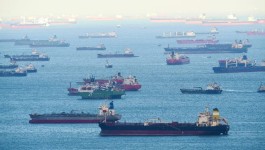
Data from Kpler indicates a significant decline in ship traffic through the strait, with the number of passing vessels, excluding container ships, dropping to just five on Wednesday, the lowest level in three weeks.