











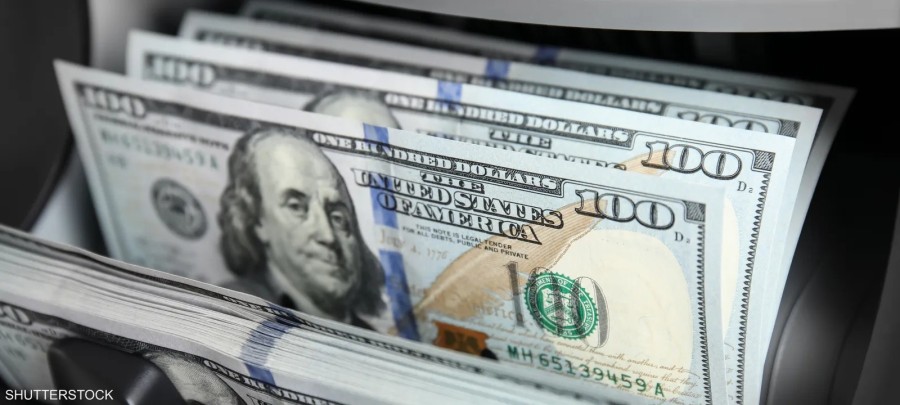
The dollar rose slightly on Wednesday, as investors awaited the Federal Reserve's interest rate decision, which is expected to be the last for its chairman, Jerome Powell, in office, amid the ongoing war with Iran with no clear signs of a resolution.
Market activity was limited due to the closure of markets in Japan for a public holiday, in addition to caution ahead of a series of central bank decisions over the next 48 hours, as well as the announcement of results from major companies such as Amazon, Microsoft and Meta after the close of Wednesday's session.
The euro fell 0.07% to $1.1705, while the pound sterling slipped 0.05% to $1.3513, moving further away from their highs earlier this month. The euro is currently trading about 1% lower than its level at the end of February when the war broke out, while the pound sterling remained virtually unchanged.
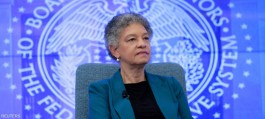
The Fed's decision is expected to take center stage later, with interest rates widely expected to remain unchanged, as markets focus on policymakers' assessment of the war's impact on the economy, as well as Jerome Powell's future at the central bank.
Carol Kong, a currency analyst at Commonwealth Bank of Australia, said: “The question is what Powell will do, because he is still a member of the Board of Governors until 2028. Will he resign after his term as chairman ends, or will he remain as a member and play a role similar to a shadow chairman?”
She added that Powell had previously indicated that he would stay on if he felt the Fed's independence was threatened, meaning his decision would depend on his assessment of the matter.
On the geopolitical front, efforts to end the war with Iran have reached a dead end, with US President Donald Trump expressing his dissatisfaction with Tehran’s latest proposal, demanding that the nuclear issue be addressed from the outset.
Oil prices rose for the eighth consecutive day, their longest winning streak since May 2022 following Russia's invasion of Ukraine. The June contract, which expires Wednesday, climbed 1% to $112 a barrel, while the more actively traded July contract settled at $105, weakening confidence and boosting demand for the dollar as a safe haven.
Derek Halpenny, head of global markets research at Mitsubishi UFJ Financial Group (MUFG), said: “Oil has returned to trading above $110 a barrel, increasing the likelihood of a more severe economic fallout over the summer.”
He added that Europe and Asia would be the most affected, and if the situation continues, the euro and Asian currencies could face further downward pressure.
The yen is under pressure and awaiting intervention.
The Japanese yen remained below 160 against the dollar, despite hints from the Bank of Japan after its last meeting of a strong possibility of raising interest rates in the coming months.
The yen was at 159.63 against the dollar, little changed, but has lost about 0.6% of its value this month and more than 2% since the start of the war, partly due to Japan's heavy reliance on energy imports.
Bank Governor Kazuo Ueda confirmed the bank's readiness to raise interest rates to prevent the energy price shock from spreading to overall inflation, provided that the economic slowdown resulting from the Middle East crisis is limited.
Sim Moh Seong, an analyst at OCBC Bank, said: “There is a tone that leans towards tightening, and the bank might have raised interest rates were it not for the war, but any future increases will be gradual.”
He added that the yen faces a lower limit on losses as it approaches levels that may warrant intervention by the authorities, but a strong rally is difficult to predict at the moment.
Weekly data shows that investors have held the largest short positions on the yen since late July 2024, shortly after the last government intervention when the exchange rate exceeded 161 yen to the dollar.
Traders are still on the lookout for possible intervention by Japanese authorities to support the currency, with the 160 yen to dollar level seen as a critical point that could trigger such action.
Elsewhere, the Australian dollar fell 0.26% to $0.7164, after domestic inflation data showed continued price pressures, although the adjusted core inflation index came in slightly below expectations.

UAE's Mubadala leads a $400 million financing round for German insurance company Wefox
Wefox, an insurance technology company founded by former emp.. Read more

Saudi Arabian Centers distributes dividends to shareholders for the second half of 2022 with a total of 356.25 million riyals
Arabian Centers Company has approved the distribution of cas.. Read more

The largest sovereign funds: "Abu Dhabi Investment Authority" advances to third place globally, with assets of $708.8 billion
The Abu Dhabi Investment Authority has advanced to the third.. Read more
Accumulated losses place Emirati companies on the "second category" screen, pending anonymity
Special Report - (Namazone): A group of companies listed.. Read more

Details 142 Saudi initiative to face the consequences of "Corona" B214 billion riyals
Special Report (Nmazzon): The government announced that.. Read more

Will gold remain a safe haven asset?
Gold has long been a source of controversy and contention am.. Read more
Global trade is expected to decline in the coming months
The economics department of Qatar National Bank (QNB) said t.. Read more

Analysis .. How will major central banks respond to the increasing cases of financial instability?
The global macroeconomic environment is experiencing some of.. Read more
The euro is below the dollar .. the lowest level in 20 years
For the first time in 20 years, the euro fell below $1 on Tu.. Read more
"OPEC"...The pressures of supply shortage will continue next year
OPEC expected global demand for oil to increase next year, b.. Read more
The dollar rises as a safe haven ahead of the Fed's decision amid the war.

NamaaZone " The Power of Knowledge"


Analysis Service |
Its a free service for technical consultation provided by NamaaZone to the website visitors. |
Open account Request |
NamaaZone provides a range of integrated trading solutions in local and global financial markets |