












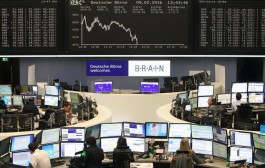


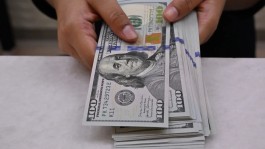


The US dollar held steady against most major currencies during trading on Tuesday, amid monitoring of geopolitical developments in the Middle East and anticipation of inflation data.
The US dollar index was largely unchanged at 99.84, while oil prices hovered near their highest levels in a week, as hopes faded for a deal between the United States and Iran to end the conflict in the Middle East.
In trading, the dollar index, which measures the performance of the US currency against six major currencies, remained largely unchanged at 99.8 points after hitting its lowest level since June 15 on Friday.
US inflation data in focus
The biggest event this week in the currency markets is the release of a series of US inflation data, which has prompted traders to be cautious and kept the dollar in a largely narrow trading range.
Consumer price index data due on Wednesday may reveal the impact of the war with Iran on inflation. Producer price data due on Thursday and retail sales figures on Friday are expected to provide further clues about the direction of inflation.
Data released on Friday showed that the U.S. economy unexpectedly lost jobs in July, while job gains in the previous two months were revised sharply downward, leading to a decline in expectations that the Federal Reserve would raise interest rates next month.
Weak labor market data reinforces the importance of Wednesday's Consumer Price Index report, as investors look for clues about the Federal Reserve's monetary policy path.
Analysts believe that labor market data is a negative event for the dollar, and therefore, expectations indicate that the trend will remain negative this week. However, if the Consumer Price Index data comes in surprisingly higher than expected, markets will return to pricing in an interest rate hike as the baseline scenario.
Market expectations for an interest rate hike in September fell to around 44%, compared to 67% a week earlier. US Treasury yields also largely held onto their post-jobs declines, as the data dampened bets on a rate increase, with the 10-year Treasury yield hovering around 4.647%.
The core consumer price index is estimated to have risen 0.2% month-on-month in July, while the annual rate is expected to slow to 2.5% from 2.6% in June.
Producer price data due on Thursday and retail sales data due on Friday will provide further clues about the inflation outlook.
Watch developments in Iran and the Strait of Hormuz
Investors are still closely monitoring talks aimed at reopening the Strait of Hormuz and its potential impact on energy prices.
Iran said an agreement with Oman to establish new shipping lanes was under consideration, but noted that the United States still had to meet other conditions, adding to the uncertainty surrounding energy supplies.

UAE's Mubadala leads a $400 million financing round for German insurance company Wefox
Wefox, an insurance technology company founded by former emp.. Read more

Saudi Arabian Centers distributes dividends to shareholders for the second half of 2022 with a total of 356.25 million riyals
Arabian Centers Company has approved the distribution of cas.. Read more

The largest sovereign funds: "Abu Dhabi Investment Authority" advances to third place globally, with assets of $708.8 billion
The Abu Dhabi Investment Authority has advanced to the third.. Read more

Accumulated losses place Emirati companies on the "second category" screen, pending anonymity
Special Report - (Namazone): A group of companies listed.. Read more

Details 142 Saudi initiative to face the consequences of "Corona" B214 billion riyals
Special Report (Nmazzon): The government announced that.. Read more

Will gold remain a safe haven asset?
Gold has long been a source of controversy and contention am.. Read more
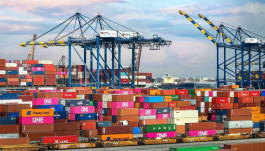
Global trade is expected to decline in the coming months
The economics department of Qatar National Bank (QNB) said t.. Read more

Analysis .. How will major central banks respond to the increasing cases of financial instability?
The global macroeconomic environment is experiencing some of.. Read more

The euro is below the dollar .. the lowest level in 20 years
For the first time in 20 years, the euro fell below $1 on Tu.. Read more
"OPEC"...The pressures of supply shortage will continue next year
OPEC expected global demand for oil to increase next year, b.. Read more
The dollar is holding steady ahead of the release of US inflation data.

NamaaZone " The Power of Knowledge"


Analysis Service |
Its a free service for technical consultation provided by NamaaZone to the website visitors. |
Open account Request |
NamaaZone provides a range of integrated trading solutions in local and global financial markets |