










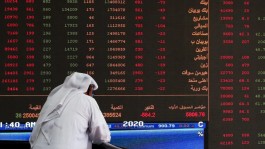


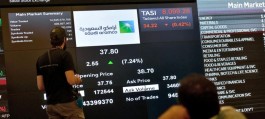


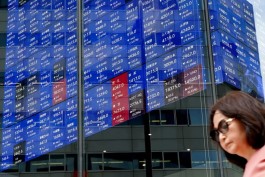

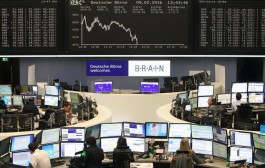

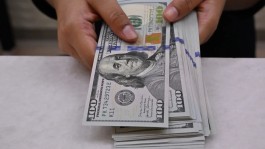









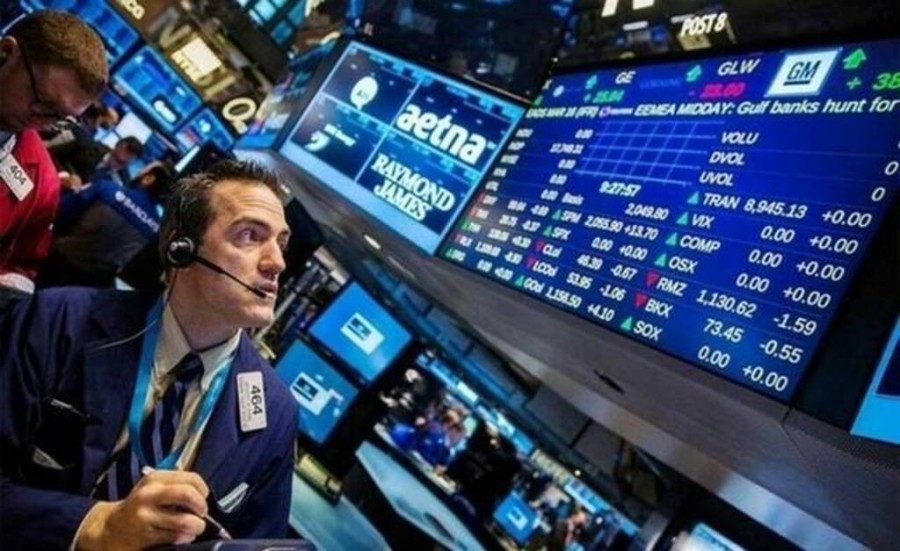


Stocks fell on Tuesday, the dollar dropped for the second day in a row, and U.S. Treasury yields climbed to their highest level in four months, after U.S. President Donald Trump intensified his efforts to take control of Greenland.
Trump’s threat to impose additional tariffs on European countries if no agreement is reached on Greenland has revived talk of what is known as “selling America out,” which emerged after the sweeping tariffs he imposed on “Liberation Day” last April, where investors sell off American stocks, the dollar, and Treasury bonds.
This movement began to gain momentum during Asian trading hours on Tuesday, as investors also turned to safe-haven assets such as the Swiss franc and gold.
Futures for the Nasdaq and S&P 500 indexes fell by more than 1%, while the dollar declined broadly, and the yield on 10-year US Treasury bonds rose to 4.265%, its highest level since early September.
European futures also fell 0.27%, signaling another lower open after the pan-European STOXX 600 index dropped 1.2% on Monday. The MSCI index of the broader Asia-Pacific region excluding Japan also declined 0.24%, moving further away from the record highs reached last week.
Kyle Rodda, senior analyst at Capital.com, told Reuters that there was hope the escalating tensions would be limited if markets send a signal that his actions are harmful to investors and the economy. He added, But there is a risk that this won't happen, and that we could be heading toward a potentially disruptive confrontation between the United States and the European Union.
The focus is now on the Davos forum, where Trump announced that the United States would discuss the acquisition of Greenland. Trump's threats have provoked strong reactions in Europe and raised questions about the future of trade agreements signed with Europe since then.
Henry Cook, Europe economist at MogW, said, “Even if things calm down, this episode will lead many to doubt the credibility of any deal with Trump, and uncertainty over tariffs will remain high.”
Citi also downgraded its rating on European stocks to neutral from overweight due to recent escalating tensions and uncertainty over tariffs.
In the currency market, the dollar captured traders' attention, with the dollar index, which measures the performance of the US currency against six currencies, falling 0.18% to 98.912. The Swiss franc rose to its highest level in a week at 0.7956 against the dollar after climbing 0.7% on Monday.
Japanese bond sales
Japan’s Nikkei index fell 0.8%, and the yen remained steady at 158.08 to the dollar, as investors awaited next month’s elections, with Prime Minister Sanae Takaichi seeking voter support to increase spending and cut taxes.
But the most notable event was in the bond market, where a sell-off across the yield curve pushed short- and long-term Japanese government bond yields to record lows, amid concerns that tax cuts, which are also supported by opposition parties, will worsen the already strained finances of the Japanese government.
Investors have remained concerned about Japan's financial health since Takaichi, known for her tight fiscal policies, took over as prime minister last October.
Demand declined at an auction for 20-year Japanese government bonds, pushing yields on these bonds to a record low of 3.35% on Tuesday.
“The weak demand at Japan’s 20-year bond auction reflects the market’s demand for a larger premium,” said Sharo Chanana, chief investment strategist at Saxo in Singapore. “This is why the long end of the yield curve is driving higher and steeper yields; not because of a surge in growth, but rather due to debt/bond supply and political uncertainty, which are being priced into the market.”
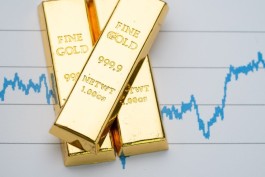
In the commodities market, gold rose above $4,700 an ounce, setting a new record high and achieving gains of more than 9% since the beginning of the month.