










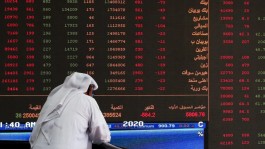




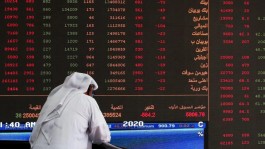



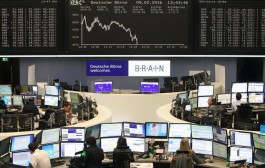











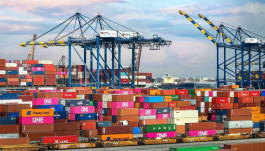



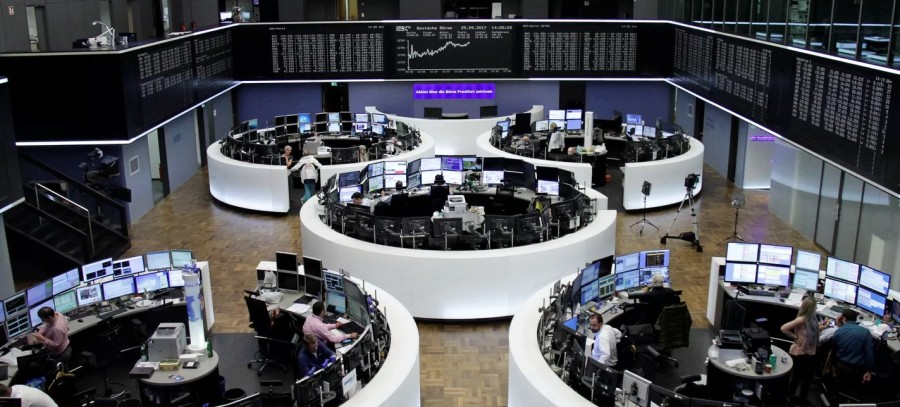


European stocks fell on Tuesday, adding to the previous session's sharp losses as concerns persisted about further economic difficulties due to new trade tariffs.
At 11:05 Saudi time, the DAX index in Germany fell by 0.9%, the CAC 40 index in France declined by 0.8%, and the FTSE 100 index in the United Kingdom dropped by 0.8%.
The threat of tariffs is putting pressure on growth prospects.
Regional stock markets fell on Monday after US President Donald Trump threatened to impose escalating tariffs on several European allies unless the United States is allowed to buy Greenland, a self-governing Danish territory.
This negative tone is expected to continue on Tuesday as US markets resume trading, after being closed on Monday due to a holiday, and are expected to decline sharply.
Late Monday, Trump indicated he would meet with several officials to discuss the issue at the World Economic Forum in Davos, Switzerland, but he also reiterated his demands regarding Greenland, saying it is essential to national and global security and cannot be reversed.
European leaders have widely rejected Trump's calls for Greenland, and have also been seen preparing to take retaliatory action if Trump goes ahead with his tariffs - with a decision to be made at an emergency meeting of EU leaders on Thursday - raising the prospect of a wider transatlantic trade dispute.
Citigroup Inc. on Tuesday downgraded its rating on European stocks based on uncertainty surrounding earnings prospects.
Slowing wage growth in the UK suggests an interest rate cut.
Data released on Tuesday showed that the UK unemployment rate remained high in November while wage growth slowed, suggesting the possibility of further interest rate cuts by the Bank of England as the new year progresses.
The unemployment rate remained at 5.1% in the three months to November, the same level as the previous month, and the highest level since early 2021.
At the same time, wage growth in the entire economy, excluding bonuses, fell to an annual rate of 4.5% in the three months to November, down from 4.6% in the previous month.
The Bank of England cut its main interest rate by 25 basis points to 3.75% in its last decision in December, and will hold its next meeting in early February.
German producer prices fell broadly in line with expectations in December, dropping 2.5% compared with the previous year, the Federal Statistics Office reported on Tuesday.
The British pharmaceutical sector is in the spotlight.
In the corporate sector, British pharmaceutical giant GSK (LON:GSK) announced that it has entered into a definitive agreement to acquire RAPT Therapeutics (NASDAQ:RAPT), a clinical-stage biopharmaceutical company based in California, for an estimated total value of $2.2 billion.
Also of interest, AstraZeneca (LON:AZN) announced that it will delist from Nasdaq and complete a direct listing of its common stock and debt on the New York Stock Exchange, effective from the market close on January 30.
Oil prices stabilize after a volatile session
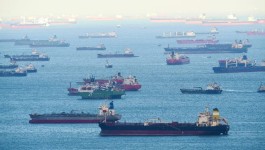
Oil prices traded quietly on Tuesday, holding steady after the previous volatile session following President Trump's threat to impose tariffs on several major European countries until an agreement is reached to hand over Greenland to Washington.
Brent crude futures fell 0.5% to $63.63 a barrel and U.S. West Texas Intermediate crude futures declined 0.6% to $58.97 a barrel.
Aside from geopolitical tensions, the focus this week is entirely on a monthly report from the International Energy Agency, due to be released on Wednesday.
The report will be watched for further clues about oil supplies, as the International Energy Agency has repeatedly warned of a supply glut coming in 2026.
The International Energy Agency report comes just a week after a monthly report from the Organization of the Petroleum Exporting Countries (OPEC) that offered a positive outlook for demand in 2026 and 2027.