

















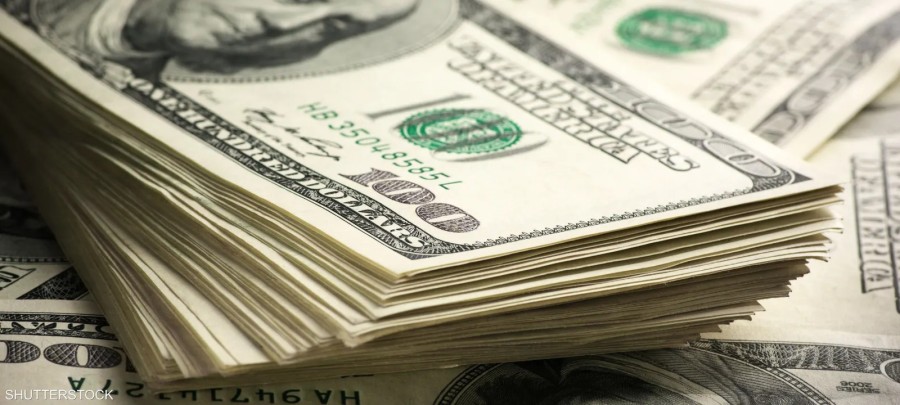


The US dollar is facing renewed pressure as US President Donald Trump considers imposing tariffs on European countries linked to his plan to acquire Greenland, which increases uncertainty about US policies, according to analysts.
The Bloomberg Dollar Spot Index fell 0.1% in Asia after Trump threatened to impose 10% tariffs on European allies who support Denmark's claim to Greenland. US Treasury futures traded mixed as money markets were closed for a US holiday.
European currencies received a boost as the Swiss franc outperformed its G10 peers, driven by increased demand for safe-haven assets, while the euro rebounded from its lowest level in nearly two months. Here are some analysts' opinions:
David Forrester, Chief Strategist at Crédit Agricole CIB in Singapore:
Trump's tariff threats have revived a sell-off in US assets. The market will also be watching for what is known as a threat-then-backdown scenario, indicating the possibility that Trump might use the threat of tariffs as a bargaining chip, which could provide some support for the dollar.
The euro will be among the biggest losers from escalating geopolitical risks during Trump's presidency in 2026, and tariffs could add cyclical pressure on the eurozone economy, while also easing pressure on Russia to end its war in Ukraine.
Chris Weston, Head of Research at Pepperstone Group:
The prevailing dynamic in the market is that US assets, including the dollar, now carry a much higher political risk premium, which may prompt foreign investors to reduce or cut their exposure to US assets.
The prevailing belief is that an agreement on Greenland will eventually be reached, but the issue of sovereignty raises concerns that things could take a more dangerous turn.
Richard Franolovic, Head of Foreign Exchange Strategy at Westpac Banking
The geopolitical risks associated with Greenland are reviving the debate about declining reliance on the dollar, and also make the United States’ large net international liabilities a key vulnerability.
Mingzi Wu, a currency trader at StoneX in Singapore:
We are seeing some weakness in the US dollar, which makes sense given the US return to an isolationist approach. However, the market has become less sensitive to tariff news, meaning reactions are likely to be limited.
Hikaru Tanaka, investment fund manager at Asset Management One in Tokyo:
Conditions are currently favorable for buying European bonds, with inflation indicators in the region deteriorating and tensions escalating between Europe and the United States.