

























Oil prices jumped more than 5% during trading on Monday, driven by fears that the truce between the United States and Iran might collapse, after Washington announced the seizure of an Iranian cargo ship, at a time when shipping traffic through the Strait of Hormuz remains almost at a standstill.
Brent crude futures rose by $4.81, or 5.32%, to $95.19 a barrel.
Meanwhile, U.S. West Texas Intermediate crude rose to $88.81 a barrel, up $4.96 or 5.92%.
This sharp rise comes after a significant decline on Friday, when prices lost about 9%, the biggest daily loss since April 18, following Iran's announcement that it was opening the Strait of Hormuz to commercial vessels, and statements by US President Donald Trump that Tehran had agreed not to close the strait again.
Security tensions bring fears back to the forefront
But this optimism did not last long, as reports indicated that some oil tankers were fired upon by the Iranian Revolutionary Guard within just 24 hours of the Strait being opened, raising new concerns among shipping companies about the safety of passage.
June Goh, an oil markets analyst at Sparta Commodities, explained that these developments have brought back concerns to the markets, noting that market fundamentals are worsening as production outages of between 10 and 11 million barrels per day continue.
This decline in supply reflects the extent of the turmoil that continues to grip the energy market, despite optimistic political pronouncements about de-escalation.
Political escalation complicates the situation
In a new escalation, the United States announced on Sunday that it had seized an Iranian cargo ship that attempted to break the naval blockade, while Tehran responded by threatening retaliatory measures, raising concerns about a return to confrontations.
Iran also announced that it would not participate in a second round of negotiations that the United States had been seeking to launch before the end of the two-week truce this week.
Meanwhile, Washington continues to impose a blockade on Iranian ports, while Tehran lifted the blockade on the Strait of Hormuz and then reimposed it, the passage through which about one-fifth of the world’s oil supply passed before the war broke out nearly two months ago.
Sharp fluctuations and loss of confidence in supplies
Analysts believe that oil markets have become highly sensitive to political statements, with prices moving sharply in response to conflicting statements, rather than relying on actual market fundamentals.
Saul Kavonic, head of research at MST Markey, explained that the announcement of the strait's reopening was premature, noting that conditions on the ground still hinder a rapid resumption of oil flows.
He added that ship owners have become more cautious and will not risk returning to the strait without strong guarantees regarding the safety of passage and the stability of the security situation.
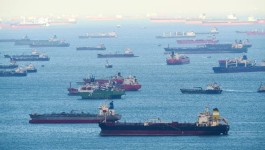
Despite these challenges, Kepler data showed that more than 20 ships crossed the Strait of Hormuz on Saturday, carrying oil, liquefied gas, minerals and fertilizers, the highest number of ships to cross the passage since March 1.
These figures reflect the beginning of an attempt to resume business activity, but they remain limited in light of the continued security risks, which means that markets will remain vulnerable to sharp fluctuations in the coming period, until the final course of the crisis becomes clear.